
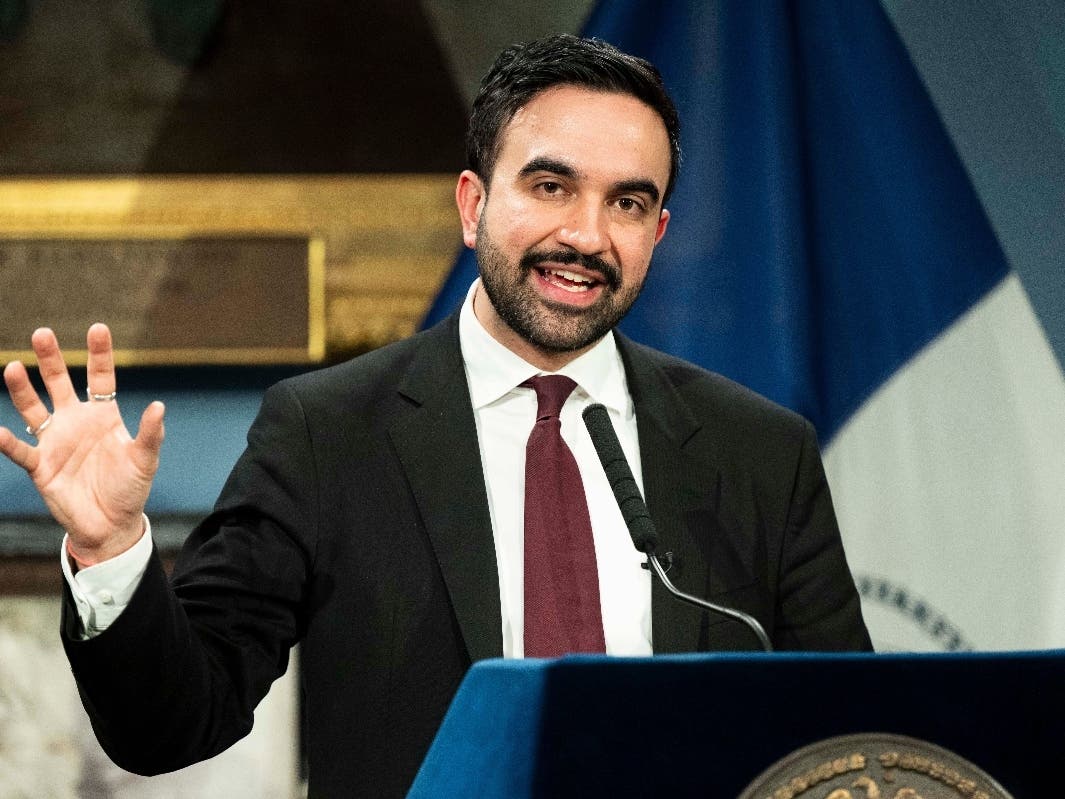
NEW YORK, NY — Mayor Zohran Mamdani presented the city council and Gov. Kathy Hochul with two options for solving the estimated $5.8 billion budget deficit: raising income taxes on New Yorkers making over $1 million or raising the property income tax to 9.5%.
Mamdani described the property tax increase as a “last resort,” and said the two point increase on “the wealthy,” which requires Hochul’s approval, remains his primary solution.
“[These are] options that we will only employ if there are no other means of arriving at a balanced budget,” Mamdani said, referencing the property tax increase.
A 9.5% property tax increase in New York City would affect roughly 3.16 million residential units and more than 102,000 commercial properties citywide, based on fiscal year 2026-27 tentative assessment data from the Department of Finance.
On Wednesday at a press conference, Mamdani described the current property tax system as broken, and one that can “barely stand up in court.”
Any proposal to increase property taxes would have to go through the City Council, where it is unlikely to pass, making the property tax threat largely symbolic.
City Council Speaker Julie Menin released a statement saying that property tax increases “should not be on the table whatsoever.”
Assemblyman Alec Brook-Krasny, a Republican representing Bay Ridge and Coney Island, said the proposal signifies another sign of the “inevitable failure of the Democratic-Socialist agenda.”
“It hasn’t even been two months since Zohran Mamdani took office, and his ‘socialist utopia’ is already falling apart,” Brook-Krasny said. “The moment wealthy residents or higher levels of government don’t fall in line, working families are expected to foot the bill.”
Hochul announced a “no new taxes” pledge in January when revealing the state’s fiscal budget that avoids raising taxes, and includes a proposal to eliminate state income tax on up to $25,000 of tipped income.
Hochul said she understood Mamdani’s stance, but did not revoke her previous pledge, in a press conference on Tuesday.
“The mayor now needs the time, he gets the breathing room with this deadline all the way until the summer to work out what the real expenses are,” Hochul said. “So he’s required to put options on the table, but that does not mean that that’s the final resolution.”
The deficit projections fluctuated— from an initial $12 billion, to $7 billion, then decreased more after Hochul’s commitment to $1.5 billion in state funding.
Mamdani also proposed new spending, creating the City’s largest budget in history at $127 billion.
The additions include $662 million to fund renovations of Section 8 housing, $54 million in food aid, $48.2 million to expand psychiatric services at Bellevue Hospital, $38 million to hire 300 new attorneys and support staff for the City’s law department, $31.1 million for street outreach efforts to the homeless, and $12 million for mobile units to aid New Yorkers with severe mental illness.
It also includes almost a billion dollars in increased funding for the City’s housing vouchers, known as CityFHEPS.
“What we are hoping for, and what we will spend every day looking towards, is working with Albany to increase taxes on the wealthiest and the most profitable corporations, such that a fiscal crisis is not resolved on the backs of working and middle class New Yorkers,” Mamdani said on Wednesday.
Any proposal to raise property taxes would require approval from the City Council, while an income tax increase on high earners would need authorization from state lawmakers and Hochul.