
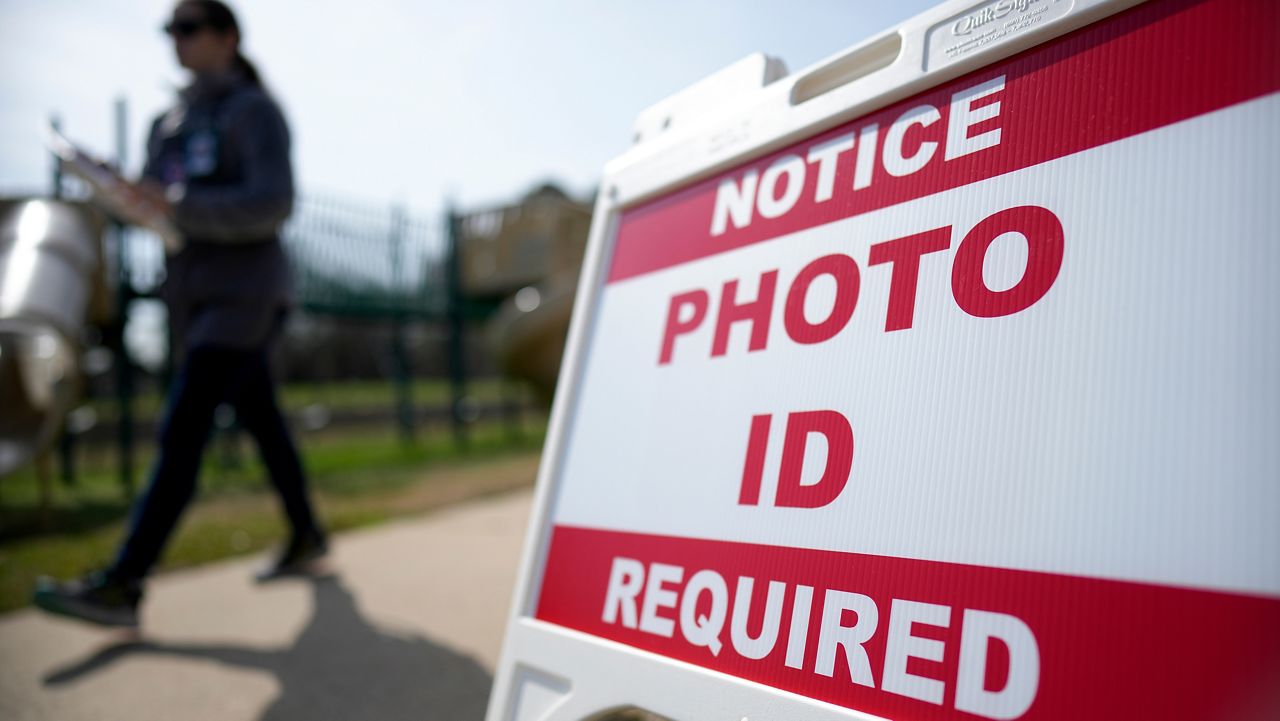
Two Western New York members of Congress, Republican U.S. Rep. Nick Langworthy and Democratic Rep. Tim Kennedy, offered two different viewpoints of the ongoing battle over legislation requiring proof for voter registration and ID when casting ballots in elections.
The Republican-led House of Representatives last week passed the Safeguard American Voter Eligibility, or SAVE America Act, which would require a valid U.S. passport or birth certificate to register to vote and a photo, government or military ID with proof of birth and location to cast a ballot. It would also require states to share their voter information rolls with the U.S. Department of Homeland Security to verify citizenship.
Republicans have long argued the legislation is needed to prevent voter fraud, while Democrats say it will disenfranchise millions by making it harder to vote, a sentiment shared by Langworthy and Kennedy.
“Let’s make it law. We have, we control three layers of government here. There’s absolutely no reason that we can’t get one of these across the finish line,” Langworthy said.
Langworthy, who represents the 23rd Congressional District, said support for some form of voter ID legislation is high.
“Only those super liberal Democrats have an argument against it. Everybody else understands it’s a principle that we have to use ID to do just about anything in this country,” he said. “And, I have to use my ID to buy Sudafed at CVS. But to prove that you say who you are when it’s time to vote for our leadership that you shouldn’t have to at least show your ID, it’s ludicrous.”
Rep. Kennedy, who represents the 26th District, said the SAVE America Act “is nothing but a voter suppression bill.”
“That bill that they passed last week would allow the vote rolls in state by state to be required to be given to the Department of Homeland Security under Kristi Noem, who has already demonstrated her inability to lead that agency or any agency within government,” Kennedy said.
The DHS requirement has seen pushback from some elections officials for potentially intruding upon individuals’ privacy. And federal law already prohibits people who are not citizens of the country from voting.
“It’s an age-old ploy by Republicans to suppress the vote and we’re not going to fall for it. And Americans are smarter than that,” Kennedy said.
Regardless, the legislation will likely go nowhere unless the Senate GOP to change Senate rules around the filibuster, which typically refers to the 60 votes needed in the upper chamber to end debate on most bills and move it to a vote. Leaders in both parties — including current Senate Majority Leader John Thune — have long expressed hesitation about moving to change the rules. Resurrecting the so-called “talking filibuster,” as Republicans are calling it, would instead require Democrats to hold the floor through speeches in what would mark a bigger hurdle to delaying bills.
“It’s going to take Sen. Thune having the courage to do a standing filibuster, the way it’s always been written into law,” Langworthy said.