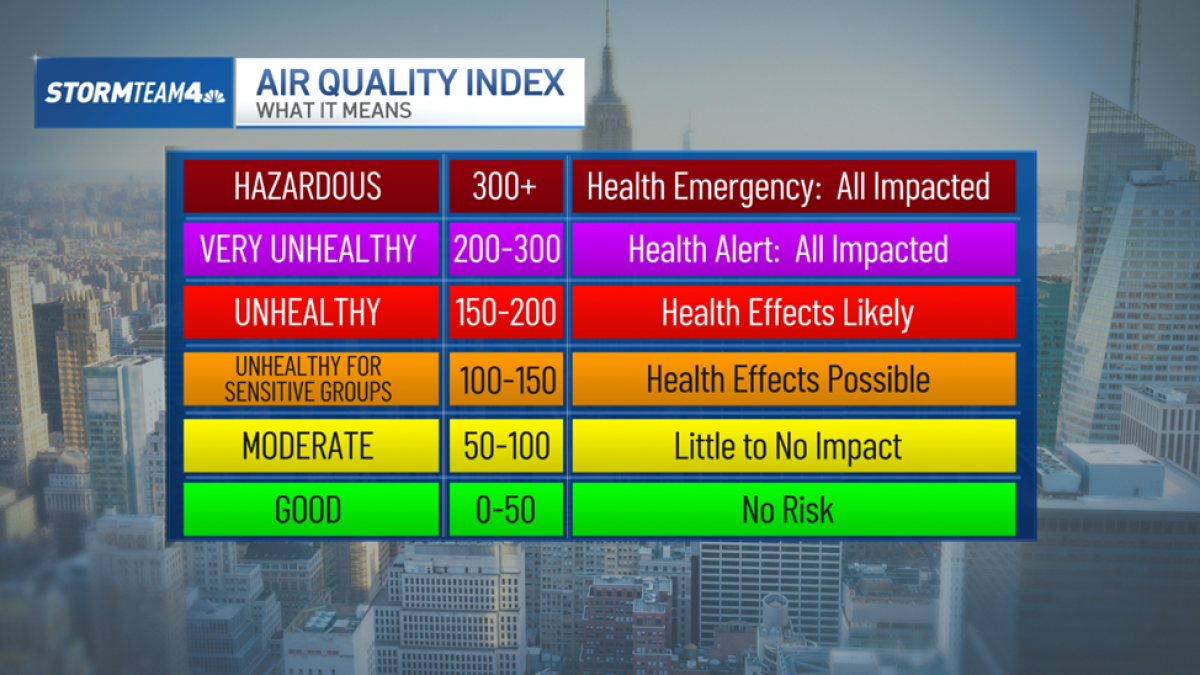
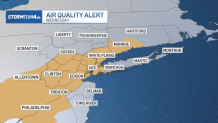
On top of the fact that Wednesday is a messy, murky day weather-wise in the tri-state area, much of the region is also under an air quality alert due to elevated levels of fine particulate matter (PM 2.5) suspended in the air that are easily inhaled into our lungs.
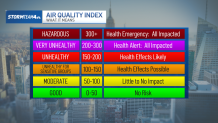
The air quality index (AQI) is expected to peak at just over 100 today, putting it in the “Unhealthy for sensitive groups” category. Air Quality Alerts are typically issued when the AQI rises above the 100 threshold.
For the overwhelming majority of our population, the current air quality alert is of no concern.
A small portion of the people in the “sensitive group” category – people with cardiac or pulmonary diseases, pregnant women, the elderly and children – may feel effects. However, considering the marginal levels of particulate matter expected, most of the “sensitive group” category probably won’t be impacted by our anticipated PM 2.5 levels.
For people with severe respiratory conditions who are concerned, though, there are things you can do to minimize exposure. Limit time spent outside, wear a mask, and use an air purifier in the home.
The fine particles we’re talking about are super-small. PM 2.5 includes all particles that are 2.5 microns or smaller in diameter, with a micron being one millionth of a meter. For comparison, human hair ranges from 50 to 100 microns in diameter, so PM 2.5 is at least 20 times smaller than that. Red blood cells range between 5 and 10 microns.
PM 2.5 particles are way too small to be seen with the naked eye and easily stay suspended in the air.
Where do these particles come from? You may remember air quality alerts due to smoke particles from Western or Canadian wildfires. Current air quality issues are not from that, since there are no fire problems. Rather, the particles are generated locally, from fossil fuel combustion.
The biggest culprit is traffic – specifically gas and diesel-fueled cars and trucks. PM 2.5 in the form vehicle exhaust surges in the morning and afternoon, when traffic volumes are high. Additional PM 2.5 comes from fossil fuel-burning industrial sites and buildings that use oil or gas to produce heat and hot water.
Not every day becomes an Air Quality Alert Day in and around New York City. But on days when weather patterns are somewhat stagnant, pollution and PM 2.5 can get trapped at ground level. Concentrations can build until AQI readings reach or exceed 100. Typically, these concentrations go down at night when cars, trucks and industrial sites spew less pollution.
Wednesday’s rain will also help. Raindrops capture fine particles in the air and take them to the ground, effectively scrubbing the air of pollution and reducing PM 2.5 concentrations. Not only do we have rain in the forecast on Wednesday, but Friday looks wet, too. And on Sunday, we could see a little snow late in the day. While not making for the best weather, days like these can help clean the air for us!