
Naturalist John Burroughs was one of the most famous Americans of his time.
He counted among his friends industrialist Thomas Edison, tire magnate Harvey Firestone, automaker Henry Ford and President Theodore Roosevelt. Yet Burroughs lived simply and privately in the secluded hills of the Catskills, his birthplace.
Burroughs was born April 3, 1837, in the rural Catskill Mountain town of Roxbury. As a boy in a family of 10 children, he spent hours communing with the nature around his home, including Slide Mountain and Old Clump Hill Mountain.
At 17, he became a teacher in Ulster County and later attended local prep schools, including Cooperstown Seminary, where he was introduced to the works of literary naturalists such as William Wordsworth, Ralph Waldo Emerson and Henry David Thoreau. During the Civil War, he moved to Washington, D.C. for work. There he penned his first book of nature essays, “Wake-Robin,” published in 1871. The book was a success, and by the 1880s, he was a world-renowned nature essayist and naturalist, later honored as the “Father of American Conservation.”
Despite friendships with powerful figures, Burroughs’ beginnings were hardscrabble. It is fitting that his longtime home, “Woodchuck Lodge,” sits near Hardscrabble Road in Roxbury. He called this summer retreat “Woodchuck Lodge” for the overabundance of groundhogs or woodchucks found in the area.
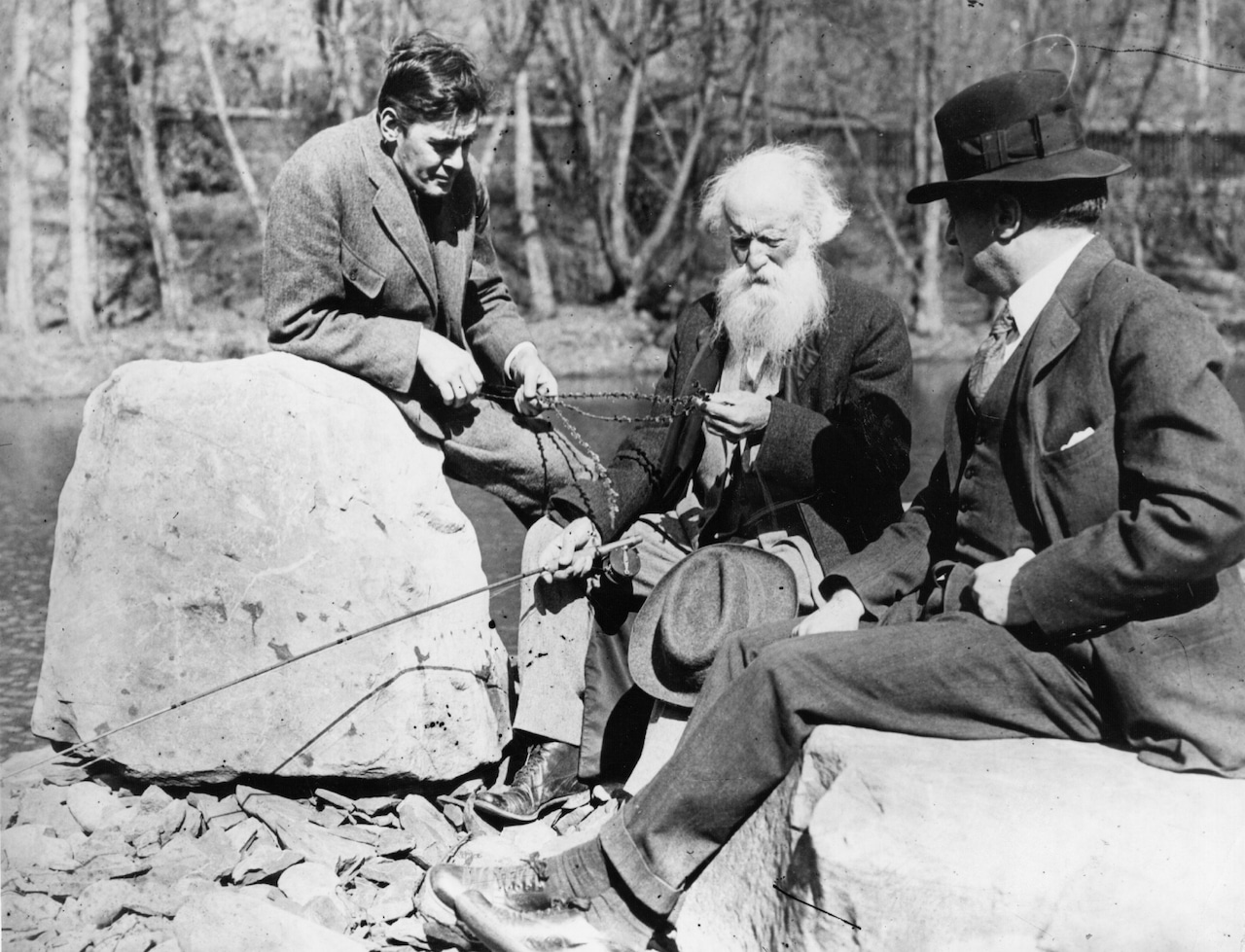 John Burroughs (1837 – 1921) the American naturalist and aviator, examines his fishing equipment with colleagues, circa 1920. (Photo by Topical Press Agency/Getty Images)Getty Images
In his adult life, Burroughs eschewed the trappings of fame and adoration by staying true to his simple roots. He lived in nondescript homes, basically cabins that he built himself. His clothes were flashy in the least or up to date. He could be seen wandering his mountain home area with his long wispy white beard, baggy pants, crushed hat, walking stick and maybe a large lunch pail in his hands.
Woodchuck Lodge makes for one of the most fascinating, out-of-the-way day trips any history lover can take in Upstate New York.
Driving up the winding road to Woodchuck Lodge, visitors are greeted by sweeping Catskill views with rolling hills and layered mountains stretching across the horizon. In autumn, the scenery is especially unforgettable.
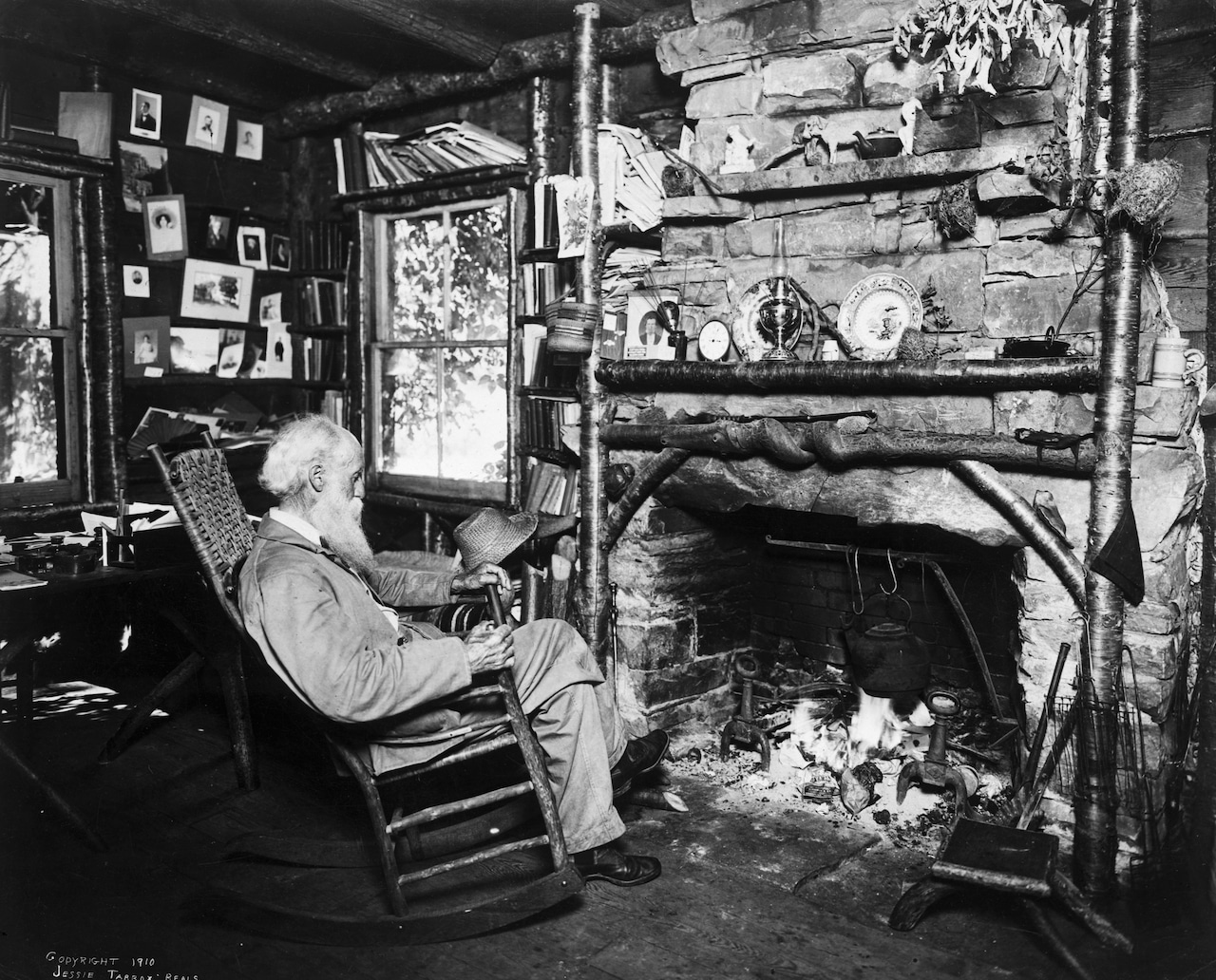 American naturalist John Burroughs (1837-1921) seated in front of his fireplace. Photograph, 1910. Bettmann Archive | Getty ImagesBettmann Archive
Woodchuck Lodge was designated a National Historic Landmark in 1962. Today it is operated as the John Burroughs Memorial State Historic Site.
On a tour, visitors will hear many fascinating stories about Burroughs getting away from the spotlight by retreating to this remote cabin on a mountaintop. Still, admirers came, as if on a pilgrimage to see the celebrated writer.
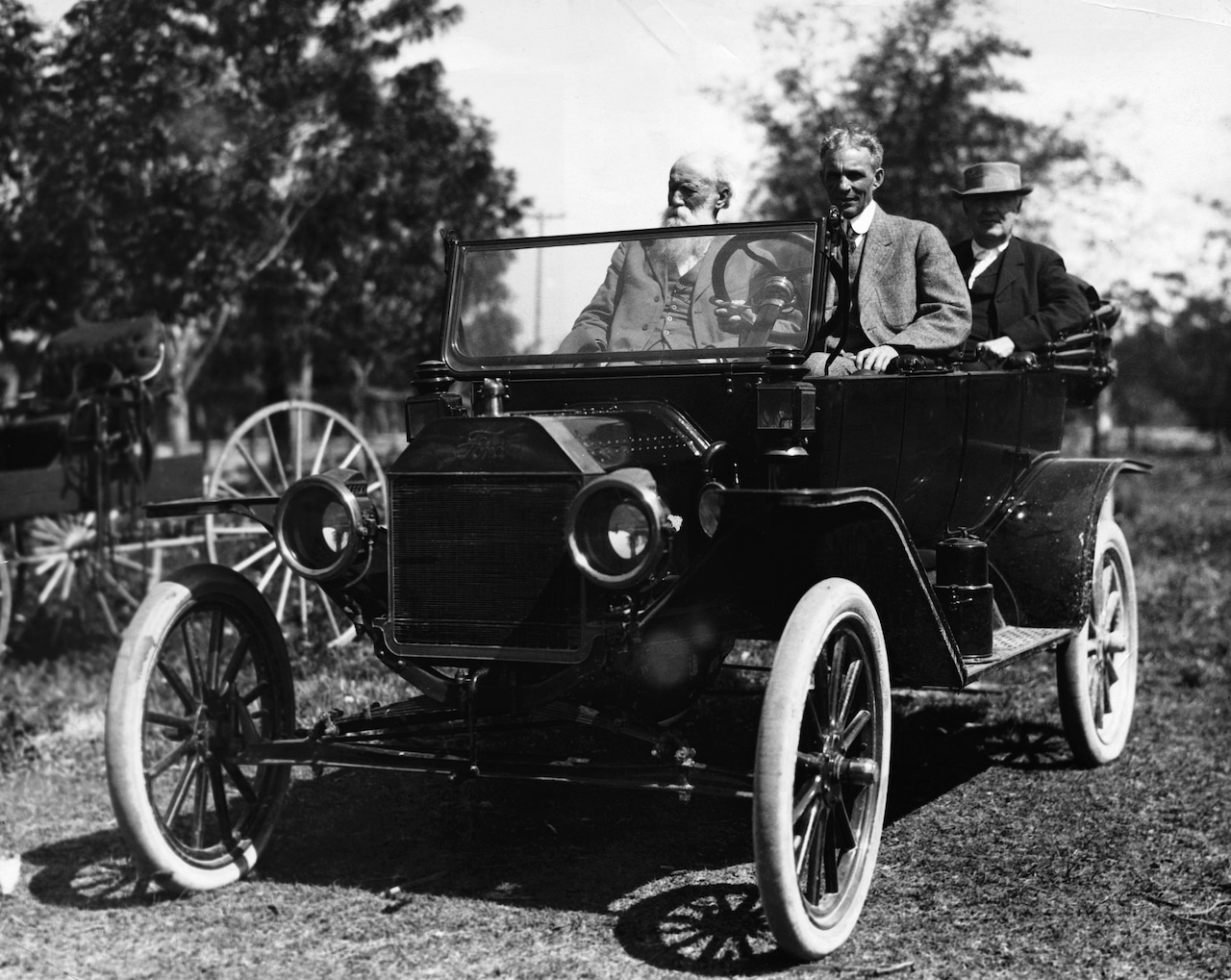 Henry Ford at wheel, John Burroughs and Thomas Edison in back seat of the Model T. Bettmann Archive | Getty ImagesBettmann Archive | Getty Images
One often-told story involves Henry Ford, who stayed for two weeks one summer and helped Burroughs move rocks in his garden. It was summertime and the millionaire industrialist came wearing a heavy flannel suit. When he departed, he left the suit at the house. Ever practical, Burroughs cut the suit up to make chair cushions, which can still be seen at the lodge. Ford later gifted Burroughs his first car, a 1913 Ford Model T Touring Car.
Another docent may open the door to the kitchen woodstove and remark, “Those ashes were probably from the last fire the great writer ever lit here.”
As visitors explore the property, they’ll pass numerous signs and narrative plaques depicting Burroughs’ life in text and photos. At the rear of the property, you’ll find his grave, surrounded by a small stone wall and overlooked by a large sandstone boulder known as “Boyhood Rock.” This was a special place for Burroughs, where he often climbed as a youth to observe and record his thoughts about nature.
Here, you are invited to stop, reflect and experience the same, unchanged beauty that Burroughs saw here from Boyhood Rock as a youth.
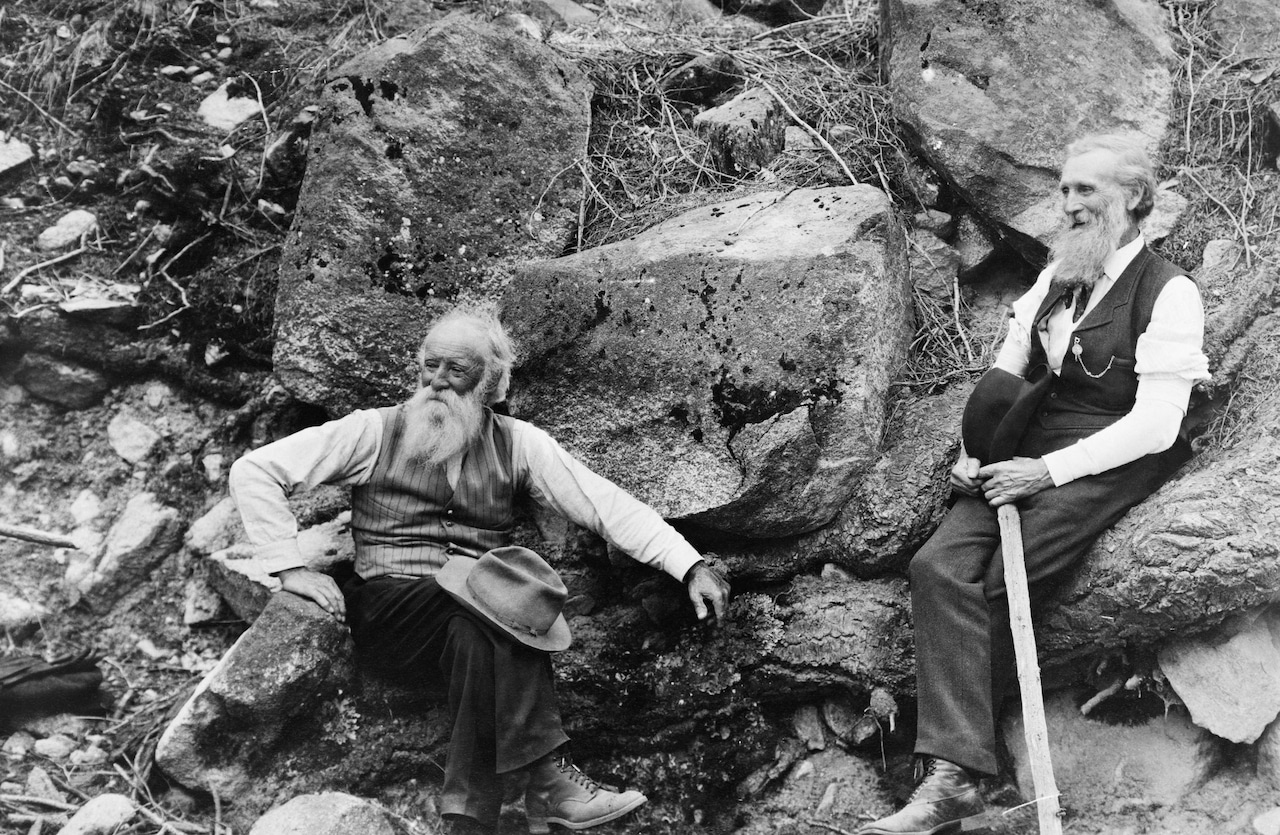 Naturalists John Burroughs and John Muir seated on a group of large rocks. Undated photograph. Bettmann Archive | Getty ImagesBettmann Archive
This little-known historic site honors one of the most prominent Americans of his era, a true “Son of the Catskills.”