
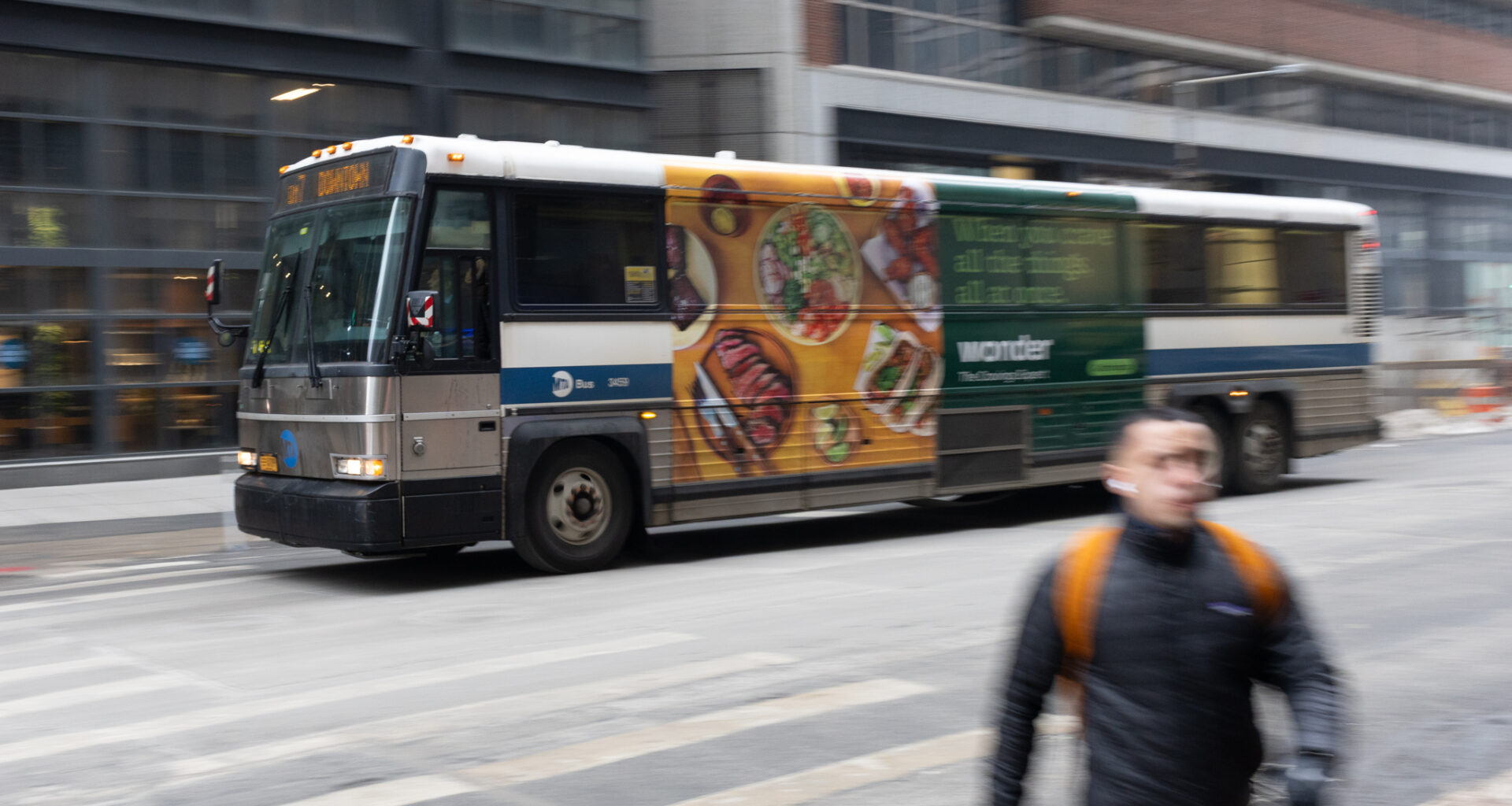
Mayor Zohran Mamdani campaigned on a promise to make the city’s buses “fast and free” – and that includes the pricier express buses that service some of the least transit-friendly neighborhoods in New York City, he confirmed for the first time last week.
Unlike a typical Metropolitan Transportation Authority bus, the rides feature plush seats, fewer stops and cost $7.25 each way — on par with the Long Island Rail Road peak city fare.
Average daily ridership for express buses is 60,000 across 80 routes, far below the more than 1 million average daily passengers on other city buses.
“Absolutely the vision that we’ve spoken about when we say making every bus fast and free, that includes every bus, which means also express buses,” Mamdani said last week.
The express bus, he said, was “a real lifeline” for him in 2017 when he was working on Khader El-Yateem’s run for a City Council seat in Brooklyn’s Bay Ridge while living in Upper Manhattan’s Morningside Heights.
But some express bus riders are more concerned about service than the fare – and fear making it free would turn things for the worse.
Clarissa Chervoni takes an express bus most days from her home on Staten Island to lower Manhattan for “peace of mind.”
“I could take the ferry and the local bus to get home, but I prefer not to,” she said. “So I situate my money to accommodate that.”
Chervoni thinks Mamdani’s fare-free plan – which has been criticized by MTA President Janno Lieber – seems even more unappealing for express bus travelers like her.
“The people who pay for the express bus, which is the majority of the riders as opposed to the local riders, they’re the ones that fund the MTA,” she said. “I can’t imagine that they’re going to stop payment on the express bus.”
Express buses have the lowest rate of fare evasion, according to MTA data. In the final quarter of 2025, the fare evasion rate was 6.7%, up from 4.4% the previous quarter. That compares to an overall fare evasion for other buses that remained at 40% last year – with Select Bus Service having the highest rate at over 50%.
The promise of free buses also seems more far-fetched as the city has a continued budget deficit of more than $5 billion, with Mamdani proposing the “nuclear” option of raising property tax rates to fill that gap if Albany won’t agree to raise taxes on the rich.
Without specifying what express buses would cost, the mayor has put the price of the overall free bus program at around $700 million in lost revenue. Lieber, however, said the price is more like $1 billion especially if ridership jumps when the charge disappears and the MTA need to run more buses and hire more drivers.
“If a lot more people are riding the bus, are we going to need more buses or are we going to need more bus drivers?” he told NY1 in October.
Melissa Torres, who gets on an express bus before dawn three days a week to travel from Staten Island to Lower Manhattan, said that when some buses are canceled, she has to stand for the entire ride when the next one finally comes around.
“If the service would be improved, you would want to pay,” she said.
“When you leave work, you want to go home. And when you come into work you want to get to work on time.”
Vittorio Bugatti, who rides BxM1, BxM2 or BxM18 into Manhattan from Riverdale in The Bronx, also said he’d rather see improved service than a free ride.
“The MTA already struggles as it is to meet express bus service,” he said. “Unless the city is prepared to contribute substantially to the MTA, I don’t see this coming to fruition.”
Other riders, though, see the potential for free fares as an opportunity to open the service up to riders who couldn’t usually afford it.
Ariel Boone takes the X37 and sometimes the X27 from Bay Ridge to midtown Manhattan every day for her job as a social worker in a hospital.
Having a fare-free bus would be “huge to have those savings in my budget.”
But it would also open up the service to so many other people, she said.
“I know so well that the cost is 100% a barrier for many people,” Boone, 39, said. “Making it free, along with other buses, would be a real game changer for people of all income levels to have more access to something that could make their commute much shorter and much easier.”
Related