
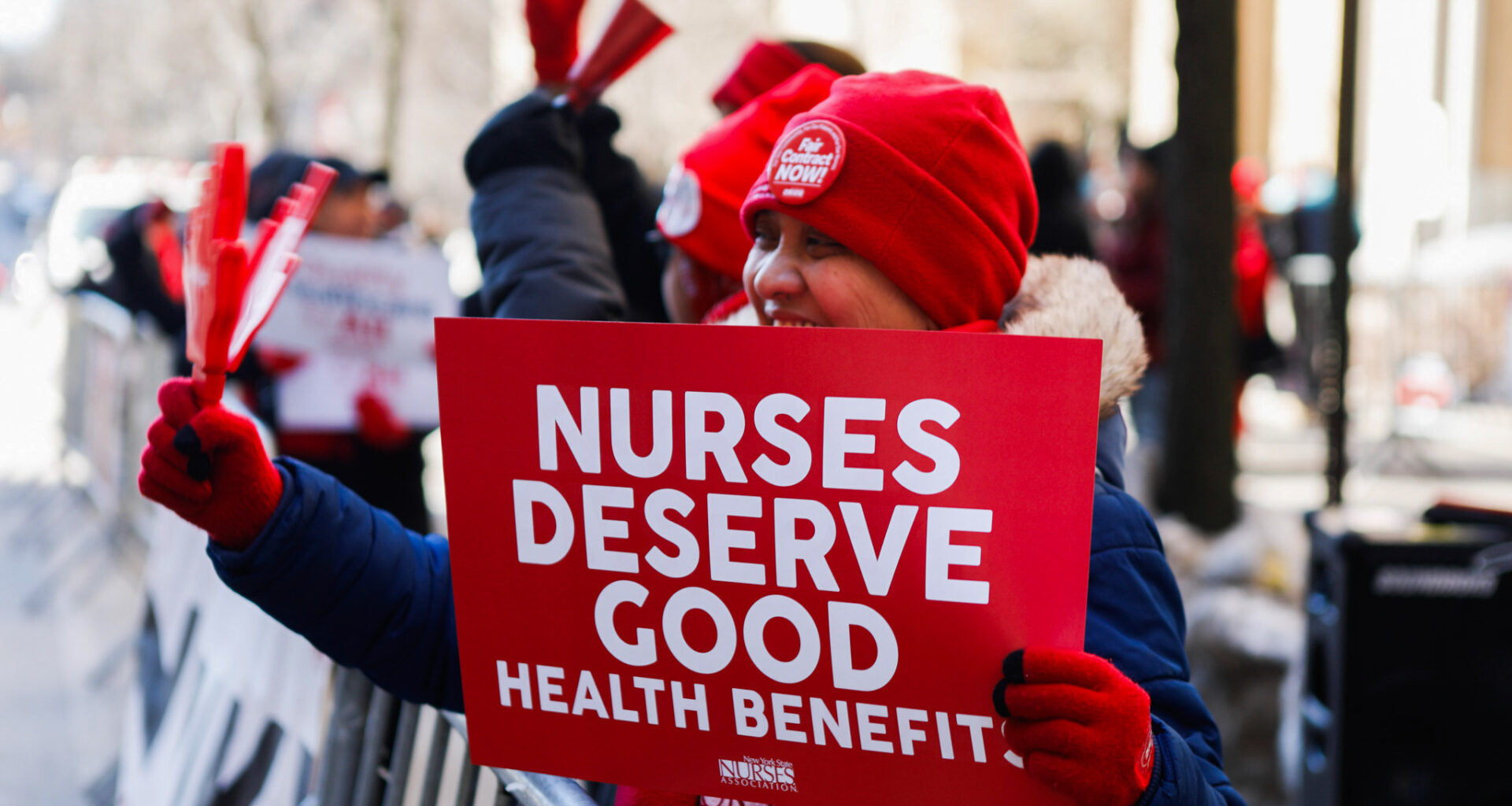
The New York State Nurses Association reached a tentative agreement with NewYork-Presbyterian on raises, nurse-to-patient ratios and workplace violence, marking the end of a strike that, at 39 days, is the longest of its kind in New York City history.
Nurses secured commitments from the hospital to hire more nurses to key understaffed units and to improve existing enforceable staffing standards — two of the most sought-after changes nurses have said are necessary to improve conditions for workers and patients alike.
NewYork-Presbyterian agreed to prioritize hiring new nurses in the emergency department and the cath lab, two of the most understaffed units, said Beth Loudin, a NewYork-Presbyterian neonatal nurse and rank-and-file representative at the bargaining table. Nurses also secured 12% raises over the three-year length of the contract.
NYSNA president Nancy Hagans said in a statement announcing the tentative agreement on Friday that nurses at NewYork-Presbyterian “showed this city that they won’t make any compromises to patient care.”
“They stood in the cold, snow, ice and wind, along with their union siblings, fighting back management’s attempts to cut corners on care and secured contracts that improve enforceable safe staffing ratios, improve protections from workplace violence, and maintain health benefits with no additional out-of-pocket costs for frontline nurses,” she said.
The contract is pending a ratification vote by members, which will begin Friday and will end Saturday. The union expects to announce the results on Saturday, Loudin said, and the 4,200 nurses will return to work next week if they approve the agreement.
It is the second deal with NewYork-Presbyterian that the union announced in as many weeks. Last Wednesday, rank-and-file nurses broke with union leadership, rejecting the first agreement by a 3-1 margin because it did not secure nurse-to-patient ratios and staffing numbers that nurses wanted. (Nurses at Mount Sinai and Montefiore returned to work on Feb. 14, having ratified agreements at their hospitals after more than a month on the picket line.)
The statement from NewYork-Presbyterian spokesperson Angela Karafazli about Friday’s tentative agreement appeared to make a thinly-veiled remark about the failed vote last week: “We are pleased to have reached a tentative settlement with NYSNA, through the mediator, that reflects our tremendous respect for our nurses — the settlement is still subject to ratification.”
Loudin, who helped lead the nurses’ mutiny against its own union leaders last week, said the new agreement secured sought-after job protections, staffing ratios and workplace violence protections, and urged her colleagues to endorse the deal.
“Today, we made significant progress on the things we had clearly defined were lacking,” she said. “We think this is a win for the future of health care and for our communities, and it really speaks to the power of working people.”
The union and the hospital announced the deal in separate statements after midnight on Friday, following a marathon bargaining session with a mediator Thursday at the East 34th Street building of the Cornell University School of Industrial and Labor Relations.
Long, Cold, Bitter Strike
Nurses at NewYork-Presbyterian didn’t get the exact staffing enforcement language that their colleagues at Mount Sinai and Montefiore won in their 2023 strike. But the nurses and the hospital did agree to regularly scheduled arbitration dates in order to resolve staffing disputes more quickly and effectively — a compromise nurses at the bargaining table were willing to accept, said Loudin.
As recently as Monday, an arbitrator ruled that pediatric intensive care unit nurses at NewYork-Presbyterian Morgan Stanley Children’s Hospital were entitled to nearly $400,000 in financial remedies for working chronically understaffed shifts. The settlement stems from complaints the union filed nearly three years ago, and the hospital has the opportunity to appeal.
The 4,200 NewYork-Presbyterian nurses were the last holdouts in what was at one point, at 15,000 participants, the largest strike of its kind in New York City history. Nurses at all three hospital systems walked off the job on Jan. 12, braving hostile winter weather and negotiations more bitter than any in recent memory, with either side accusing the other of greed, lies, harassment and intimidation.
Hospital administrators prepared for an extended work stoppage, cancelling elective surgeries and diverting patients to hospitals unaffected by the strike. They also proactively hired thousands of travel nurses to staff hospitals during the strike to the tune of approximately $100 million. For more than a month, nurses picketed in freezing temperatures without pay or health insurance, with some turning to GoFundMe to make ends meet.
“The wins of our private sector nurses will improve care for patients, and their perseverance and endurance have shown people worldwide the power of NYSNA nurses,” Hagans, the NYSNA president, said in her statement on Friday.
As their peers at Mount Sinai and Montefiore returned to work over the President’s Day holiday weekend, union members stepped up their outreach to ensure NewYork-Presbyterian nurses continued to hold the line.
After nurses voted to continue the strike last week, NewYork-Presbyterian emailed staff asking them to indicate whether they are interested in returning to work by 6 p.m. on Feb. 14. Twenty-four hours before that deadline, nurses at the NYP-Milstein picket line were gloating: Only 40 people had signed up so far, said Judy Sheridan-Gonzalez, a Montefiore nurse and former NYSNA president.
In the end, fewer than 100 people signed up to cross the NewYork-Presbyterian picket line, Loudin told THE CITY on Friday.
Related