2
history
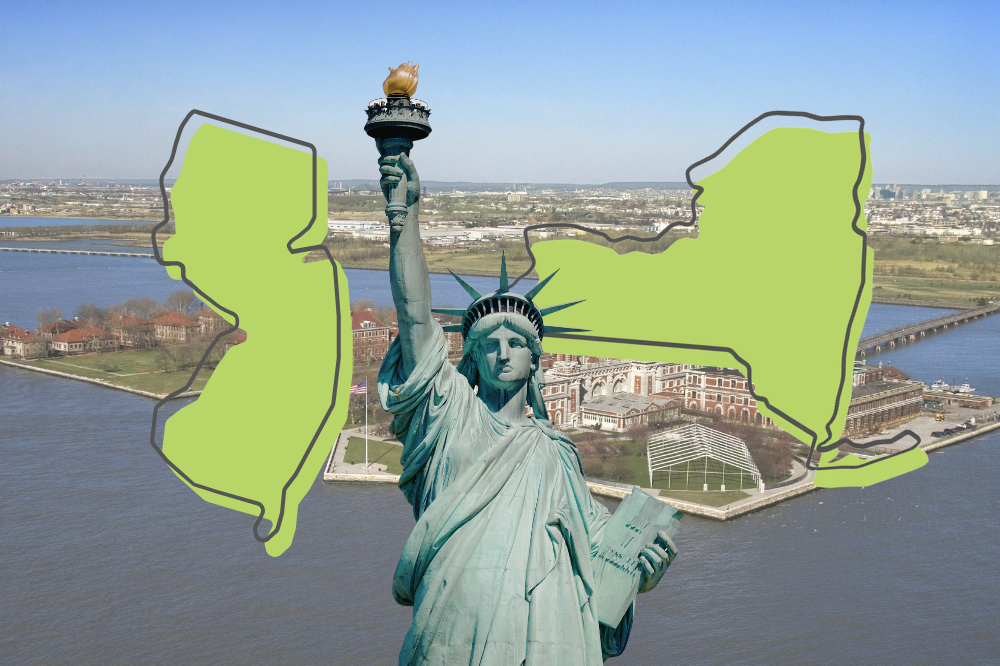
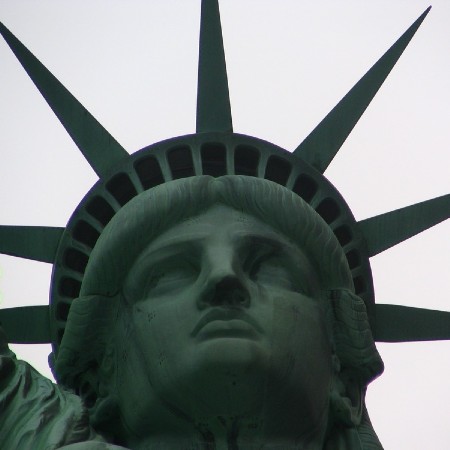
The Statue of Liberty has been standing in front of New Jersey, looking over the New York City skyline, since 1886. Right behind her, immigrants were processed at Ellis Island for decades before it shut down and reopened as a National Monument. While we all know Ellis Island sits on the New Jersey side of the Hudson River, there was debate for a couple of years over whether it sat in New York or New Jersey. The Hoboken Girl took a deep dive into the tumultuous history of Ellis Island and the Supreme Court ruling that decided which state the National Monument continues to call home. Read on for the history of Ellis Island + Statue of Liberty and whether these historical sites call New Jersey or New York home.
The History Of Ellis Island
Ellis Island was known as the “gateway to America,” welcoming over 12 million immigrants to the United States between 1892 and 1954. The 27.5-acre island was originally much smaller; before construction of the immigration facility in the 1800s, it was a small three-acre oyster island.
Dating back to the 1600s, Ellis Island went through many ownership and name changes. It was known as Little Oyster Island, Dyre’s Island, Bucking Island, and Gibbet Island, to name a few.
In 1785, Wrexham-born Samuel Ellis bought the island and tried to sell it, but was unsuccessful. He died in 1794, and the US Government swooped in and acquired the island for harbor defense.


In 1813, the government built Fort Gibson, named after a colonel killed in the War of 1812. Nearby residents raised concerns over the military activity because the Army and Navy used it for ammunition storage. Congress ordered the removal of the Navy’s powder magazine in 1890.
In 1833, the commissioners of New York and New Jersey entered into an interstate compact to resolve boundary disputes over New York Harbor and the Hudson River. By 1834, the compact was ratified by both state legislatures and approved by Congress. It established the harbor boundaries between two states and confirmed Ellis Island and Liberty Island (known then as Bedloe’s Island) were part of New York State. The Statue of Liberty arrived from France in 1885 and opened to the public in 1886.

Read More: That Time the Hudson River Froze So Hard People Opened a Tavern on It

The U.S. Immigration Station on Ellis Island formally opened in 1892. Annie Moore of Ireland was the first immigrant processed through the new station on Ellis Island. Just five years later, the wooden buildings burned down. A fireproof facility reopened in 1900. The island expanded significantly from 1900 to 1924 with additional buildings and a land extension for contagious disease wards, making it much larger than the original three-acre island.
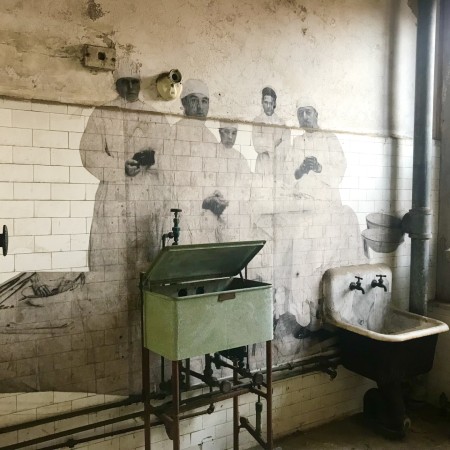
Immigration declined after the National Origins Act of 1924. It required immigrants to show visas before departure and established quota limits, reducing the number of immigrants that could enter the US. During World War Two in 1942, the island turned into a detention center for roughly 1,000 German, Italian, and Japanese enemy aliens. The last detained aliens left the island in November of 1954, and the ferry made its final run later that month.
The island sat vacant until President Lyndon Johnson made it part of the Statue of Liberty National Monument in 1965. The restoration project ran from 1986 to 1990 and cost about $156 million. It reopened to the public in 1990. Ellis Island is still owned by the federal government and managed by the National Park Service.
New Jersey v. New York
That brings us to 1993, when the State of New Jersey filed a lawsuit directly with the United States Supreme Court, arguing the expanded Ellis Island belonged to the Garden State. The Ellis Island renovations in the 80s and 90s brought jurisdictional disputes, which led to the lawsuit. New Jersey said that while New York still owns the original three acres of land, New Jersey owns the artificial portions of the island built on top of previously submerged lands. New York argued the whole island, including the expanded parts, had always been part of New York State, citing the 1834 Compact. The Supreme Court agreed to hear the case and appointed a Special Master to gather evidence in the decision.
After a 25-day trial in 1996, which combed through nearly 2,000 documents and over 4,000 pages of testimony, the Special Master ruled in favor of New Jersey.
In 1998, the United States Supreme Court voted 6-3 to divide Ellis Island between New York and New Jersey. New York still owns the original three acres of land, and New Jersey owns about 83% of Ellis Island, making up the remaining man-made 24 acres of land.
 Image Courtesy Of The National Park Service, United States Department of the Interior
It sounds like there was a lot of confusion over the years as to which state the immigration station resided in. The Supreme Court called New York’s evidence of its jurisdiction over the man-made areas of Ellis Island between 1890 and 1954 “too slight” to support any finding in New York’s favor. New Jersey was the opposite, staying relatively active during the same time period, asserting its jurisdiction there. William E. Andersen, a member of the New Jersey team in the Ellis Island litigation, shared his research online.
“The federal Harbor Line Board prepared six surveys of Ellis Island as it was being expanded from 1890 to 1911; each one said they depicted ‘Ellis Island, New Jersey.’ United States Attorney General William Moody agreed that the Compact of 1834 gave New Jersey the lands to be filled for the expansion of the island, and so, in 1904 authorized their purchase from New Jersey, not New York. In the 1930s, the government applied to New Jersey, not New York, for a permit to construct a seawall on Ellis Island. Finally, for a time in the late 1940s, New Jersey wage rates, not New York rates, applied there.”
Meanwhile, New York never depicted the expanded island on voting maps, never tried to collect taxes there until 1991, and their statutes never specifically mentioned the filled land.
See More: The History + Evolution of New Jersey’s Hudson River Walkway
Ironically, two justices born in New York and New Jersey voted against their home states. Brooklyn native Justice Ruth Bader Ginsburg sided with New Jersey, and Trenton native Justice Antonin Scalia sided with New York.
So while we Jersey girls would love to claim Lady Liberty as one of us, she technically resides on the New York side of the river. Even if the Statue of Liberty lives in New York, now we know some of our ancestors’ first steps in America happened on New Jersey soil (even if it was man-made).
Follow @thehobokengirl on Instagram + TikTok for the latest Hoboken and Jersey City updates, sign up for our weekly newsletter here that shares everything you missed each week, and check out our events calendar, which has over 100+ events weekly to peruse.