
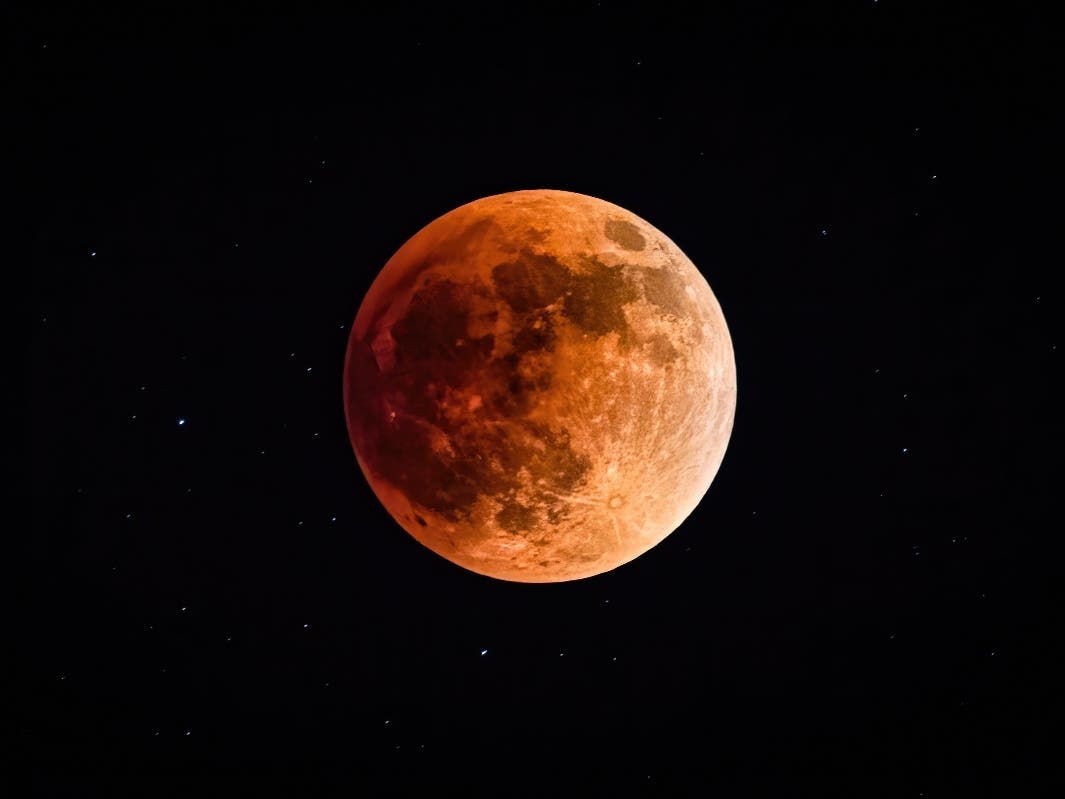
NEW YORK CITY — New York residents planning to catch the total lunar eclipse on Tuesday, March 3 should plan on being awake before 4 a.m. Eastern Time to see the moon turn blood-red.
During a total lunar eclipse, Earth moves between the sun and the moon and cuts off the moon’s light supply. When this happens, the surface of the moon takes on a reddish glow instead of going completely dark because of the way Earth’s atmosphere filters and bends sunlight.
The farther west, the better the views of the blood moon. Western North America will have the best, highest-in-the-sky views of the blood moon. On the eastern side of the country, deep-red totality occurs around 6:25 to 6:33 a.m., almost exactly at sunrise, when the moon will be very low on the western horizon.
Here are the times to know in New York (all times local):
Penumbral eclipse begins at 3:44 a.m.: moon enters Earth’s outer shadow (subtle dimming)Partial eclipse begins at 4:50 a.m.: umbra starts covering moon (a visible dark bite)Total eclipse begins at 6:04 a.m.: entire moon in Earth’s umbra (start of “blood moon”)Total eclipse ends at 7:02 a.m.: moon leaves umbraPartial eclipse ends at 8:17 a.m.The penumbral eclipse ends at 9:23 a.m.
NASA points out that as Earth’s shadow dims the lunar surface, some constellations may be easier to see than they are usually during a full moon. At the time of the eclipse, the moon will be in the constellation Leo, under the lion’s hind paws.
SUNY Oswego will host a viewing party on the top floor of its Shineman Center to view the total lunar eclipse. The eclipsed Moon will set into Lake Ontario, promising a compelling sight, organizer said.
“Observing will begin at 7 p.m. on Monday, March 2, with viewing of celestial objects like planets, nebulae, galaxies, and the full moon. Then, the main event — the eclipse — will begin at 4:30 a.m. on Tuesday, March 3,” according to the school’s website.
For those in New York City, to get the best views you be somewhere with unobstructed view of the horizon.
Some good viewing areas around the city include parts of the West Side Highway, Chelsea Piers and the Brooklyn Heights Promenade.
Whether you’ll be able to see the moon turn blood-red depends on the weather, of course. New York’s seven-day outlook from the National Weather Service suggests mostly dry and sunny weather with a chance of snow on Tuesday.
Lunar eclipses only happen during full moons. March’s full moon is typically called the “worm moon.” The origin of the moniker is the subject of some debate, according to The Old Farmer’s Almanac. While the moniker was long thought to reference earthworms tunneling out of winter homes, historical research, notably by Captain Jonathan Carver in the 1760s, suggests the name referred to beetle larvae emerging from thawing tree bark and winter hiding places.