
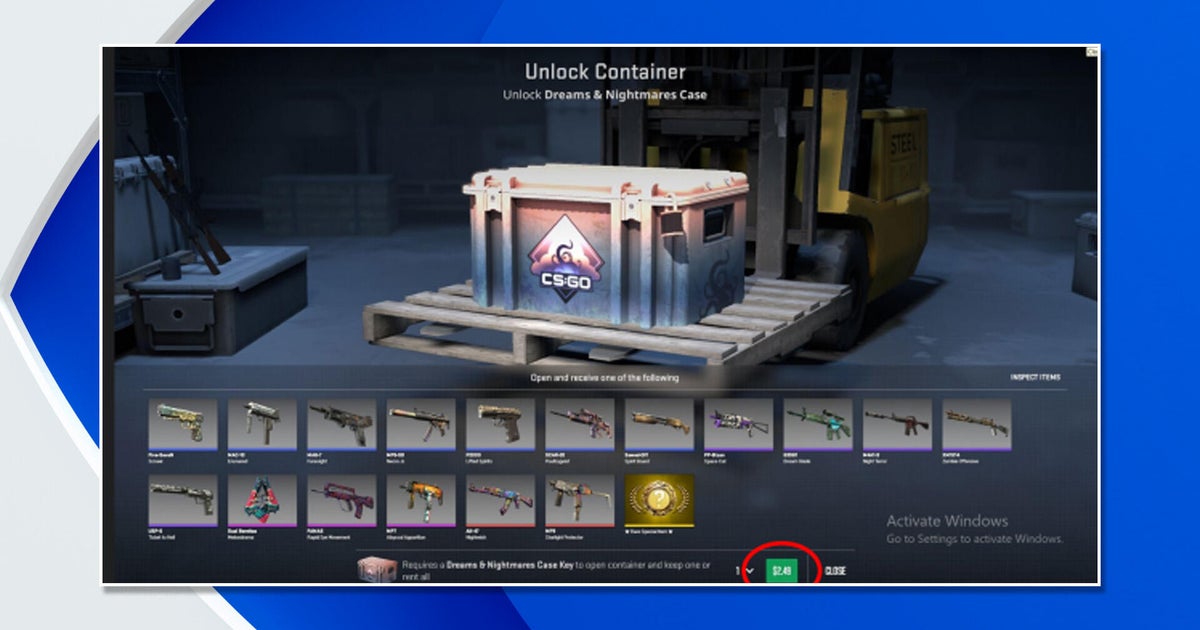
New York Attorney General Letitia James is taking on a giant of the video games industry, Valve Games, alleging in a new lawsuit that they essentially enable illegal gambling through an in-game mechanic known as a “loot box.”
Valve is the company behind the wildly popular games Counter-Strike 2, Team Fortress 2, and Dota 2.
“The franchises also have proven to be remarkably lucrative for Valve, even though the games have been free to play for years. Valve has managed this feat by pioneering an alternative model for monetizing its games: gambling,” according to the complaint.
Loot boxes in the crosshairs
James alleges Valve entices players to pay for a chance to win a rare virtual item, and that those rare items can be traded for real money in accordance with their rarity. A loot box might include a cosmetic upgrade for a character, such as a hat, or change a “skin,” the way a player’s weapon or equipment appears within the game.
“This loot box model that Valve has developed—charging an individual for a chance to win something of value based on luck alone—is quintessential gambling, prohibited under New York’s Constitution and Penal Law,” the complaint says.
In one of the games, the process even resembles a slot machine, according James. Since the prizes in the loot boxes are determined randomly in accordance with odds set by Valve, James alleges, that effectively makes Valve an online casino.
“Valve, a video game developer, has made billions of dollars by letting children and adults illegally gamble for the chance to win valuable virtual prizes,” James posted on social media. “These features are addictive and harmful. That’s why I’m suing to stop Valve’s unlawful conduct and protect New Yorkers.”

A screenshot of the weapon skin that reportedly sold for $1 million in 2024.
New York Attorney General’s Office
While the virtual items don’t actually change how the game plays — only how certain things look — they can be sold for real cash in an online marketplace. One of the items, a new “skin” for a gun, sold for more than $1 million in 2024, James said, while the overall market for these various skins in “Counter-Strike” in March 2025 was reportedly more than $4.3 billion.
James’ office alleges that Valve assists in the online sales of the skins either through an in-house marketplace or third-party marketplaces.
James goes on to allege that the demand for the rare skins has led to a sharp uptick in users requesting support for allegedly having their online accounts hacked, or saying they’d been tricked into transferring rare items to a bad actor.
CBS News New York has reached out to Valve for comment.
Read the complaint
New York vs. Valve Corporation