
Real journalists wrote and edited this (not AI)—independent, community-driven journalism survives because you back it. Donate to sustain Prism’s mission and the humans behind it.
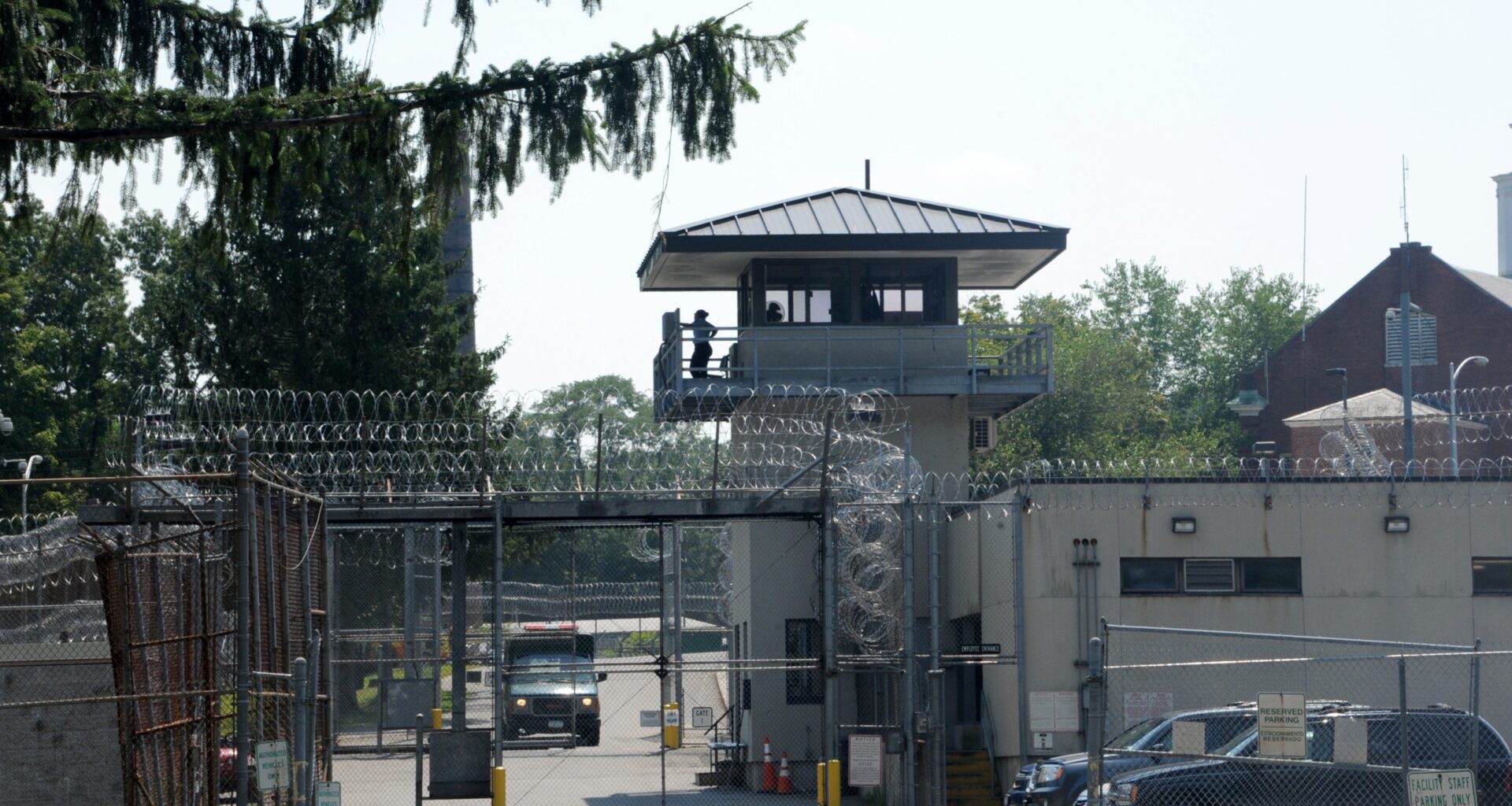
People incarcerated at one of the nation’s most dangerous women’s prisons are urging officials to remove a new security official with a decadeslong history of violence, a man they say has already run afoul of state and federal laws meant to protect vulnerable incarcerated populations from abuse.
Women inside the maximum security Bedford Hills Correctional Facility in Westchester County, New York, have for months raised the alarm over the facility’s new deputy superintendent of safety, Michael Blot, and the restrictive policies he has instated since his arrival last summer. And trans people incarcerated at the prison say they have faced targeted violence as the Trump administration aims to implement anti-trans policies in facilities nationwide.
“One of my opinions as a transgender woman, I feel we are not welcome,” one trans woman incarcerated at Bedford Hills told Prism over a prison messaging platform. “And here I feel they don’t want us in here, but because a law [protects] us, there is nothing they can do.” The incarcerated people Prism spoke to asked to be anonymous for fear of retaliation from prison officials.
Blot arrived at Bedford Hills in August after working at Sing Sing Correctional Facility, a maximum security men’s prison in the state that people inside refer to as “a war zone.” Advocates also say that Blot’s personal history of violence is of particular concern given the documented abuse at Bedford Hills. Court records going back more than 20 years accuse Blot of brutalizing people inside several New York state prisons, including one case in which Blot was accused of cutting an incarcerated person with a pocket knife.
Recent data from the U.S. Department of Justice (DOJ) shows that Bedford Hills is one of the most dangerous women’s prisons in the nation. According to results from the most recent National Inmate Survey released in December and based on anonymous surveys of incarcerated people, Bedford Hills has the highest rate of sexual victimization among women’s facilities across the U.S. Though the data cannot identify the unique facilities with highest rates of sexual violence, nearly 1 in 5 people surveyed at Bedford Hills said they experienced sexual violence while incarcerated at the facility.
One trans woman who has been incarcerated at Bedford for a number of years said “the arrival of Michael Blot has sent this facility into a spiraling tailspin and human rights crisis.”
“Blot’s record is problematic and concerning, and the policies he’s implementing are grave violations of [Department of Corrections and Community Supervision (DOCCS)] policy and procedure, state and federal law, and constitutional guarantees,” she added. “He has no business being a [deputy superintendent of] security, let alone at a women’s facility.”
One of the recent policy changes at the center of criticism are the severe restrictions on showering that many say are putting women in unsanitary and unsafe conditions.
Incarcerated women and advocates told Prism that Blot has severely curtailed shower times to limit the number of people who can use them and even created specific time slots. It’s also alleged that at least temporarily, he removed the ability for trans and intersex people to shower separately from the general population, as is required by federal law.
Nicole March, a DOCCS spokesperson, told Prism in a statement that “transgender individuals have always had, and continue to have, the option to request to shower separately. If requested, they will be afforded a separate shower within the established shower schedule.”
As part of a letter-writing campaign that began soon after Blot moved to Bedford Hills, F2L, an organization that serves queer and trans incarcerated people of color, called for him to be removed from the facility and for his policies to be reversed.
“These policies endanger the well-being, religious freedom, and legal rights of people incarcerated,” F2L wrote in a petition to Gov. Kathy Hochul and New York Attorney General Letitia James. “Michael Blot also has a documented 25-year history of violence and abuse toward people in New York prisons. These recently introduced restrictions are a continuation of Blot’s legacy of torture. We call on you to act immediately to ensure the safety, dignity, and legal protections of all people incarcerated at Bedford.”
Standards established under the Prison Rape Elimination Act (PREA), which became effective in 2012 after being passed nearly a decade earlier, mandate that trans and intersex people are given the ability to shower individually if they request. Far from preferential treatment, this requirement is due to the tremendously high rates of verbal, physical, and sexual violence that trans people experience behind bars. According to DOJ data, trans incarcerated people face significantly higher rates of sexual violence than others behind bars.But advocates argue that allowing trans people to shower individually or in small groups while the general population faces restrictions at Bedford Hills has created a de facto hierarchy that some say puts trans people at greater risk for retaliatory violence. According to allegations first reported by Them, women incarcerated at Bedford Hills have sometimes reported going without showers for days, or relying on buckets of hot water when shower slots are unavailable due to the severe restrictions. And while protections for trans people in this particular instance might be more established, advocates say they are broadly concerned for all incarcerated people at Bedford Hills.
“It’s about trans [people], but it’s about everyone at Bedford, and the only way trans people are going to get what we need is if we stand with all the women at Bedford,” said a member of F2L who asked to be anonymous for fear of retaliation from DOCCS.
After conditions at Bedford Hills made headlines, March, the DOCCS spokesperson, told Prism that the changes were made in light of “frequent fights and safety concerns.” March also confirmed that officers can use their discretion to allow more people to shower at a time, but one woman incarcerated at Bedford Hills said guards are inconsistent and “deliberately antagonistic with it, and try to rile people up over it.”
But even amid these changes and reported increases to shower access, a trans man said in a November message to F2L shared with Prism that he previously showered separately “for years,” but that changed under Blot.
“Now I am forced to [be] in with the women. I am a Muslim man who should not be subjected to this. I’ve grieved it but it hasn’t been answered,” he said.
Alongside shower restrictions, advocates say that indoor recreation time has also effectively been eliminated.
An operating manual for Bedford Hills reviewed by Prism explicitly states that indoor recreation has been paused at the facility. While outdoor recreation is not, the pause forces people to go outside in frigid temperatures as a break from being in their cells. For those who don’t want to go out—or cannot, in the case of elderly or medically vulnerable people—the policy forces them into isolation. Multiple people incarcerated at Bedford Hills say that only certain housing units are subject to this restriction. Dormitory units, for example, are subject to far less restriction, they say.
Incarcerated people and legal advocates alike argue that the restriction on indoor recreation also flouts the state law that bars extended solitary confinement, known as the Humane Alternatives to Long-Term (HALT) Solitary Confinement Act.
The act, signed into law in March 2021, prohibits prison officials from placing people in solitary confinement for longer than 15 consecutive days, or more than 20 days over a 60-day period, except in very limited situations. But legal advocates argue that since the act was passed, DOCCS officials continue to wantonly flout and undermine the law, despite numerous lawsuits and a court order.
And even in other states with similar prohibitions on extended solitary confinement, trans people have been forced into isolation under the guise of safety or due to their own fear.
The HALT Act was also central to last year’s state-wide prison guard strike, which saw thousands of National Guard troops stationed in dozens of prisons to take the place of workers who walked off the job. Guards alleged that the HALT Act prevents them from using solitary at their discretion for safety or discipline to prevent violence—despite overwhelming evidence of the disastrous impacts solitary confinement has on mental health.
“This is all about the safety of the folks at Bedford, and you’re not seeing violence if now every single person is experiencing a different type of violence than they did before,” the F2L advocate said.
The prison guard strike, which violated New York state law regarding the ability of public employees to strike, came just two months after prison guards at Marcy Correctional Facility beat 43-year-old Robert Brooks to death while he was handcuffed to a bed in December 2024.
In response to questions about indoor recreation restrictions, March said many facilities across the state “continue to face significant and ongoing staffing and operational limitations” due to the strike.
“In accordance with DOCCS Commissioner [Daniel] Martuscello’s guidance, the Department remains committed to our Recruit, Recover, and Rebuild Initiative following the illegal job action,” March said. “As such, facilities have been resuming programming as staffing levels permit toward the goal of full resumption of pre-job action programming, as well as reopening additional family reunion programs and expanding visitation days. Also, as staffing allows, facilities have been able to expand the out-of-cell time for meals, recreation, and religious services.”
The changes at the women’s prison occurred as the Trump administration began efforts to roll back protections for trans people in federal and state facilities across the country.
In December, the DOJ revealed in a private memo that the Trump administration plans to severely roll back protections for trans and intersex incarcerated people in federal, state, and local prisons, jails, and youth detention facilities.
According to the memo, the administration is taking specific aim at standards under PREA that allow trans people to shower individually, as well as rules regarding how trans and intersex people are screened for their risk of sexual abuse and how facilities use that information to determine where trans and intersex people are housed in prison.
The proposed changes would affect all facilities that are subject to PREA standards, including adult prisons and jails, lockups, community confinement facilities such as halfway houses, and juvenile facilities that are operated by the DOJ, state, or local governments or by corporate or nonprofit organizations.
The memo targeted PREA protections that the DOJ said don’t comport with a provision of President Donald Trump’s day one salvo against trans people that called for trans women to be housed in men’s facilities and barred the DOJ from providing gender-affirming care to people inside.
A federal judge in November blocked the DOJ from withholding gender-affirming care through an injunction that lasts until March. The ruling was part of a class-action suit brought against the Trump administration by the American Civil Liberties Union on behalf of trans people behind bars.
Alongside these potentially sweeping changes to protections for incarcerated trans people, the DOJ also in December released long-awaited reports about sexual violence in prisons and jails, but omitted data on transgender incarcerated people. The two reports are based off the same data from the National Inmate Survey that cited Bedford Hills as the women’s facility with the highest number of sexual violence reports in the nation.
In light of the issues now emerging under Blot’s leadership, F2L members have repeatedly called on state officials to step in to remedy the problems at Bedford Hills. But F2L members say they’ve been stonewalled.
According to a video posted to F2L’s Instagram page, attendees at a January town hall discussion pressed Martuscello, the DOCCS commissioner, on the conditions at Bedford Hills. In turn, they were threatened with security and police before the commissioner eventually left the event.
March contends that Martuscello was merely talking to event organizers after being interrupted at the roundtable.
“For safety and order, organizers temporarily suspended the event and asked to speak to the Commissioner in private while the disruption was addressed,” March said. “The roundtable proceeded as planned, which included thoughtful discussion focused on Bedford Hills Correctional Facility.”
According to the F2L member, the issues at the event paint a perfect picture of what New York prison officials really prioritize in their facilities: not safety, but severe control by officials and silence from outside advocates.
Editorial Team:
Tina Vasquez, Lead Editor
Lara Witt, Top Editor
Rashmee Kumar, Copy Editor
Related