
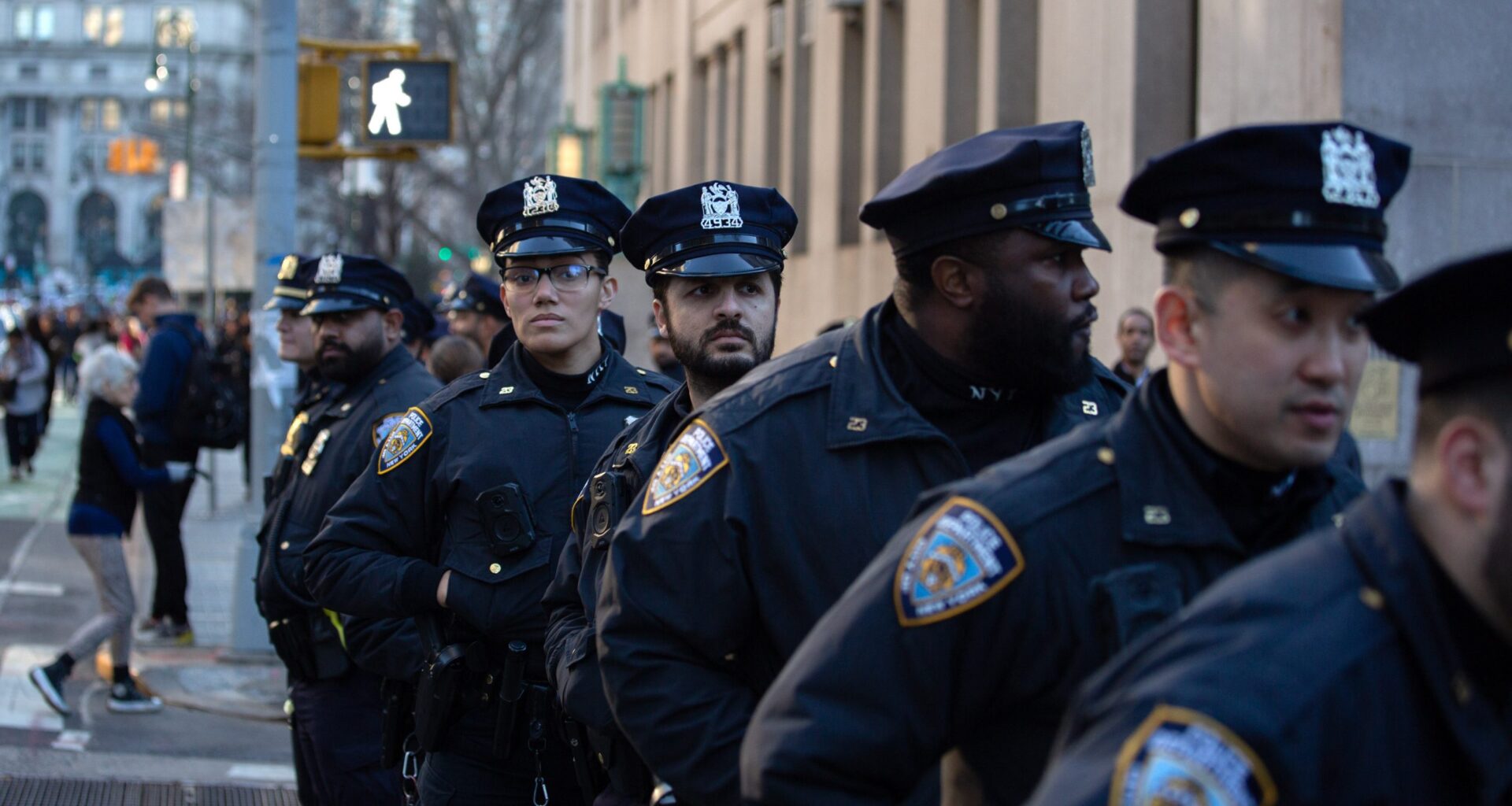
More than a decade after a federal judge ruled that the New York Police Department’s stop-and-frisk practices violated the Constitution, the agency is still not following the law according to a new report by a court-appointed monitor.
“This is not the year-end report that I had hoped to submit,” wrote the monitor, Mylan Denerstein, who said the findings were a “wake-up call.”
The report is the latest to document the NYPD’s lack of compliance with court-ordered reforms stemming from the landmark 2013 Floyd v. City of New York ruling, which found the department’s practices violated the constitutional rights of Black and Latino residents.
After 12 years of oversight, the NYPD has still not reached “substantial compliance” with the court’s orders, the monitor concluded, pointing to three persistent failures: unlawful self-initiated stops by officers, chronic underreporting of encounters, and a lack of meaningful accountability among supervisors.
“Supervisors routinely approve stops, frisks, and searches as lawful even when they are not,” Denerstein wrote in the report filed last week with federal Judge Analisa Torres. “The NYPD must build a system where supervisors correct officers who are conducting illegal stops, frisks, and searches and address officers who repeatedly violate the law.”
The report comes as many top business leaders and local elected officials have urged Mayor Zohran Mamdani to keep NYPD Commissioner Jessica Tisch in place.
“The NYPD is committed to upholding the constitutional rights of everyone we encounter, no matter the circumstance,” the department told THE CITY via email on Wednesday. “We appreciate the monitor’s report and remain focused on achieving compliance.”
Police leaders, including Tisch, have repeatedly told the court they are committed to following the law while at times using aggressive tactics to bring crime down. They have invested years of training and policy changes since the original 2013 ruling, department lawyers have repeatedly argued in court.
Still, the latest report, first reported on by amNewYork, highlights a disconnect that reform advocates have complained about for years: the NYPD often believes its officers are doing nothing wrong when they randomly stop-and-frisk minorities.
In the first half of 2025, NYPD supervisors deemed 99% of stops lawful, according to the report. But the monitor’s audits found 11% were unconstitutional.
That gap, the report suggests, is not a paperwork problem.
Supervisors “routinely approve stops, frisks, and searches as lawful even when they are not,” the monitor wrote, urging the department to move beyond training and start disciplining officers and supervisors who repeatedly violate legal standards.
There is “no excuse,” the report added, for the same failures year after year.
The department has rolled out a series of initiatives meant to prove it is serious about reform, including ComplianceStat. That’s modeled after the NYPD’s famous CompStat crime-tracking system. The NYPD has also launched an Early Intervention Program designed to identify officers with problematic behavior, according to the report.
The monitor acknowledged those programs show promise on paper but said they have so far fallen short.
One example detailed in the report involved Brooklyn South patrol commands that were repeatedly called back to ComplianceStat meetings after auditors found officers — many assigned to specialized anti-crime units — failing to document stops captured on body-camera video.
When commanders finally imposed meaningful consequences, such as removing officers from units, issuing discipline and restructuring teams, compliance improved dramatically.
But the gains didn’t last.
By early 2026, some of the same problems resurfaced, with officers returned to specialized teams and misconduct patterns reappearing, according to the report.
The lesson, the monitor concluded, is straightforward: reform works when top brass demands accountability and collapses when it doesn’t.
‘The Residents of NYC Deserve No Less’
The report also detailed how commanders sometimes view officers who generate complaints or questionable stops.
In some cases, supervisors characterized problematic officers as simply being an “active cop,” effectively excusing behavior that should trigger intervention, the monitor said.
Even officers with multiple complaints from the Civilian Complaint Review Board were not consistently flagged early in the system, the monitor found.
That failure undercuts one of the core goals of reform: preventing misconduct before it escalates.
The report also highlights a long-running concern at the heart of the stop-and-frisk controversy — encounters initiated solely based on an officer’s own observations are far more likely to violate the law.
Nearly half of all reported stops fall into that category, the monitor found, and compliance rates are dramatically lower than when officers respond to 911 calls or information from witnesses.
In the first half of 2025, self-initiated stops were deemed lawful about 79% of the time, compared with roughly 97% of stops stemming from radio runs. The gap widened further for frisks and searches, where self-initiated encounters were lawful just 64% and 53% of the time.
The problem is especially pronounced in specialized NYPD units, including Neighborhood Safety Teams and similar anti-crime squads, where most encounters are self-initiated. Audits found only 75% of stops by Neighborhood Safety Team officers were lawful, and compliance was even lower for some other units.
Yet supervisors reviewing those same encounters concluded only about 1% were unconstitutional.
The monitor warned the department is unlikely to meet court-ordered compliance targets for those units, despite leadership restructuring specialized teams late last year to eliminate Public Safety Teams and shift officers into other assignments.
The report also found that officers continue to fail to document a significant share of stops.
Audits in 2025 showed that about 71% of stops reviewed were properly documented, an improvement from roughly 61% the year before, but still far below acceptable levels, the monitor said. Nearly one-third of stops identified through audits were not recorded even when documentation was legally required.
When stops aren’t documented, unlawful encounters are harder to detect, supervisors cannot identify patterns of misconduct, and public trust erodes, the report noted.
Efforts to overhaul the department’s disciplinary system have also stalled.
A working group formed in 2025 to implement recommendations from an outside discipline review — led by former judge James Yates — initially made progress toward a series of reforms.
But negotiations broke down late last year after the city signaled it would only agree to a small number of the proposals, prompting frustration from the monitor and other parties.
The monitor said she hopes to resume negotiations with the city and the NYPD in 2026, emphasizing that meaningful discipline remains a critical link to changing officer behavior.
Without consistent discipline for rank-and-file cops and supervisors, the NYPD may never reach compliance, the report warned, adding that oversight was never meant to be permanent.
“The residents of NYC deserve no less,” the monitor wrote, “and there should not be a permanent monitor.”
Related