
Yesterday, New York state attorney general Letitia James announced that the state of New York had opened a lawsuit against Valve, accusing the Steam developer of violating gambling laws by “letting children and adults illegally gamble” via “addictive and harmful” loot box mechanics.
Contained within New York’s 52-page court filing detailing its investigation into Valve’s monetization strategies and the alleged dangers they pose to children and adults alike, the state describes one particularly interesting avenue of its inquiry. Spotted by Aftermath‘s Riley MacLeod on Bluesky, the state of New York has been dabbling in some Counter-Strike skin trading of its own. For official purposes, of course.

(Image credit: Valve)
In its allegations, New York explains how Valve hasn’t just developed a series of loot box-style monetization methods. It’s also developed its own digital exchange with the Steam Marketplace, where users can sell the virtual items and cosmetics they receive from Valve’s chance-based microtransactions—demonstrating that those virtual items have value, as do the winnings of traditional forms of gambling.
Related articles
As New York notes, those sales result in the distribution of Steam Wallet funds, which “have the equivalent purchasing power on the Steam platform as cash.” Crucially, however, the ability to use Steam Wallet funds for purchasing Valve’s physical hardware, like the Steam Deck, provides users with a method through which they “can readily convert virtual items to cash by purchasing Steam hardware and then reselling it off platform.”
And just to be sure, the New York Office of the Attorney General dipped into the Steam Marketplace to do some skin flipping. As written on page 21 of the court filing:
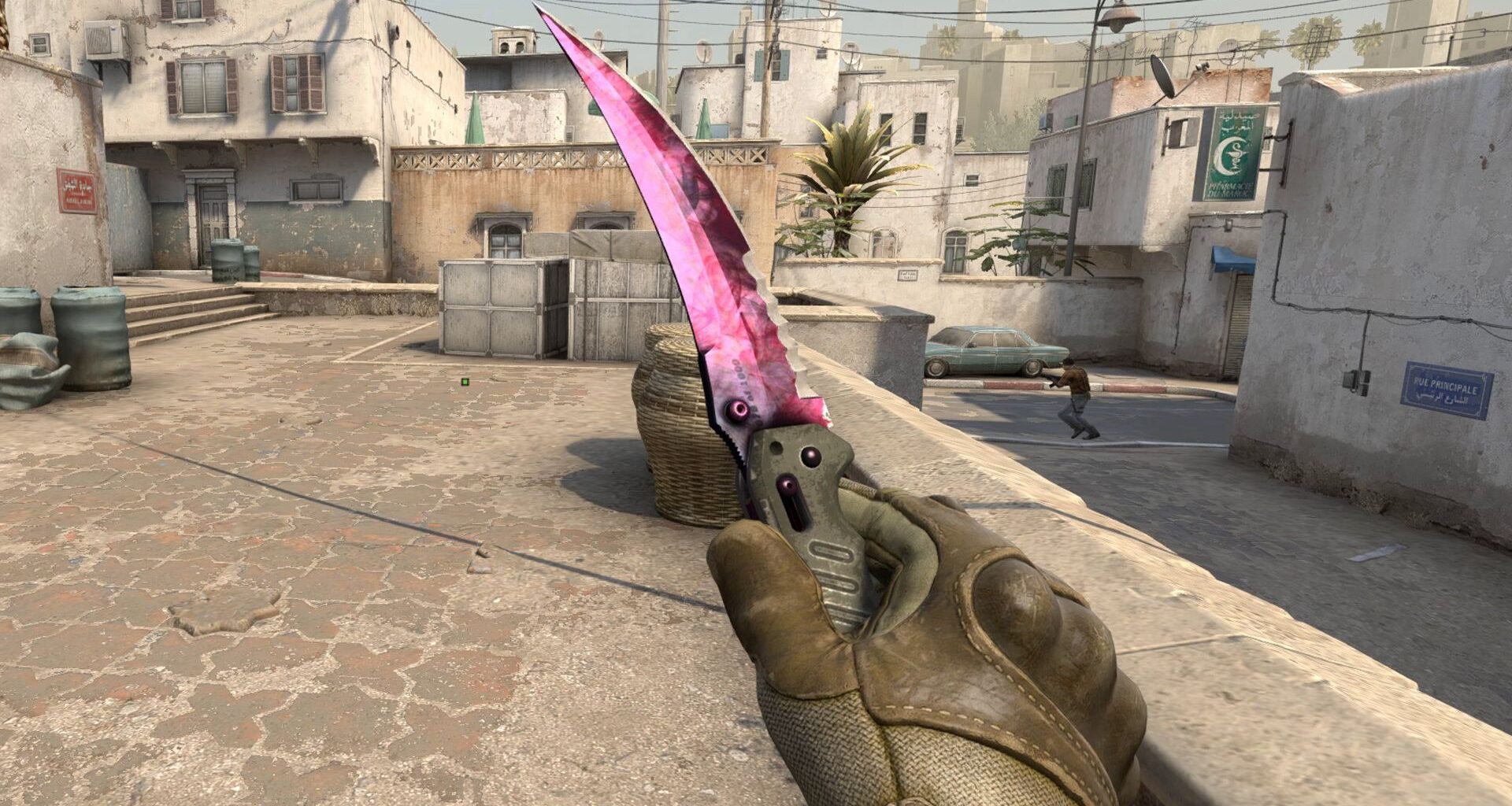
“Indeed, an OAG investigator did so, converting a Counter-Strike skin called a ‘Stiletto Knife’ to $180 by: (a) selling the skin on the Steam Community Market for Steam Wallet funds, (b) using the Steam Wallet funds received from the sale of the skin to purchase a Steam Deck, and (c) selling the Steam Deck for $180 in cash at a store that buys and sells electronics.”

(Image credit: Valve)
Now, you might be wondering: If the state of New York sold a Counter-Strike knife valuable enough to buy a Steam Deck that costs $549 at minimum, didn’t it take a big loss if it only got $180 for reselling the hardware? And the answer is yes, which would be a problem if you’d bought that knife with your own money.
If you used someone else’s money, that’s another story. If you, let’s say, purchased a valuable knife skin using a stolen credit card or the Steam Wallet funds on a stolen account, Valve’s provided you with a way to launder stolen money.
While New York’s lawsuit is primarily concerned with its gambling allegations, it also demonstrates the hazards generated by digital marketplaces where real currency is exchanged—particularly ones like Valve’s, which provides an avenue for converting virtual commodities into real-world goods and cash. By engaging with Valve’s loot box mechanics, users enter into the proximity of compounding criminal incentives, as we’ve seen in previous money-laundering scandals involving Valve cosmetics.
But hey, if you’re embedded in the Counter-Strike skin economy, you’re at least now also in proximity to New York’s OAG investigators. Maybe that’s reassuring?