
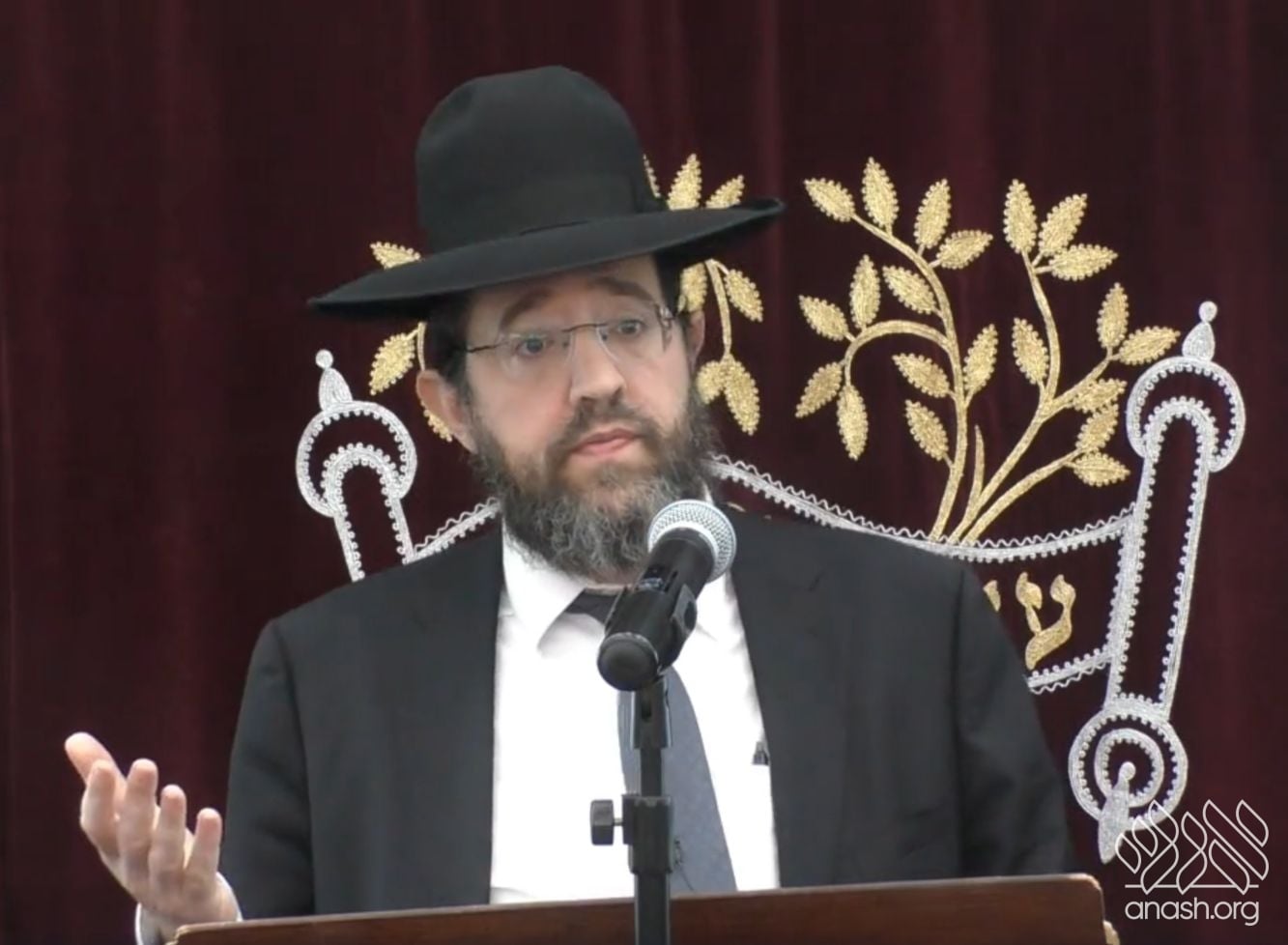
In a recent shiur, Rabbi Daniel Osher Kleinman, Rov of K’hal Nachlas Dovid in Brooklyn and author of many seforim, revealed how, beyond the many halachic questions, the “Brooklyn Eruv” is faulty and fraudulent.
Many leading poskim, including Rav Moshe Feinstein, as well as R’ Zalman Shimon Dworkin and other Lubavitch rabbonim, held that an eruv in Brooklyn could not possibly be established since the area is a reshus harabbim d’oraisa. Yet, Rabbi Kleinman acknowledged, there were rabbonim who held it was possible. Regardless, the “Brooklyn Eruv” is problematic according to all.
Unlike other places, where the eruv is checked weekly under competent rabbinic supervision, he said, Brooklyn has no consistent oversight by rabbonim. Rabbi Kleinman recounted firsthand investigations showing that many sections of the Brooklyn eruv were discovered to be broken and fundamentally flawed.
The “Brooklyn Eruv” relies in many places on silicone caulk to form tzuras hapesach, often connecting to a kaneh al gabeihem with an imaginary gud asik, but in numerous locations, ledges, protrusions, or other obstacles block the proper connection entirely.
Other sections depend on natural features, such as beaches that slope gradually into the water, which do not meet halachic requirements for depth, or on permanent infrastructure whose stability cannot be guaranteed.
Wires spanning poles across streets sometimes leave sidewalks completely uncovered. Rabbi Kleinman documented “around forty-five different places which were questionable at best and pasul l’halacha at worst,” demonstrating that large portions of the eruv fail to meet the standards necessary for reliable Shabbos observance.
When one of the rabbonim associated with the “Brooklyn Eruv” was presented with photographic evidence, the rov admitted, “I told them for this reason that I can’t be involved anymore.” Yet, for some reason, his position was not made known.
Rabbi Kleinman stressed that halacha requires chezkas kashrus – a reliable continuity that people can trust – but in Brooklyn, “the goalposts keep moving,” and even those tasked with oversight often don’t know the true borders of the eruv.
“Something that the story keeps changing … you wouldn’t invest with such a person. And that’s the bottom line with the eruv,” he said, while calling out those sending weekly emails declaring the eruv kosher despite its fundamentally flawed infrastructure, amounting to misrepresentation or outright fraud.
WATCH