
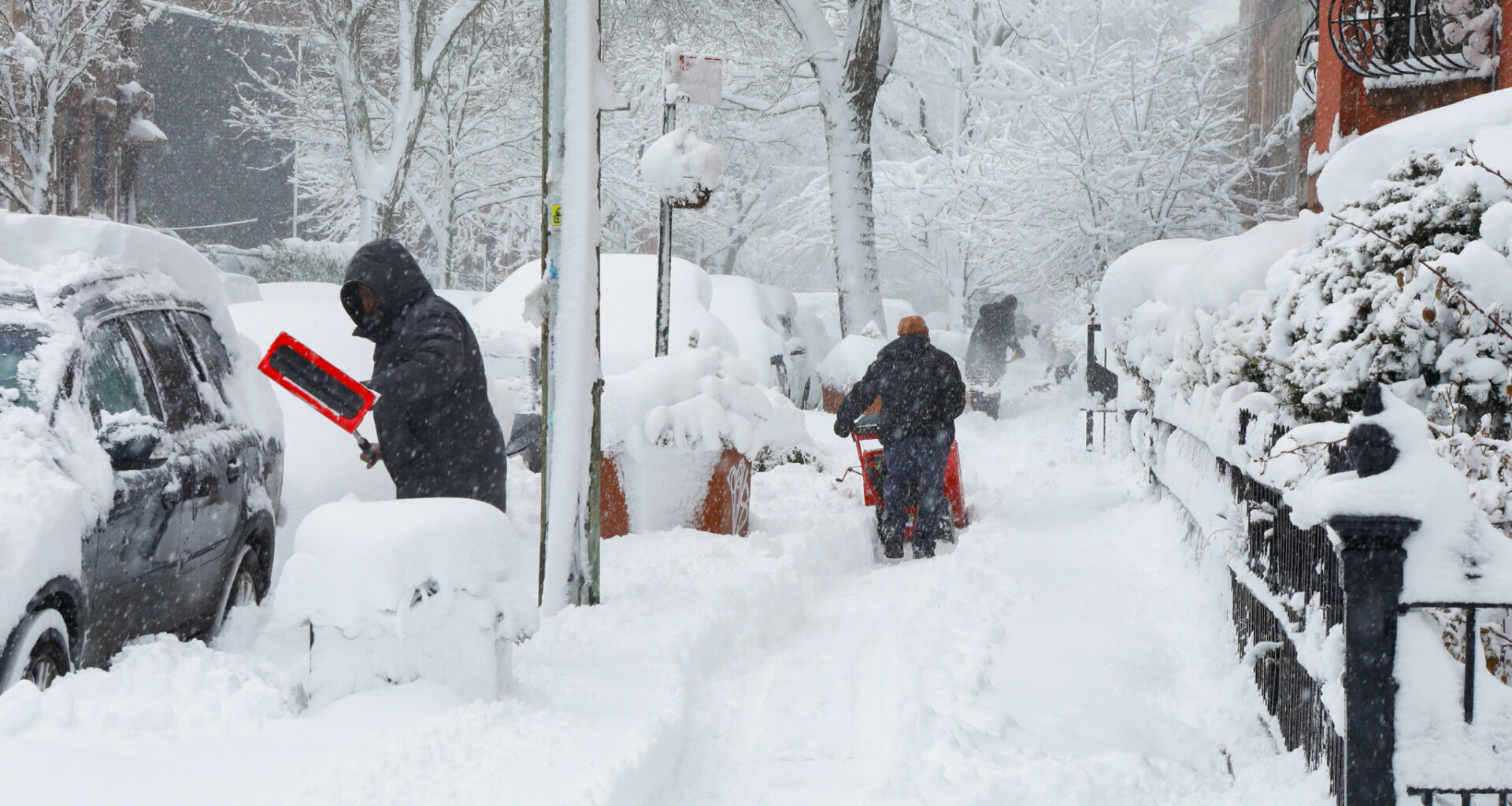
Property owners who failed to clear snowy sidewalks after two major winter storms in a month faced a blizzard of criticism Friday from people with disabilities who were then marooned at home.
At a City Council committee hearing, New Yorkers with limited mobility pointed to snow-clearing lapses from neighbors and the city in creating enough space for wheelchairs on sidewalks and at curb cuts, bus stops and bus shelters.
“It is so stressful to be stuck at home and not know when we will freely and safely be able to go where we need to go,” said Jean Ryan, a motorized wheelchair user. “We have spent weeks being stuck at home, like COVID time without the disease.”
Ryan, the head of Disabled in Action of Metropolitan New York, said she only was able to testify in person after a neighbor in Bay Ridge cleared a path on Thursday.
“Thank you to whomever shoveled three days after the storm instead of four hours,” Ryan said.
Snowy obstacles shrunk how some with disabilities get around following a January winter storm that was followed by a bitterly cold, weeks-long stretch of subfreezing temperatures. Then came the city’s first blizzard in a decade, which dumped more than 20 inches of snow on the five boroughs.
Originally scheduled for Feb. 23, the hearing was initially set to focus on pedestrian and transit accessibility during the January storm, which hit the city with more than 10 inches of snow and led to 19 outdoors deaths. The blizzard pushed it to Friday, when temperatures hit 40 degrees, finally speeding a melt.
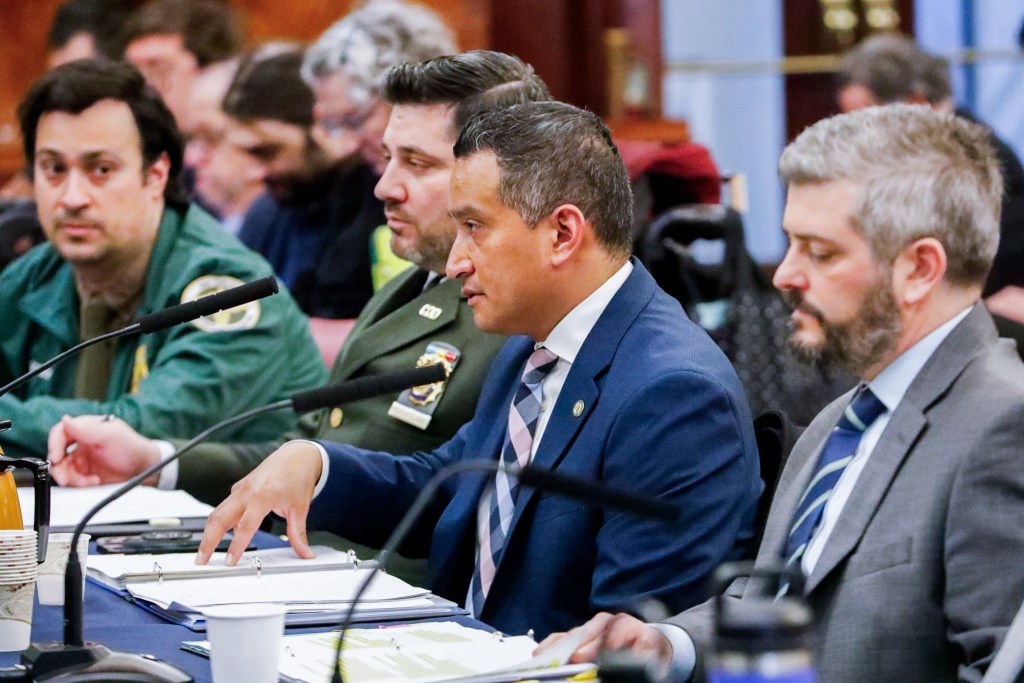 Acting Sanitation Commissioner Javier Lojan testifies at a Council hearing about DSNY efforts to clear snow after two winter storms walloped the city, Feb. 27, 2026. Credit: Alex Krales/THE CITY
But some people with disabilities still opted to testify remotely, citing continued uncertainty over just how far they could travel before encountering lingering snowy obstacles that are supposed to be cleared by property owners.
Eman Rimawi-Doster, a double amputee who uses a walker to get around, testified remotely that she “missed everything this week” as a result of being unable to leave her Harlem home.
“Getting to work isn’t just about transportation or workplace accommodations,” said Rimawi-Doster, a senior organizer for disability justice with New York Lawyers for the Public Interest. “It’s also about making sure streets, sidewalks and curb cuts are cleared for us in every borough.”
Councilmember Shahana Hanif (D-Brooklyn), who chairs the disability committee, said that New Yorkers with limited mobility face “persistent barriers” that only worsened during the dual winter storms.
“For many New Yorkers with disabilities, older adults and families with strollers, the question is not how the streets were plowed,” she said. “It was whether they could leave their homes at all.”
While some advocates praised City Hall for clearer pre-blizzard messaging emphasizing that property owners must clear areas near bus stops and carve four-foot-wide sidewalk paths big enough for wheelchairs, Councilmember Gail Brewer (D-Manhattan) said the message has clearly not sunk in enough with some.
She cited a chain restaurant near her Upper West Side district office that she said “didn’t do anything” to clear out space for pedestrians.
“People were stumbling over their mess and then the crosswalk was a mess,” Brewer said.
Javier Lojan, the acting Department of Sanitation commissioner, said more than 4,500 summonses were issued to property owners for not clearing sidewalks, fire hydrants, unsheltered bus stops and crosswalks within hours of the end of the January storm.
Sanitation has so far issued more than 600 summonses for the latest winter blast, when the department pressed 2,600 workers, 700 salt-spreaders, 2,200 plows and 1,500 emergency snow shovelers into service.
“Together, these two storms demonstrated what we already knew — that no two storms are alike,” Lojan said. “And that our response must be tailored to certain conditions.”
He added that the city would prefer not to issue violations for property owners that don’t hold up their snow-clearing requirements.
“That might be necessary in certain situations where there’s certain chronic property owners [who are] unresponsive,” Lojan said.
But Jonathan Hannon, whose mobility is limited by genetic disorders known as Ehlers-Danlos syndromes, countered that the city needs to do more enforcement.
“The Department of Sanitation needs to do more for people with disabilities … it’s just not acceptable,” he said.
Joseph Rappaport, executive director of Brooklyn Center for Independence of the Disabled, said there is a “disconnect” on who clears what.
“You can point fingers at the property owners,” he said. “But even if the property owner does their job, the Department of Sanitation often does not.”
Related