
New York City lawmakers are pushing to ban private businesses from using biometric tools like voice and facial recognition software to track the public.
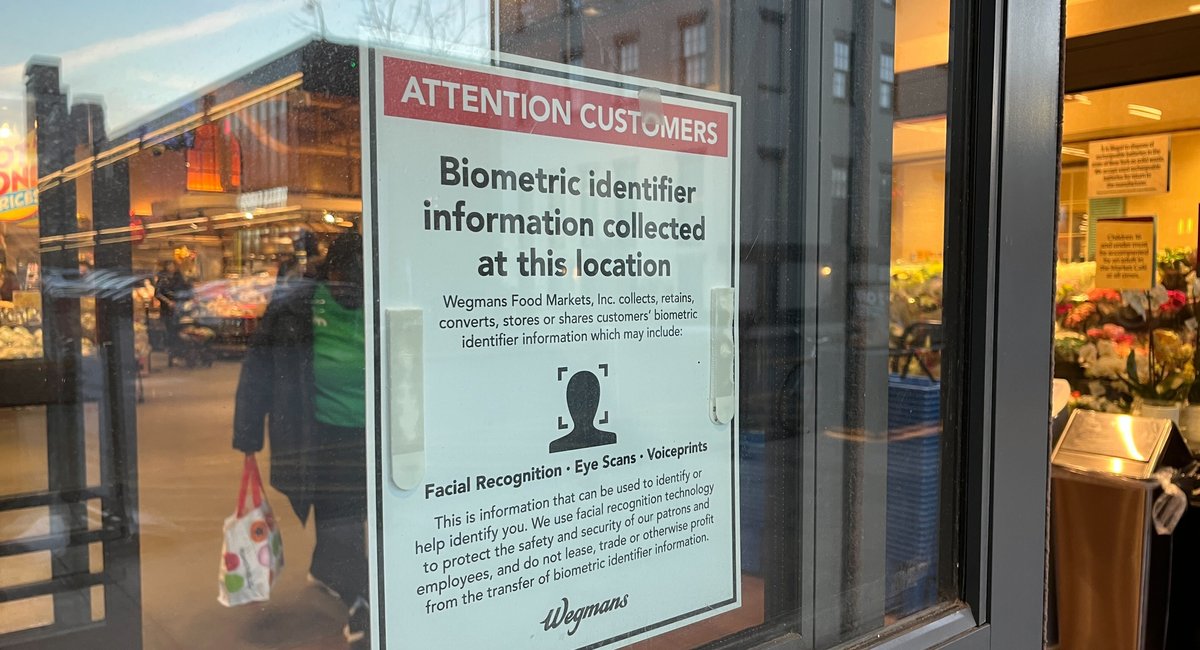
The City Council on Monday held a hearing on proposed legislation that seeks to rein in the type of “Big Brother” surveillance that has grown more common in apartment buildings and grocery stores like Macy’s and Wegmans, a Rochester-based chain with locations in Brooklyn and Manhattan that began storing biometric data of shoppers earlier this year.
Proponents of the surveillance technology argue it acts as a shield against retail theft, but lawmakers have said that New Yorkers are being forced to give up features of their identity just to buy groceries.
Councilmember Shahana Hanif, who’s sponsoring legislation to prohibit the technology in places of “public accommodation” like grocery stories and concert venues.
“The urgency comes from earlier this year when we learned that Wegmans is now using biometric technology,” Hanif said during Monday’s hearing. ”A lot of us, including myself, shop at Wegmans.”
New York City already requires businesses to post signs notifying customers when they collect biometric data, but the proposed legislation would make it against the rules entirely.
“ Many of us know the feeling of discovering our credit card information has been stolen. It’s invasive and frightening, but you can cancel a credit card and get a new one. You cannot cancel your face,” Hanif said. “You cannot replace your iris.”
Jake Parker, a spokesperson for the Security Industry Association that advocates for biometric surveillance, argued during the hearing that the Council’s proposed legislation goes too far.
“This government overreach would intrude into people’s daily lives by eliminating their choice to use more secure and convenient services and dictating to New Yorkers how they can and can’t protect themselves in their property, making them less safe,” he said.
Wegmans has defended its use of biometric data collection, saying that it only uses the technology at stores with a higher risk for theft. The company’s only two locations in New York City are among those stores.
The proposed legislation would also make it against the rules for businesses to sell, lease or trade biometric data for profit and require written consent for those who wish to share their data, such as in stores where palm prints would be accepted for payment.