
The U.S. Supreme Court blocked a lower court order that would have forced New York to redraw Staten Island’s congressional district ahead of this year’s midterm elections.
The court’s six conservative justices voted to grant the stay. Justice Samuel Alito wrote separately to explain his reasoning, saying the lower court’s order amounted to “unadorned racial discrimination.” The other justices in the majority did not join his opinion.
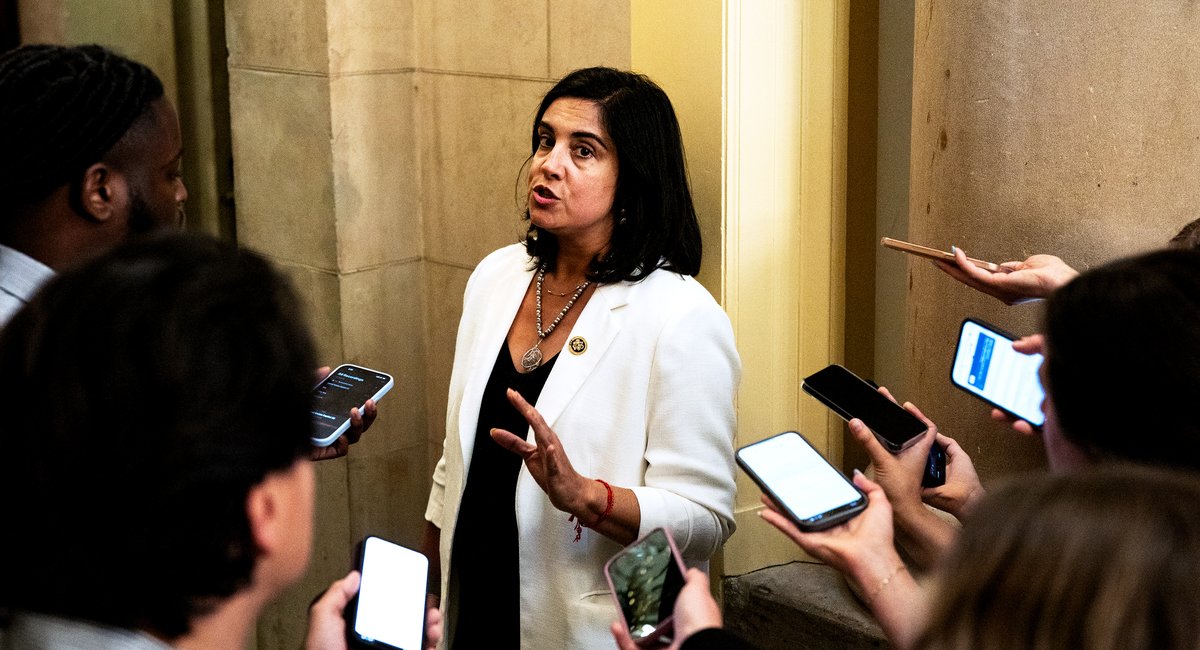
A lower court in New York found in January that the current lines of the 11th District disenfranchise Black and Hispanic voters there by diluting their votes, particularly on Staten Island’s north shore, and ordered a state panel to redraw the district lines. The current district includes all of Staten Island and a portion of south Brooklyn and is represented by Rep. Nicole Malliotakis, the only Republican in New York City’s U.S. House delegation.
Malliotakis and Republican officials appealed to the state’s two higher courts and sought a stay to prevent the redistricting commission from redrawing district lines before the November midterms. When the state courts did not intervene, Republicans turned to the U.S. Supreme Court to stop any changes to the current map.
The decision effectively ends New York’s only mid-decade redistricting battle and preserves the current map for the 2026 midterm elections, delivering a win for Republicans in a national fight for majority control of the U.S. House of Representatives.
“The plaintiffs in this case attempted to manipulate our state’s courts to use race as a weapon to rig our elections,” Malliotakis said in a statement heralding the majority decision. “That was wrong and, as demonstrated by today’s ruling, clearly unconstitutional.”
An attorney for the plaintiffs has not yet responded to a request for comment.
Writing for the three liberal justices, Justice Sonia Sotomayor slammed Alito’s brief opinion, arguing that it was an example of federal judicial overreach.
“The Court’s 101-word unexplained order can be summarized in just 7: ‘Rules for thee, but not for me,’” Sotomayor wrote.
She wrote that the decision ignored “every limit on the federal courts’ authority,” since the high court was deciding before New York State’s Court of Appeals had weighed in.
Republicans had appealed the case to the state’s two higher courts simultaneously, but the Court of Appeals had only weighed in to refer the case back to the state’s mid-level court before it could issue a ruling.
“Because that order violates basic principles of jurisdiction, federalism, and equity, I respectfully dissent,” Sotomayor wrote.