

Matti Siemiatycki, Director of Infrastructure at U of T, weighs in on a growing debate over Toronto implementing a program to pay residents for shoveling snow.
Days after the latest snowfall blanketed Toronto, the plows have moved on and the dust is starting to settle.
But a new policy debate is picking up.
Online, some residents are questioning whether Toronto should follow New York City’s lead and pay residents by the hour to help clear snow after major storms.
In New York, where the region recorded as much as 48 centimetres last week, officials are recruiting temporary “Emergency Snow Shovellers” to clear bus stops, crosswalks and fire hydrants. Pay starts at US$19.14 an hour in most storms and has risen to $30 an hour during blizzard conditions. After 40 hours are worked, officials say residents can earn $45 an hour.
Work alongside New York City’s Strongest as we get through this historic storm.
Emergency shoveling pay is now $30/hour. Walk into any sanitation garage to sign up TODAY BY 8PM or TOMORROW from 9AM to 8PM.
Let’s get NYC back on its feet— together.https://t.co/IMCewKjLMU pic.twitter.com/pySDIT1mbQ
— Mayor Zohran Kwame Mamdani (@NYCMayor) February 23, 2026
The program recently drew more than 1,400 new sign-ups in a single day, according to Mayor Zoran Mamdani.
Meanwhile in Toronto, where last winter’s snow response was labelled a “systemic failure” by Mayor Olivia Chow, experts tell CTV News the idea is less about the number of shovels on the ground, and more about whether the city is willing to invest more to keep up with disruptive winters.
A city always under pressure
Toronto has faced intense criticism over snow removal not just this season, but especially last winter.
When Chow criticized last year’s response, she cited poor contractor performance and frequently broken equipment.
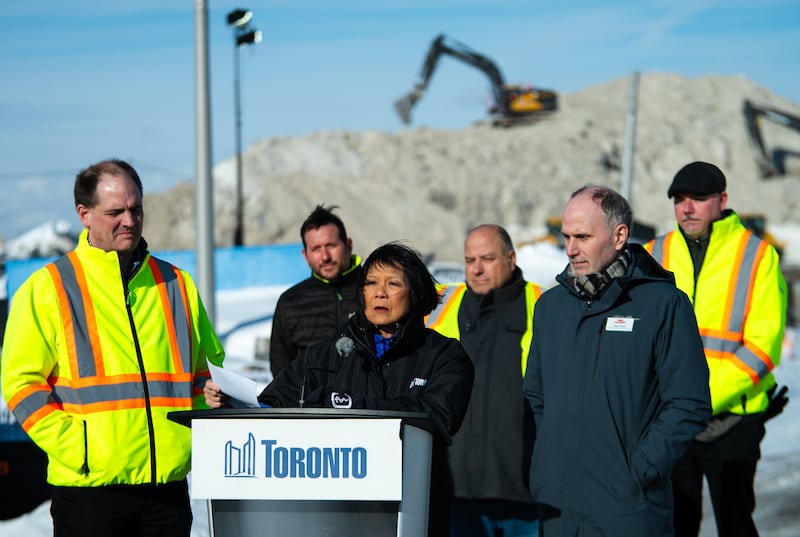 Olivia Chow Mayor Olivia Chow gives a snow removal update at one of Toronto’s snow dump sites in North York, Ont., on Wednesday, January 28, 2026. THE CANADIAN PRESS/Laura Proctor
However, last month, city officials did note considerable improvement this time around compared to previous years. Toronto has expanded storage capacity, added more melters and deployed surge staffing. A sixth snow storage site was also secured.
This winter, more than 433,000 tonnes of snow have been removed — about 70 per cent more than at the same point last year, according to the mayor’s office.
In addition, more than 43,000 snow removal requests have come through 311 since January, and the city says that 90 per cent have been completed.
Still, at a news conference just a few weeks ago, Toronto’s City Manager Paul Johnson acknowledged only 66 to 75 per cent of sidewalk machines are operational on a given day due to reliability issues.
An independent review last November suggested Toronto should spend up to $130 million more to improve snow-clearing operations. But at the time, Johnson noted there was no budget for that level of investment.
‘An innovative idea’ to hire residents
Matti Siemiatycki, director of the Infrastructure Institute at the University of Toronto, said the New York concept has merit in principle.
“In principle, I like the concept of enlisting residents to get after it… when there’s snow, it takes a village to clear it, and let’s call on people who are willing and able to help out,” he explained during an interview. “I do think that’s an innovative idea.”
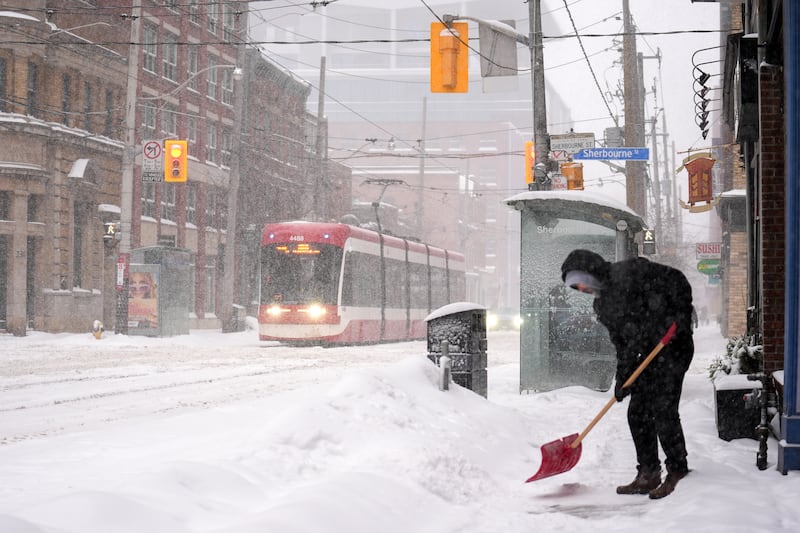 Winter storm in Toronto A man shovels snow from the sidewalk during snowstorm in Toronto, Ontario, Canada on January 25, 2026. (Mert Alper Dervis/Anadolu via Getty Images)
But he warned the conversation quickly moves beyond volunteer spirit.
“You start out talking about snow clearance, and before you know it, you’re into contracting and budgets, because part of the issue is that… we’re a city that’s bigger than Montreal, and yet we’re paying less annually for snow clearance. So, you get what you pay for,” he said.
He also raised operational concerns.
“It’s not entirely clear that having thousands of humans shovelling is more efficient than having machines.”
And in major storms, labour alone is not the bottleneck.
“At a certain point you can have all the shovelling you want, but if there’s nowhere to put the snow… it’s not a matter of having more boots on the ground — it’s requiring ways of getting rid of it.”
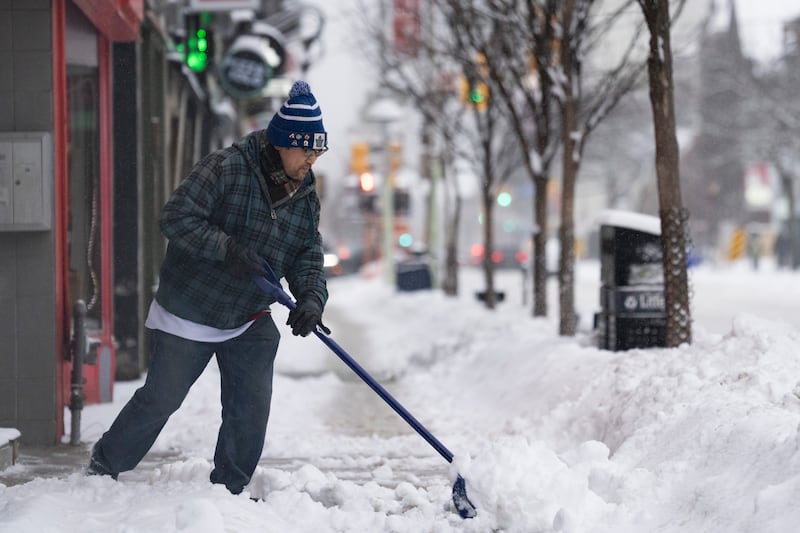 Shovelling snow Snow stopped falling across most of the Greater Toronto Area at around 8 a.m. with Environment Canada lifting its snowfall warning for Toronto about a half-hour later on Thursday. THE CANADIAN PRESS/Arlyn McAdorey
Still, he said the idea of hiring residents to help with snow clearing, could benefit the city to some degree.
“It signals a set of priorities and a willingness to experiment. In this day and age, when people are becoming frustrated and disenfranchised with government, that kind of activity can restore people’s idea that government is interested in solving the big problems that people face.”
Accountability over imitation
Few city officials have spoken out about the idea so far.
For his part, Coun. Brad Bradford has shared his thoughts online, suggesting Torontonians are already “sick” of doing the city’s job.
In an email to CTV News, he clarified he is not calling for Toronto to replicate New York’s model outright.
“I am not suggesting that Toronto adopt a paid resident-shovelling program,” he wrote.
But he said the public interest in it speaks volumes.
“Every time we have a major snowfall, my office is flooded with the same concerns. The City is failing at the basics,” he added. “The reason Torontonians are interested in the New York model is not because they are looking for a paycheque. They are looking for accountability.”
It should be noted the mayor’s office has not confirmed whether such a program is under consideration, saying operations are reviewed annually and adjusted as needed.
For now the snow may have stopped falling — but the broader debate over how Toronto recovers from the next storm is far from settled.