
“One of the biggest surprises for me in being on Broadway is that there are a lot of unhappy people there,” Tony winner Jonathan Groff writes in a foreword to this book co-written by Lindsay Mendez, his “Merrily We Roll Along” co-star and fellow Tony winner. “I think this is a reflection of what can happen when we finally get what we think we want.”
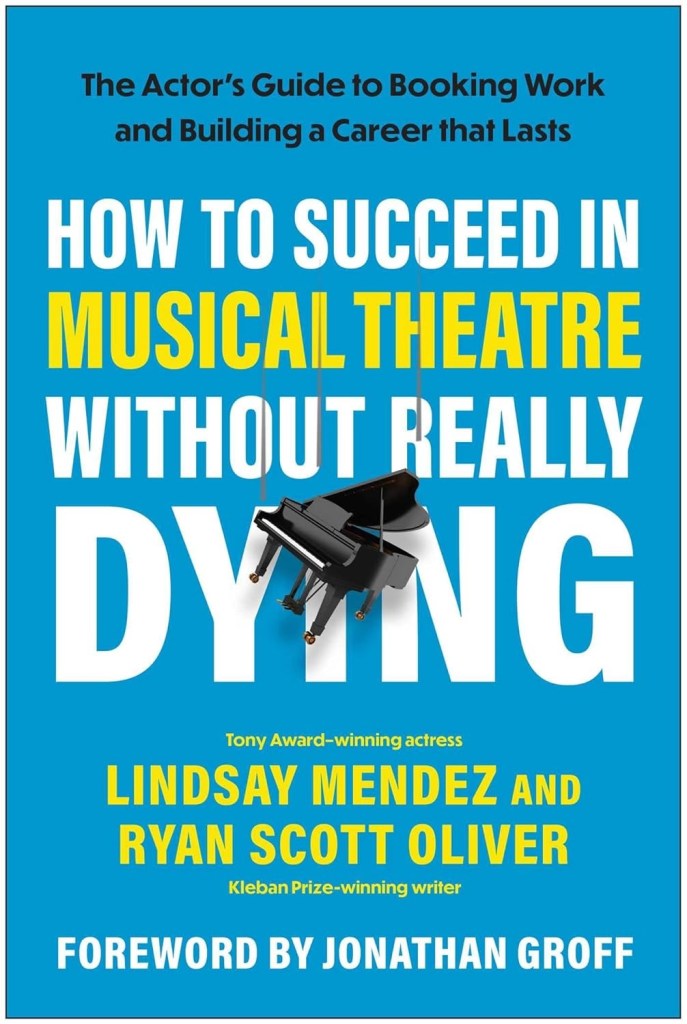
Groff acknowledges that people wanting a career in Broadway are exactly who would pick up a book entitled “How to Succeed in Musical Theatre Without Really Dying: The Actor’s Guide to Booking Work and Building a Career That Lasts” (BenBella Books, 432 pages) written by Mendez and musical theater composer Ryan Scott Oliver. If the title is unfortunate, the book is full of practical and specific advice, derived from the authors’ experiences in their own careers and in the training program they have run since 2012 called Actor Therapy.
As is clear from the start — the casual conversation that Mendez and Oliver recorded and transcribe as their introduction — the book is in part a pep talk for theater actors (not just in musical theater, and not just early-career, but also those who feel stalled or “totally lost.”) The authors don’t believe there is any “It factor”(unique talent or star quality) that determines a successful career in theater. Rather, what it takes, they say, is “expertise of the craft, industry savvy, business acumen, a collaborative mindset, tolerance of rejection, and, above all, perseverance.”
But it’s the mix of the inspirational with the nitty gritty that makes this book feel especially useful for the niche readership to which it’s geared. If there is one overarching theme in “How to Succeed…” it’s: Be specific. And they follow their own advice.
The authors begin with a step by step guide to help you “embrace” and define who you are, rather than allowing others to determine your “type,” helping you to figure out the four essential qualities of your “brand” — your voice (helping you wind up determining, for example, that you are a “dramatic mezzo-soprano with strong belt to C4″) and your look (including playable age, height, body shape, etc), but also the harder to define qualities of “energy” and “authenticity. ” Examples of energy include “character actors like Josh Gad, seductive comedians like Jane Krakowski, or dark-hearted villains like Patrick Page.” Authenticity (“aspects of your identity, history or lived experience that informs the stories you tell”) might include ethnicity, sexuality, disability, where you’re from, but also “less fixed aspects” that might be relevant for a specific role, such as gamer, or marathon runner.
They then give examples of “branding statements,” such as “a spunky neurodivergent queen from a loud, Greek-Jewish family. This 5’3 but mighty comedic actress has the fiercest of belts that exists in both the pop/rock and musical theatre worlds.” The authors comment extensively on this example – e.g. “Though she probably sings soprano, she omits it strategically to keep the focus on her strongest skill, which perfectly positions her for roles like Adelaide in Guys and Dolls” and a half dozen other specific roles.
The authors explain how to use the branding statement (on your website etc), and how to get feedback to refine it, but caution“It’s vital to avoid advice telling you what you should or shouldn’t be and ignore anyone who suggests that a core part of your identity isn’t ‘in’ right now. A brand is not a costume – it’s a proclamation.”
A point they make repeatedly and in various ways: Focus on what you do best, rather than how versatile you are, and eventually “you can begin to expand your reputation in any direction you wish.” Also: who you are (and thus what you will be hired to play) changes with time.
Near the end of this chapter, they illustrate the point that “characters are not brands” with an example from Mendez’s career. “Lindsay never considered Elphaba a likely part of her career trajectory, primarily because of the physical type typically cast in the role. Instead, she committed to going after roles that she connected with authentically, like Rose Fenny in Dogfight. It was this performance – deeply rooted in her vulnerability, vocal flexibility, and the ability to tap into being an outsider – that caught the attention of Wicked director Joe Mantello and ultimately led to her casting. The creative team wasn’t looking for a replacement; they wanted the Lindsay Mendez version of Elphaba.”
This is all in just the first of the sixteen chapters, which are divided into three sections. The remaining four chapters in the first section (labeled “Building It”) are equally detailed road maps on how to audition, from developing an audition book to focusing on storytelling to how to move, with some peculiarly precise advice; the eight pages on “Grounding” include the sentence “It’s wise to place one foot slightly in front of the other to maximize your hip mobility and range of motion..” The pages on gestures advise how to be natural and include a dozen photographs of common unnatural gestures, which they’re given labels like “taking your fingers for a walk.”
The second section details the seven steps for creating an artistic career over the long term:
Prepare an artistic business plan.
Grow through training and self-care.
Stabilize your finances and get a job that works for you
.Build a digital presence through a website and social media.
Foster inspiring and mutually beneficial relationships.
Create your own opportunities.
Manage your time effectively.
The last section entitled “Building It” goes into details about headshots and resumes, the pluses and minuses of joining Equity, the types of contracts, how an agent works anad how they differe from a manager, and other business details.
“How to Succeed in Musical Theatre without Really Dying” has a chapter, “Conclusion: Rejecting Rejection” and ends with an appendix listing the more than ninety musicals that are referenced throughout the book, complete with credits. This doesn’t include “How to Succeed in Business Without Really Trying” (1961, Book by Abe Burrows, Jack Weinstock and Willie Gilbert; Music and lyrics by Frank Loesser) Lindsay and Ryan have some great arguments for keeping on going — for resisting the urge to quit — but they want you to know, you have to really try.
Like this:
Like Loading…
Related