
As the snow melts in New York, the temperature is not the only thing on the rise. Prepare for sticker shock on your utility bills, which are likely to be particularly high after a brutally cold winter.
“Natural gas has more seasonal fluctuation, and we tend to use more in the winter,” said Sanya Carley, faculty director of Kleinman Center for Energy Policy at the University of Pennsylvania. “It’s been profoundly cold so people are using a lot more.”
Not only are people using more, it’s more pricey — the price of energy has spiked as customers needed more to heat their homes in frigid weather. Gas is a global commodity whose price rises and falls with demand.
National Grid’s natural gas customers set a usage record on Feb. 7.
“Extremely cold temperatures like New Yorkers have experienced this winter force heating systems to run longer and work harder to maintain their thermostat setting, which leads to overall increased energy usage and impacts costs to customers,” said Alexander Starr, a National Grid spokesperson, in a statement.
Electric bills, too, are likely to be higher than normal. That’s because gas generates the majority of the city’s electricity — so higher prices for gas also push electric bills up. The price of natural gas has just about doubled in price since a year ago.
Con Ed said January and February saw unusually high demand for energy.
“The sustained low temperatures led people to use much more heat than usual, resulting in some of the highest gas demand in our company’s history,” said company spokesperson Jamie McShane. “Con Edison doesn’t control or profit from these supply costs. When the wholesale cost of natural gas or electricity rises, we pay more, too, and we pass that cost directly to customers without any markup.”
It’s important to note that utility companies charge customers what they pay for the price of fuels. On your utility bill, you’ll see that as the supply charge.
“When generators pay more for fuel, wholesale prices rise, and those increases flow through to consumers,” stated a recent report by the New York Independent System Operator, which runs the grid. “Other forces — such as insurance costs, system investments, and infrastructure upgrades needed to meet growing demand — also contribute to rising electricity prices.”
Utility companies are allowed to make a profit on investments into the system that delivers the energy. On your utility bill, that’s the delivery charge.
The state Public Service Commission in January approved rate hikes for Con Ed, amounting to an average increase of about $4 per month for electric customers and about $5 to $19 per month for gas customers in New York City over three years.
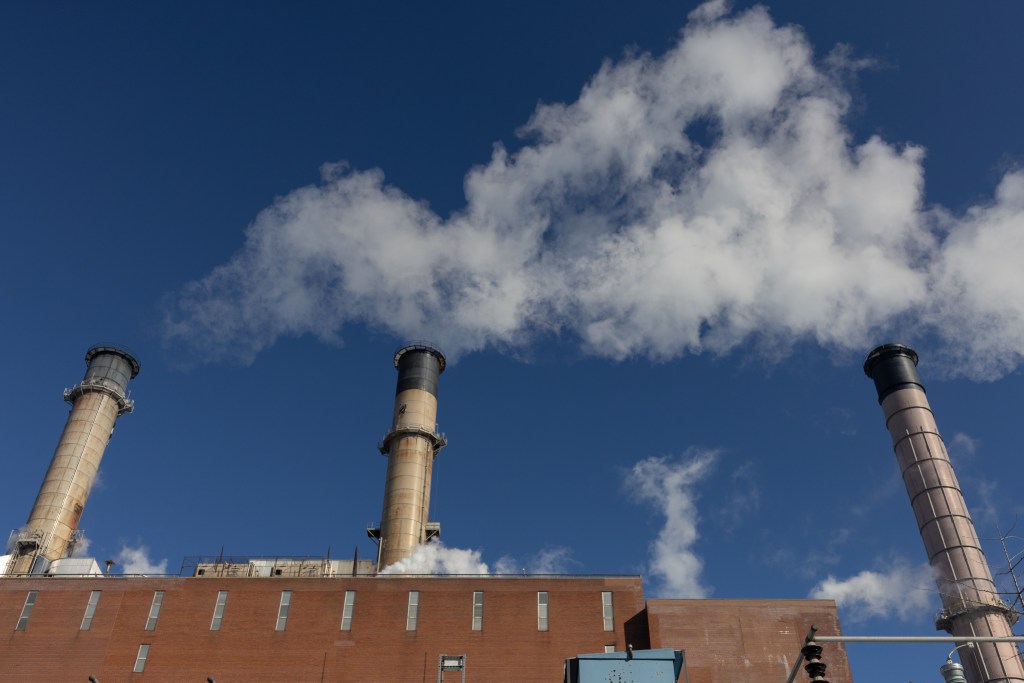 Smoked billows out of smokestacks at the Con Edison East River Generating Station in Manhattan, Jan. 29, 2026. Credit: Ben Fractenberg/THE CITY
While energy prices are on the rise nationally, they’ve grown at a faster rate in New York City according to data from the U.S. Bureau of Labor Statistics. Energy prices rose 6.1% in the New York metropolitan area between December 2024 and December 2025, compared to just 2.3% nationwide.
In a recent report, city Comptroller Mark Levine pointed to energy prices — particularly electricity prices — as a major driver of local inflation.
Note that natural gas is different from gasoline or diesel — and experts say worldwide events, such as recent attacks on Iran, won’t affect the price of natural gas.
The fluctuations of gas prices are “based on the weather and almost nothing else,” said Ira Joseph, senior research associate Center on Global Energy Policy at Columbia University.
Efficiency is Key
Your utility bills also depend on what your home is like, its heating system and how much energy your household uses. Since those factors interact with one another and vary from building to building, it’s tough to compare bills to other people living in similar apartments, even next door or across the street.
“It’s enormously important what system you’re using, how efficient that equipment is and how energy efficient the house that you’re in is, which determines how much fuel you’ll be using,” said Chris Halfnight, CEO of the Urban Green Council.
If your landlord pays for heat, it won’t show up on your utility bill.
In the vast majority of New York City residential buildings, boilers running on natural gas (or in some cases, oil) provide steam heating, Halfnight said.
In many buildings with electric heat, tenants themselves pay — and electricity costs more than gas.
“Switching from a boiler running on gas or oil, since the price of electricity is so much higher compared to the price of gas or oil, you may not see the savings,” said Francis Rodriguez, director of weatherization at the Association for Energy Affordability. “If you are switching from an electric heater to an electric heat pump, you’ll see savings for sure.”
What you pay on your bill comes down in part to your heating system’s efficiency and how well sealed your apartment is. The more efficient a system — and the better sealed a place is — means the heating equipment works better to maintain comfortable temperatures inside.
Halfnight noted that tenants can control certain aspects of how energy efficient their apartment is: by installing LED lights, for instance, or doing air sealing — especially for air-conditioning units left in windows during the winter.
Behind on Bills
Higher utility bills from the winter may further squeeze the wallets of many New Yorkers.
“In the current environment of prices rising so significantly, I think a much greater proportion of the population will have a harder time paying their energy bills and may resort to unsafe behavior to cope,” Carley said, referring to people who may, for instance, use their ovens as a heating source — a dangerous choice that can lead to fires or carbon monoxide poisoning.
Already, thousands are struggling to pay bills. Over 160,000 National Grid customers are more than 60 days behind on their bills through January, to the collective tune of $161.6 million, according to data from the company. More than 403,000 Con Ed customers are more than 60 days behind on their bills, totalling $858.7 million.
Both National Grid and Con Ed offer assistance programs and payment plans for customers who need help.
New York State Energy Research and Development compiled additional programs that can help save money on energy bills, and eligible New Yorkers can apply for the federal Home Energy Assistance Program. The nonprofit Public Utility Law Project also offers resources, including a telephone hotline for utility customers at 877-669-2572.
Related