
STATEN ISLAND, N.Y. — Plans to construct an eight-acre battery energy storage system on a busy strip of Victory Boulevard in Travis have been officially scrapped, according to government records. A notice of project termination has been filed with the New York State Department of Public Service, the agency that regulates electric, gas, steam, telecommunications/cable, and private water utilities in New York.
“By this letter, we, on behalf of Petitioner, hereby notify the Commission that plans to construct the BESS have been terminated,” noted the correspondence from Steven D. Wilson of Young/Sommer LLC, the attorneys representing the project’s developers. “As of the date of this letter, no part of the BESS has been constructed.”
No reason for termination was given, and Wilson did not respond to a request for comment. Hecate Energy, a utility-scale energy storage operator that announced intentions for the $300 million project in 2023, also did not reply to inquiries from the Advance/SILive.com.
Called Swiftsure, Hecate Energy’s proposed battery storage system was billed in promotional materials as “one of the largest in the nation,” capable of storing enough energy to power 500,000 homes. It was slated for construction at 3861 Victory Blvd. on the site of a large tract of vacant land located within an M1-1 zoning district — a multiple use area containing manufacturing, commercial, and community facilities — so no zoning actions were required to facilitate its construction.
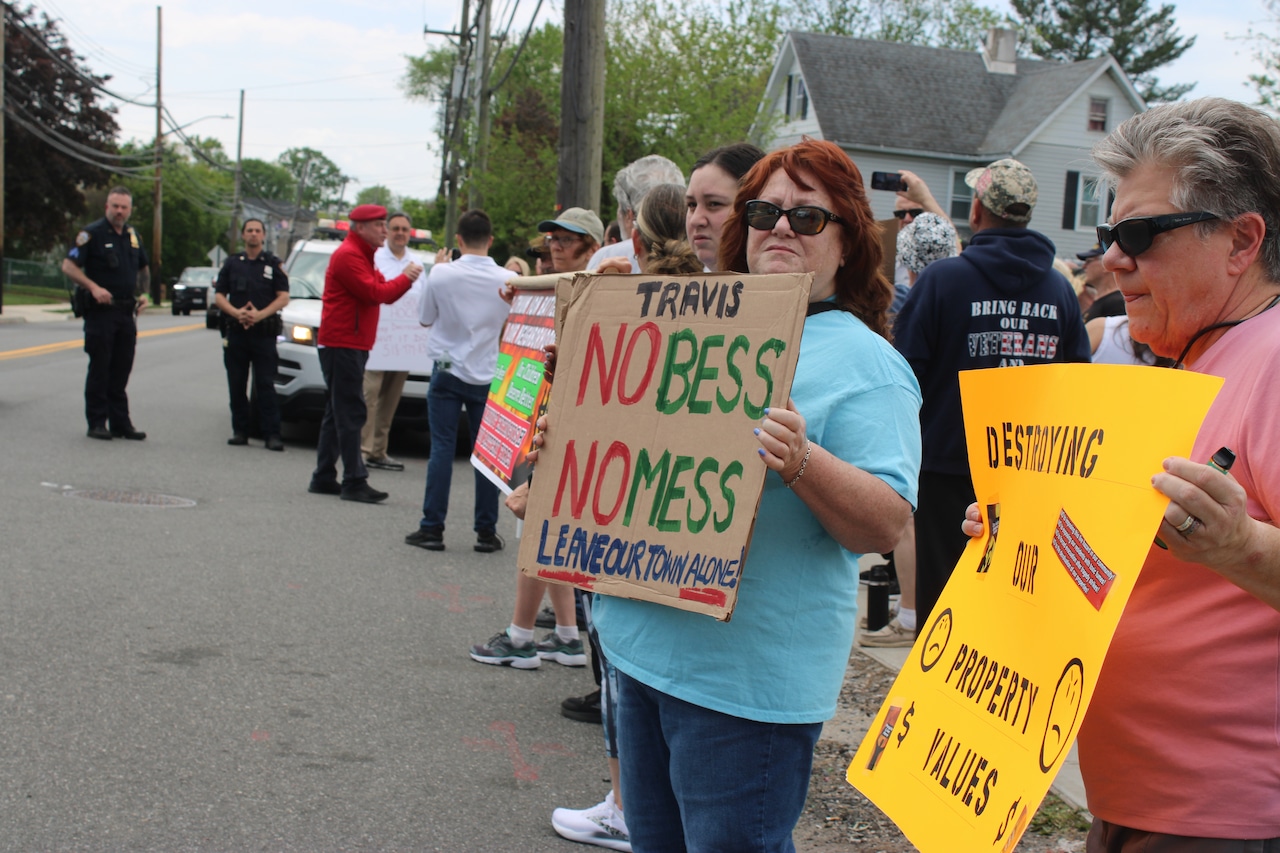 Dozens of Travis residents line up along Victory Blvd. to protest the battery energy storage system this summer. (Advance/SILive | Jessica Jones-
The property is near many local businesses and homes, making it a concern for residents and political leaders who rallied against the project several times this summer.
According to public records, Hecate applied for a Certificate of Public Convenience and Necessity from the Public Service Commission in 2024, which was approved and granted the company a significantly reduced regulatory burden compared to traditional public utilities. In exchange, Hecate was required to demonstrate timely compliance with critical safeguards, including the submission of a comprehensive decommissioning plan and cost estimate to ensure the facility could be responsibly dismantled at the end of its lifespan.
But Hecate Energy missed its deadline to submit those legally required plans by more than 200 days. In April, the company sought an extension from the New York State Public Service Commission, but was denied.
In a letter dated Aug. 1, 2025, and posted to the project’s online case file, general counsel for the New York State Department of Public Service gave Hecate a deadline of Oct. 11, 2025, to produce the outstanding decommissioning filings “or else be subject to potential enforcement proceedings and the imposition of fines.”
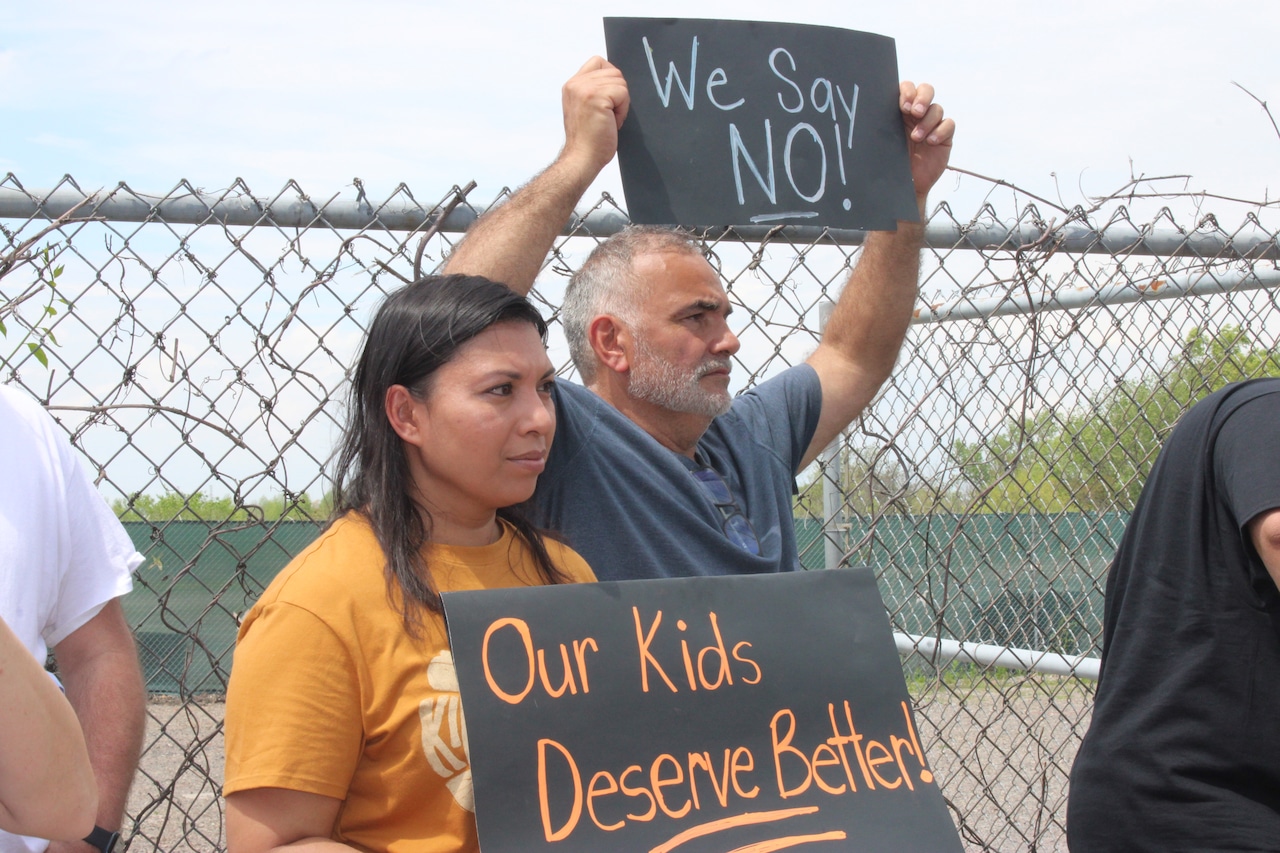 Staten Islanders are seen at a rally to voice their concerns over the battery energy storage system proposed for Travis.(Advance/SILive | Jessica Jones-
Hecate issued its notice of project termination a little more than two weeks later, on Aug. 18, 2025.
“This is a tremendous victory for the people of Staten Island,” Assemblyman Sam Pirozzolo, a Republican serving the Mid-Island, noted in a press release. “From the moment we were first alerted to this ridiculous project, residents raised legitimate concerns about the risks these large-scale battery sites pose to nearby homes, schools and critical infrastructure. Their persistence, organization and advocacy made all the difference.”
Borough President Vito Fossella added:
“We are gratified that the lithium-ion battery storage site planned for 3861 Victory Boulevard in the Travis section has been terminated. The facility was slated to be one of the largest BESS facilities in the entire nation … this is a victory for common sense and for the people of Staten Island, especially the residents of Travis. We will continue to fight against these units that threaten the quality of life and the safety of residents across the Island.”
A technology that uses a group of batteries to store electrical energy, allowing the energy to be released later when needed, the storage system sites — commonly referred to as BESS — essentially act as backup power sources for homes or the grid, particularly during peak demand or power outages. They are often used in conjunction with renewable energy sources like solar power.
Developers and green energy proponents tout the lithium-ion structures — which started popping up in several NYC neighborhoods in 2022 — as quiet neighbors that are a necessary agent for renewable change. They are designed to remove pressure from the city’s stressed grid, using rechargeable batteries to store electrical energy from various sources, and then releasing that stored energy when needed.
But over the past two years, borough residents and local officials have voiced their concerns about their siting. Community Boards voted against their proximity to bakeries and storefronts and elected officials issued a moratorium on applications filed within residential districts. In one instance, an energy developer retracted plans to place batteries in a Bulls Head church parking lot.
If you purchase a product or register for an account through a link on our site, we may receive compensation. By using this site, you consent to our User Agreement and agree that your clicks, interactions, and personal information may be collected, recorded, and/or stored by us and social media and other third-party partners in accordance with our Privacy Policy.