
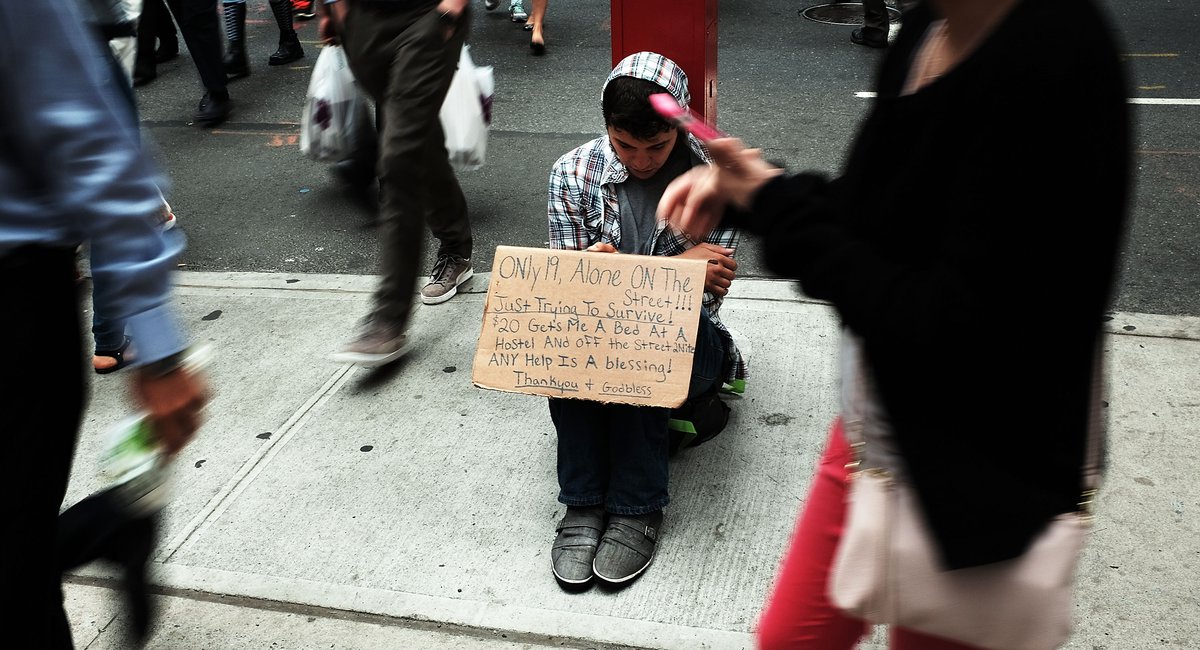
The Mamdani administration’s preliminary budget could end a program that helps homeless young people leave the shelter system and find permanent places to live.
Mayor Zohran Mamdani’s proposed spending plan doesn’t include money for housing specialists, who connect homeless teens and young adults to housing, mental health counseling or other services.
Advocates for homeless youth say the cut comes as youth homelessness has been rising in the city, due in part to the remnants of the migrant crisis, rising rents and attacks on LGBTQ+ youth around the country. More than 10,000 New Yorkers between 14-24 years old slept in shelters or on the street in 2024, and hundreds continue being turned away from temporary beds because there’s no more room, city data shows.
”We’re seeing the highest numbers that the city has ever seen. It peaked under the Adams administration so a lot of this is inherited by the Mamdani administration,” said Jamie Powlovich, a senior manager for the Coalition for the Homeless. “No young person in New York City should ever be faced with the question of where they’re going to be sleeping at night.”
New York City’s homeless teens and young adults can access special shelters and services that are separate from the adult shelter population, so long as there are available beds. The city began hiring housing specialists and formerly homeless youth as “peer navigators” in 2023 to help young people find housing more quickly. But the program was gutted by former Mayor Eric Adams, until the City Council restored funding last year.
Now, it’s once again at risk.
“ Every time we’re given a resource to provide our young folks as a pathway out of homelessness, it’s immediately taken away from us,” said Sebastien Vante, associate vice president of Street Work programs at Safe Horizon.
He said without the funding, Safe Horizon would lose five positions, including some formerly homeless youth hired to help their peers.
“ It’s so difficult for anybody to come to a program, to come to a space and ask for support. And when you see providers and staff members that look and identify like you, it makes it a little bit more comfortable for you to lean into the resources and really feel supported,” he said.
City officials said the budget process is ongoing but that the 913 shelter beds currently available for youth would remain the same under the preliminary budget.
The city’s most recent temporary housing assistance report showed nearly 700 young people could not access a bed when they sought one in the first half of 2025, though advocates believe far more people than that were left without a place to sleep.
“As we begin this budget cycle, we’re confronting a fiscal crisis we inherited while taking a hard look at how to protect and fund the services that matter most,” City Hall spokesperson Sneha Choudhary. “Our administration is committed to making sure homeless New Yorkers — especially young people — can access the shelter, stability, and support they need.”
Shelter providers say young people often wait six months for an open bed and have to either turn to the city’s homeless shelter services for adults, where they don’t always feel safe, or find other places to sleep. Advocates say young people need separate, designated shelters to help them out of homelessness.
G Galloway, advocacy manager at the Ali Forney Center, which offers shelter and services for LGBTQ+ youth, said youth shelters offer services that specifically cater to young people.
“It gears financial literacy for folks that have never understood a credit score, for folks that have never gotten a credit card or had their first job,” Galloway said.
They said young adults and teens are often still trying to figure out how to apply for college and learning the basics of independent living such as cleaning, or interacting with a landlord.
Homeless youth residing in youth shelters are unable to access the city’s rental assistance program, known as CityFHEPS. The rental vouchers are given to homeless people residing within the city’s larger adult Department of Homeless Services shelters, not the city’s Department of Youth and Community Development, which oversees youth shelter beds.
Plans to offer CityFHEPS to more New Yorkers, including homeless youth, are currently being discussed by the administration. After promising to expand the rental assistance program under a set of laws passed by the City Council, Mamdani instead said he wanted to negotiate a compromise, citing the program’s ballooning cost.
“New Yorkers who are homeless and under 25 years old are equally deserving of resources,” said Joe Westmacott, director of housing, benefits and resources at Safe Horizon’s Street Work Project, which runs programs for homeless youth. He said he hopes Mamdani can recognize that homeless youth need specialized services and investment.
“When homeless youth and young adults don’t have pathways out of homelessness, they become chronically homeless, and it’s even harder for them to access resources once they’re older,” Westmacott said.