
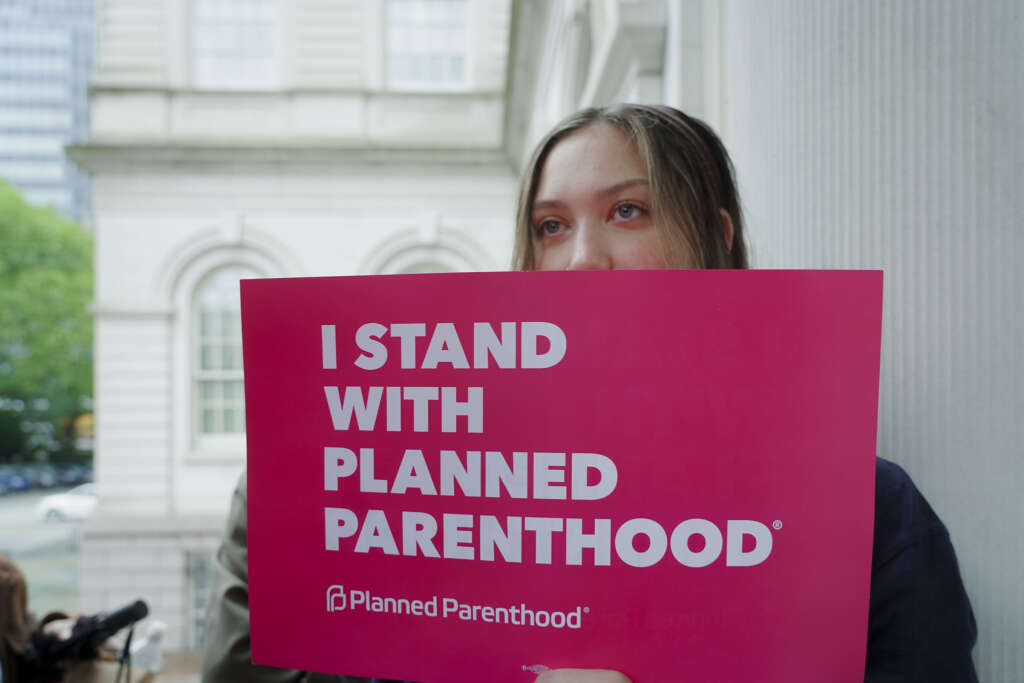
“New Yorkers face pressures around affordability every day,” the authors write. “For many, reproductive health care is the first thing they delay when money is tight. That delay can have lifelong consequences.”
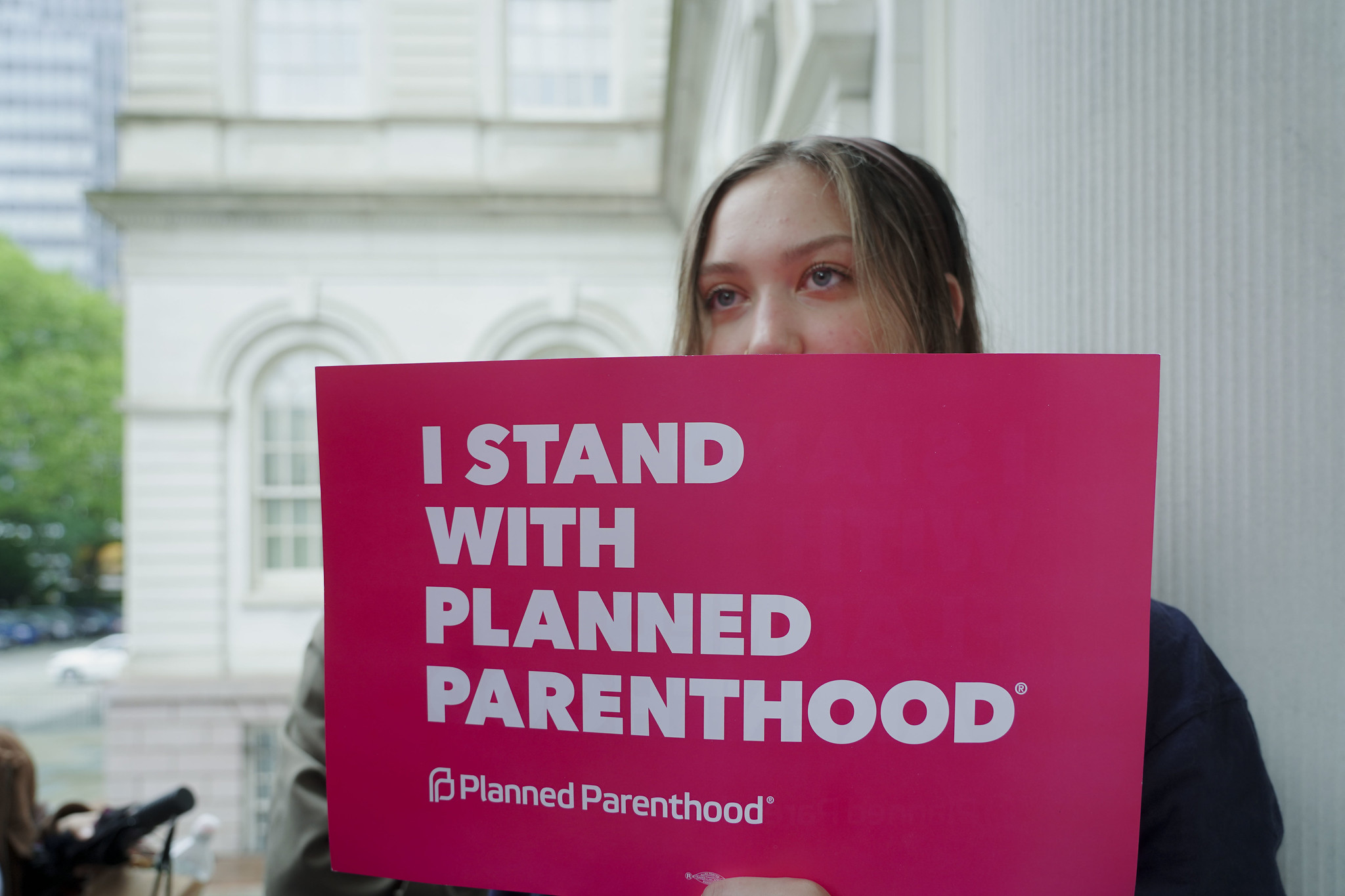 A press conference in support of Planned Parenthood last May. (Gerardo Romo / NYC Council Media Unit)

New Yorkers sent a clear message in the recent mayoral election: affordability and access to essential services are not abstract policy goals—they are the daily determinants of whether people can build stable, healthy lives in this city. Mayor Mamdani’s victory reflected that urgency.
Voters demanded leadership that understands how rising costs, shrinking safety nets, and uneven access to health care are reshaping what it means to survive in New York. A holistic affordability agenda must also recognize sexual and reproductive health as foundational to economic stability.
New Yorkers face pressures around affordability every day. In all five boroughs, people are navigating impossible choices: child care or medication, groceries or a doctor’s visit, subway fare or a follow‑up appointment. For many, reproductive health care is the first thing they delay when money is tight. That delay can have lifelong consequences. In study after study, the unambiguous result is higher rates of preventable illness, like STIs and HIV, more Black mothers and birthing people dying from pregnancy-related causes, and the perpetuation of already existing structural inequities.
At Planned Parenthood of Greater New York, our commitment has always been to the people who are most vulnerable to these trade‑offs—communities of color, families with low‑income, immigrants, young people, LGBTQ+ communities, and anyone who has been pushed to the margins of our health care system. Over the past several years, we have made deliberate, sometimes difficult decisions in the face of significant operational, political, and fiscal challenges to ensure that as many of our doors as possible remain open and accessible to those who need us most.
Our mission ensures that anyone who seeks our services can receive high-quality care regardless of their ability to pay. We invested in telehealth to reduce transportation barriers. We have made difficult but strategic decisions to modify our care footprint so that those New Yorkers who need our services most can continue to receive them. And when the federal government “defunded” Planned Parenthood health centers, stripping away critical support, we refused to pass that burden onto our patients. Instead, we doubled down on our mission: care, no matter what.
But no health care provider—no matter how committed—can shoulder this responsibility alone. If New York City is serious about affordability and access, reproductive health care must be part of that conversation. And the new administration has an opportunity to lead.
The city must strengthen its partnerships with and investments in community‑based health care providers.
This means a coordinated and regular opportunity for nonprofit providers and city hall leadership to convene to co-create solutions to ensure affordable health care; robust integration of reproductive health care priorities into the new administration’s programs and initiatives; and co-designed outreach and engagement initiatives to ensure no New Yorker is left behind in receiving care.
This also means providing critical multi-year funding streams to nonprofit providers. Organizations like ours are often the first point of contact for people who are uninsured, underinsured, or distrustful of traditional health care institutions. We are a foundational part of New York’s health care landscape. Stable, predictable city funding for nonprofit providers, even in the face of expanded city-operated services, allows us to keep services affordable and maintain care in communities that have long been systemically underserved.
We need a citywide strategy to integrate reproductive health into broader affordability efforts.
Childcare, housing, transportation, and health care are not separate silos—they are interconnected. Just days into his term, the mayor took initial steps to address our survivability crisis, announcing free childcare for 2-year-olds and strengthening the already existing 3K program. We applaud the mayor for acting swiftly on his campaign promise and for focusing on a fundamental piece of reproductive justice in just the first few weeks of his term.
Now more than ever, we need to build on this momentum with initiatives, including but not limited to housing stability programs, so that patients do not have to move away from their providers; it means even more investments in child care supports so that patients can seek the care when and how they need to; and it means robust support for digital access so that telehealth options remain available to everyone, regardless of zip code.
The city must advocate forcefully in Albany.
The state budget process—beginning with the governor’s proposal in January and culminating in negotiations with the Legislature through March—is critical as to whether community providers of sexual and reproductive health care have the resources to meet rising demand. New York must continue to lead with boldness in funding and policy.
Finally, not all providers have a model to provide services at little or no cost. New Yorkers deserve to know what they will pay before they walk into an exam room. The city should also push state lawmakers to require insurers and hospital systems to simplify billing, reduce hidden fees, and ensure that preventive and reproductive services remain low‑cost or free. This is good policy that strengthens the entire healthcare ecosystem.
Affordability is not just an economic issue. It is a public health issue. And access to reproductive health care must be part of the solution.
Wendy Stark is the president and CEO of Planned Parenthood of Greater New York. Dipal Shah is the chief external affairs and program officer at Planned Parenthood of Greater New York.