
(Editor’s note: Some sources have been anonymized with their first initial due to immigration-related concerns.)
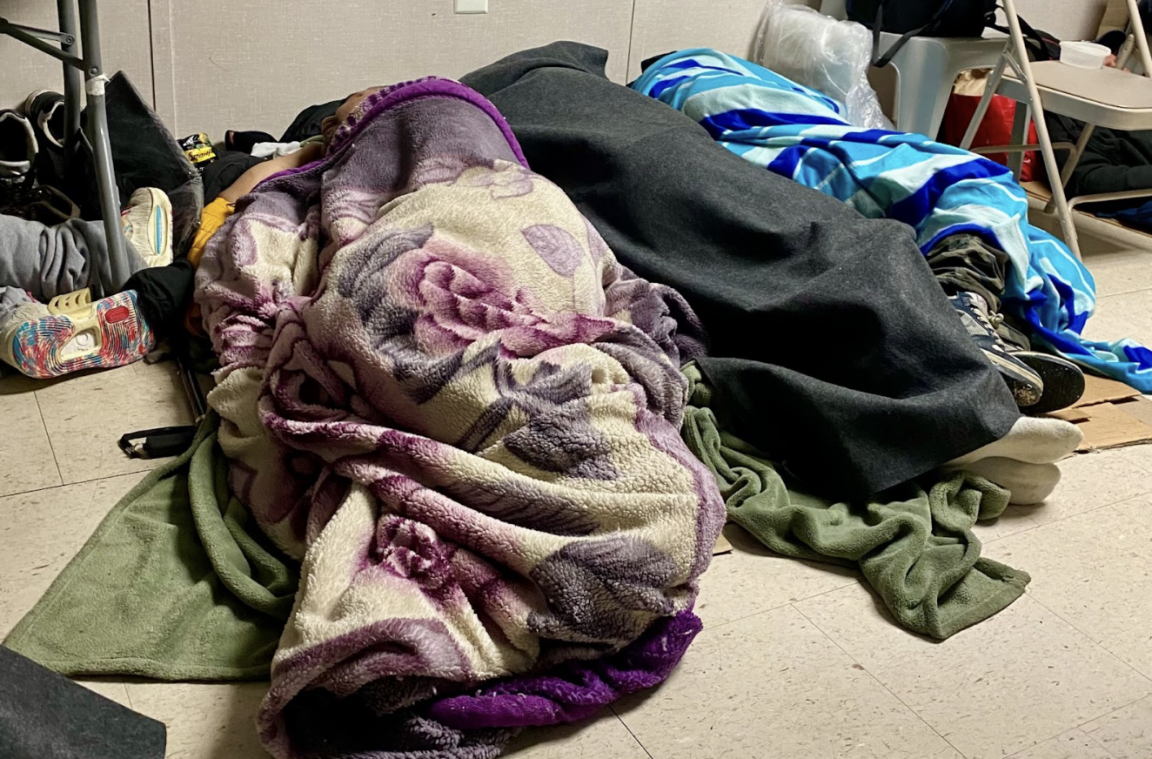
On a frigid Friday night in February, more than a dozen people, bundled inside their coats and wrapped in fleece blankets, slept restlessly on the floor of a cramped trailer adjacent to Elmhurst Hospital in Queens. Backpacks lay strewn around the small, poorly-ventilated room. The smell of alcohol clung to the air, and several people coughed. A police officer entered to provide more plastic-wrapped blankets.
Mostly men occupied the space, with the exception of one woman who rested beside her partner, moaning in pain.
A.M., a 68-year-old Ecuadorian immigrant, who requested anonymity due to his immigration status, checked on her, asking if she was okay. He had been struggling with the increasingly harsh weather and shelter conditions.
“A crazy guy was here yesterday,” he said. “He was asked to leave because he was drinking too much, and he wanted to fight with the other guys.”
A.M., like other unhoused individuals, sought refuge from the piercing cold inside the trailer operated by NYC Health + Hospitals (NYC H+H), which ran 18 of the 62 warming facilities across the city.
Thousands of other New Yorkers had to endure unsafe, unpredictable shelter conditions during January and February’s Code Blue alerts—a citywide emergency response when temperatures plummet to 32 degrees or below.
More than 20 people across the city died during the cold snap. New York City Chief Medical Examiner Jason Graham attributed 15 of those deaths to hypothermia during a city council oversight hearing regarding the Cold Blue response. On Feb. 9, a day before the hearing, the Department of Social Services (DSS) Commissioner, Molly Wasow Park, resigned amid the controversy of weather-related deaths.
In response to mounting pressures, Mayor Zohran Mamdani’s administration promised to open several more warming shelters, including buses, public schools, and hospitals. Even with the city’s ramped-up efforts to provide a temporary solution to the frigid weather, people looking for a warm place to rest have faced a myriad of issues.
At the 72nd Street location in Jackson Heights—also run by NYC H+H and just a few blocks from Elmhurst Hospital—a vastly different scene unfolded.
Concealed from the street, the entrance was barely visible to passersby. Unlike the corridor of Elmhurst Hospital, where randomly taped signs advertised the center, no signs indicated the 72nd Street site. Upon entering the building, a security guard asked to see ID. “You’re the first and only one to arrive,” he said. Two rooms—a section for women and one for men—were empty and dimly lit. A bare, bright-white room, where men and women could intermingle, offered trays of chips, peanuts, and cookies, along with tea and coffee.
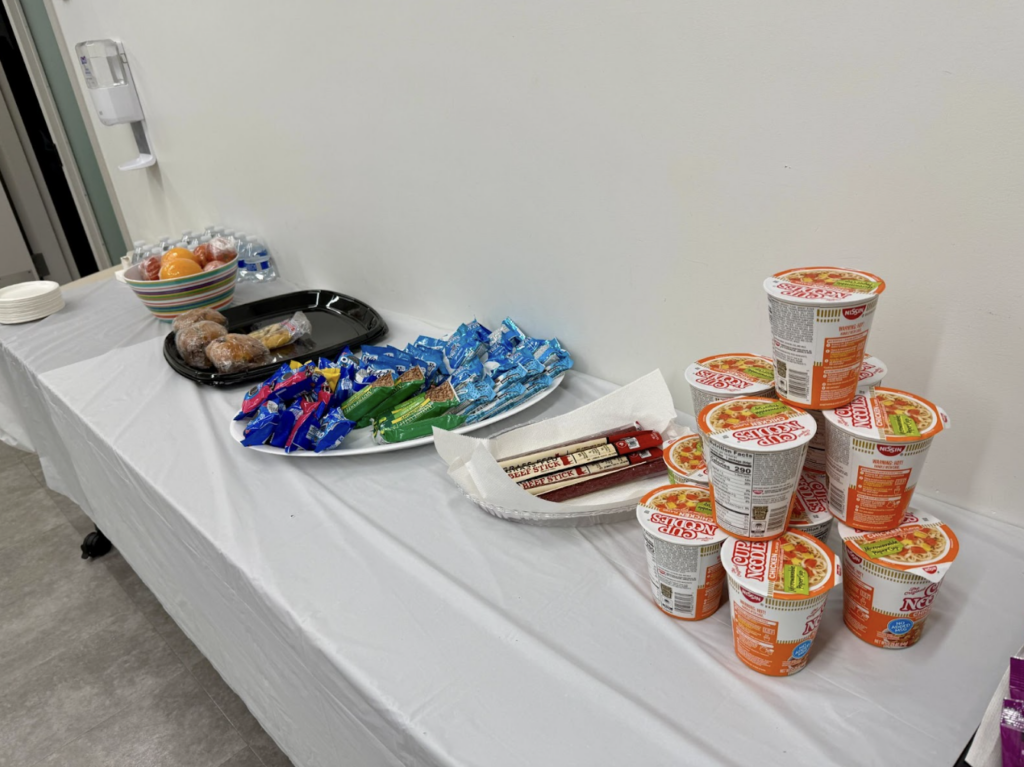
At the Roosevelt warming center, run by NYC Health + Hospitals, a table offered visitors food and drinks, in stark contrast with the Elmhurst Hospital trailer. (Credit: A. Felix)
When repeatedly asked about the varying warming center standards, Adam Shrier, press secretary and director of communications at NYC H+H, declined to answer.
DSS also operated several warming buses and centers. But on a recent Saturday night, Jeannie Phelps, 63, stood stranded and shivering for hours inside a Penn Station vestibule. She searched for buses that, according to the city’s list of available shelters, were supposed to be stationed outside, but found none.
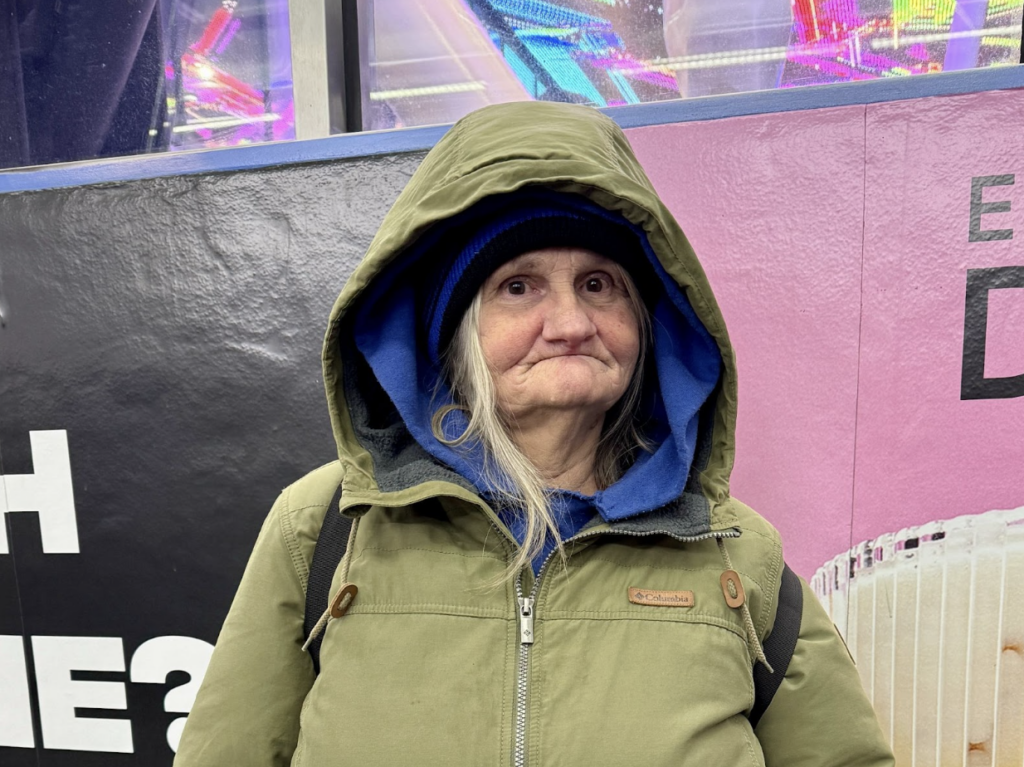
Jeannie Phelps inside Penn Station after searching for warming buses advertised on the city’s list of available centers. (Credit: A. Felix)
“I walked all the way down and back that way and then this way,” said Phelps, pointing toward Seventh Avenue. “I’ve been trying to find it.”
The Jacqueline Kennedy Onassis High School on West 46th Street in Manhattan also advertised overnight availability, but those seeking refuge from the freezing winds found the doors locked. A security guard directed people to a crowded warming bus parked across the street, saying no DSS staff were present to help.
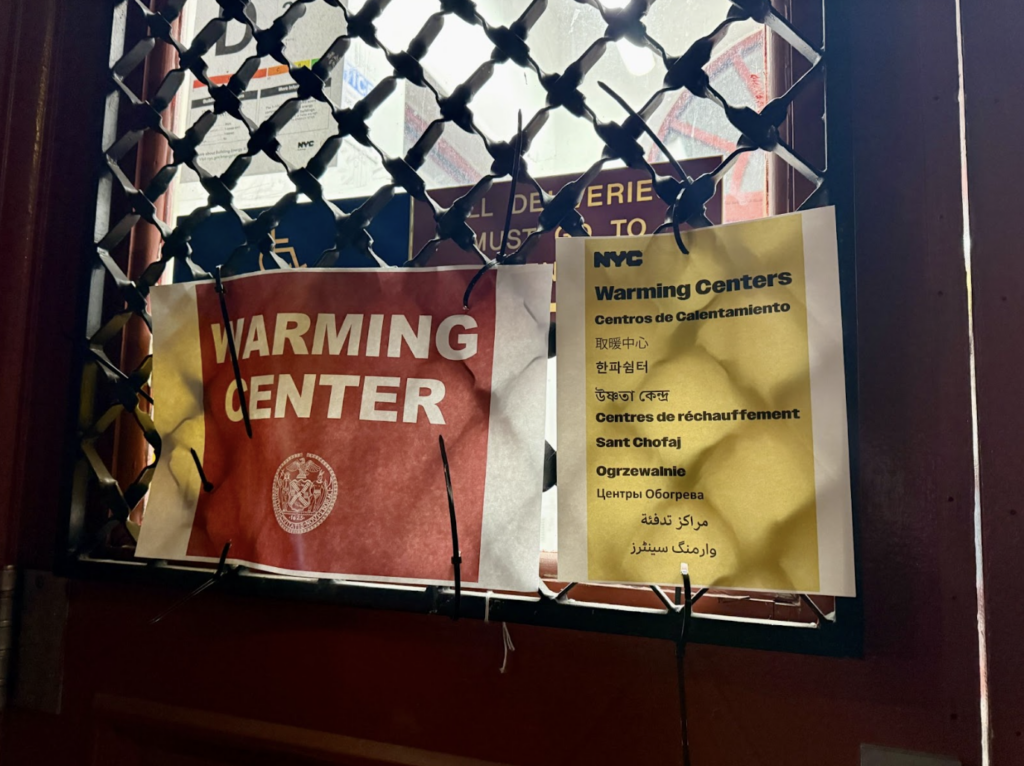
The city advertised Jacqueline Kennedy Onassis High School as an available overnight warming center, but the doors were locked. (Credit: A. Felix)
Despite the absence of workers, Neha Sharma, a spokesperson for the DSS, insisted that staff worked overtime throughout the cold spell.
“Outreach workers are out there 24/7,” said Sharma. “Our teams are working around the clock.”
Following his experience at Elmhurst Hospital, A.M. walked to the 72nd Street location and stayed overnight, which he found much more comfortable. For now, the Code Blue has ended. Many warming centers have closed, forcing those who need them to search for new shelters.
“They told me to return to Elmhurst Hospital,” A.M. said. “If you know of another place, please tell me.”