
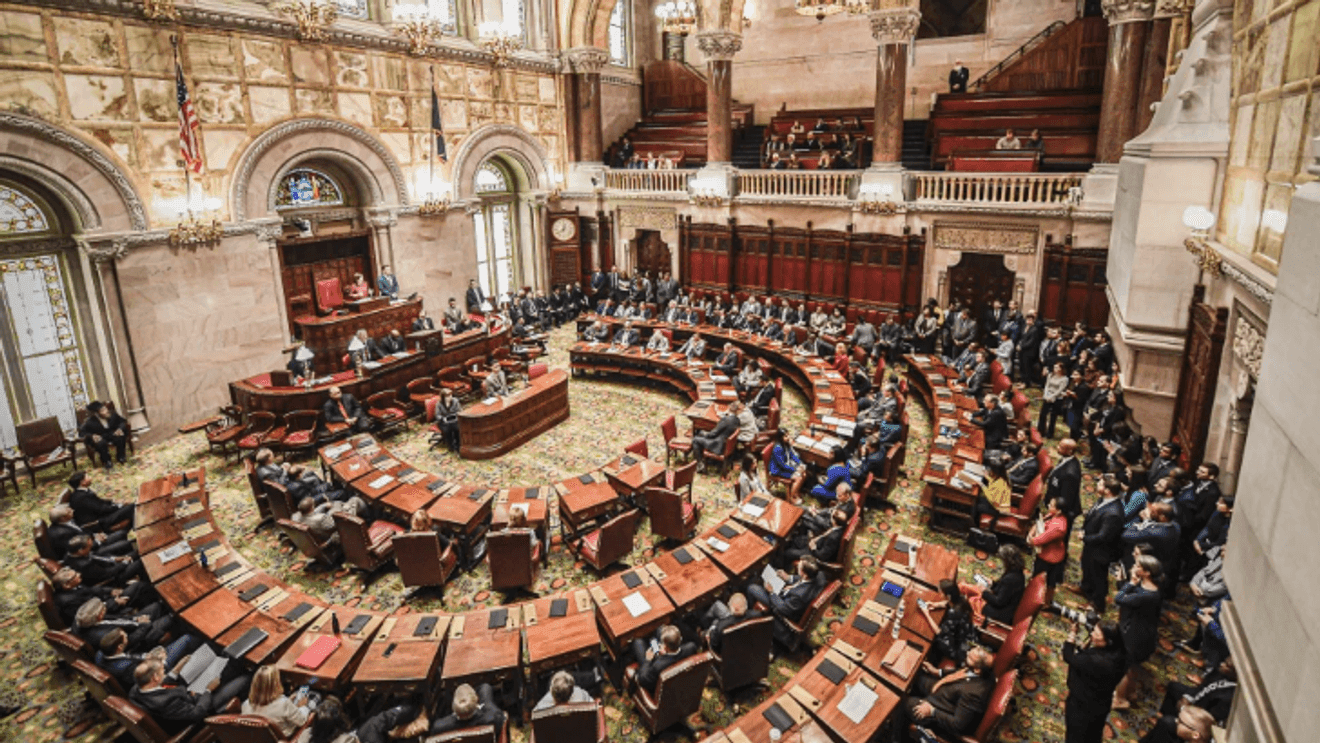
NYS Capital — The New York State legislature revealed their One House Budget proposals on Tuesday, setting up negotiations with Governor Kathy Hochul leading up to the April 1st deadline.
Despite Governor Hochul’s continued pushback of raising taxes on the wealthy, but the Senate and Assembly, both with Democratic majorities, have proposed tax increases for wealthiest New Yorkers and corporations.
The State Assembly is proposing a tax increase for people making $5 million to $10 million from 10.3 percent to 10.5 percent. Those making $10 million to $25 million would go from 10.3 percent to 10.75 percent. Those making $25 million to $100 million would go from 10.9 percent to 11.75 percent. Those making above $100 million would go from 10.9 percent to 12 percent.
The budget would also establish the Crypto Mining Facility Excise Tax.
The Assembly is also proposing tax deductions for small businesses, increasing their tax deduction from 15 percent to 25 percent of net income, gain, loss and deduction.
In regards to utility fees, the Assembly is proposing Protecting Out Wallets Energy Rebate (POWER) Checks. Eligible residential ratepayers with incomes below $150,000 would receive a $500 check, while those with incomes between $150,000 and $300,000 would receive a $300 check.
The Assembly is also proposing a two-year moratorium on rate cases, and a commission to study utility fees.
You can review the entire Assembly proposal by clicking here.
The Senate also is proposing tax increases. For those making between $5 million and $25 million, Personal Income Taxes would increase from 10.3 percent to 10.8 percent, for those making more than $25 million, Personal Income Taxes would increase from 10.9 percent to 11.4 percent
The Senate also is proposing to extend the temporary Article 9-A tax rates for three years by increasing the rate for businesses with over $5 million in income to nine percent.
The Senate also is making utility fee proposals, directing the Public Service Commission to add additional inappropriate utility expenses to its review, require utilities to return revenues in excess of their authorized return on equity, and clarify the Commission’s parameters when evaluating budget-constrained rate increase proposals.
You can review the entire Senate proposal by clicking here.
This story will be updated with more details, interviews and more.