
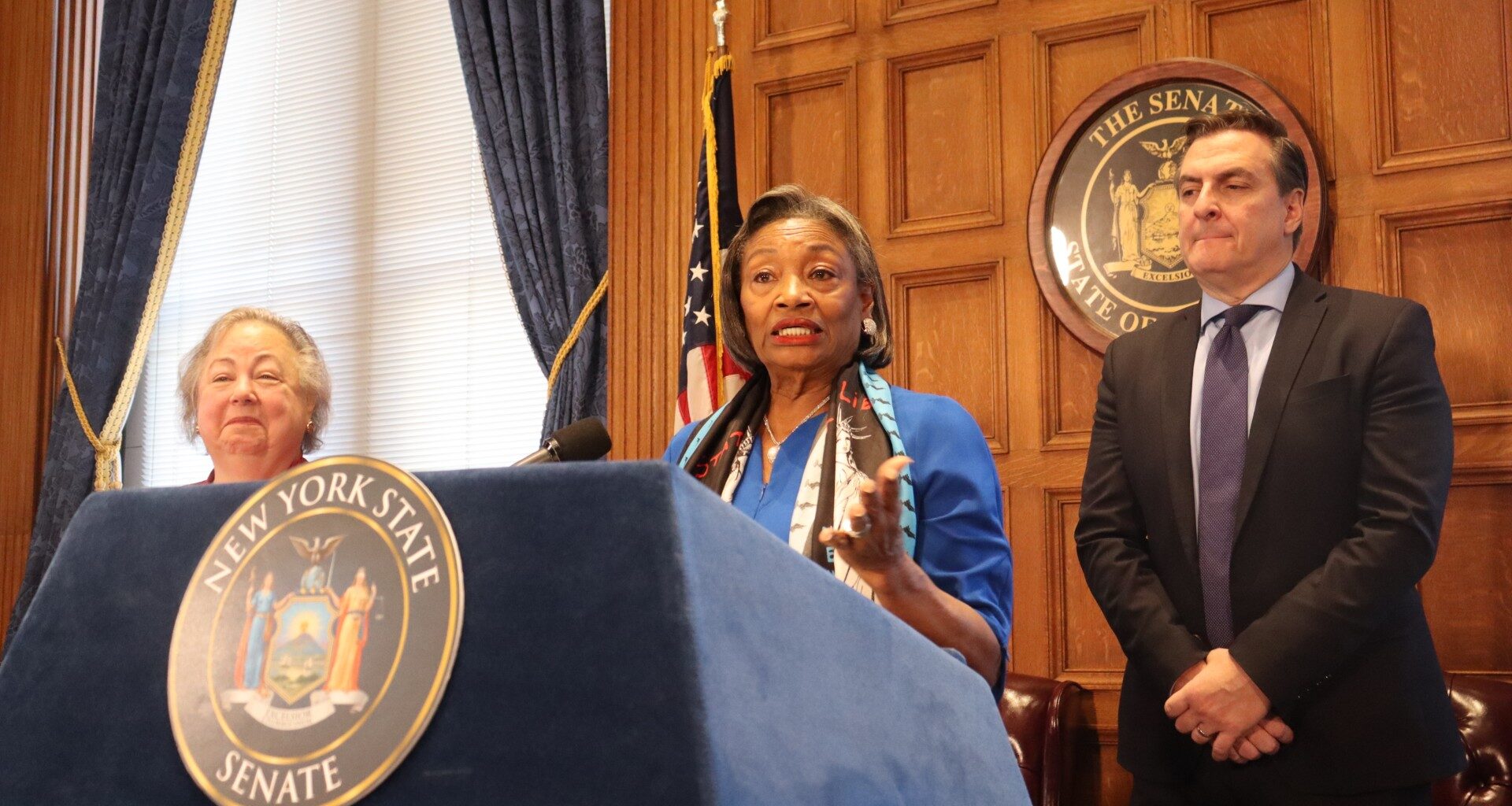
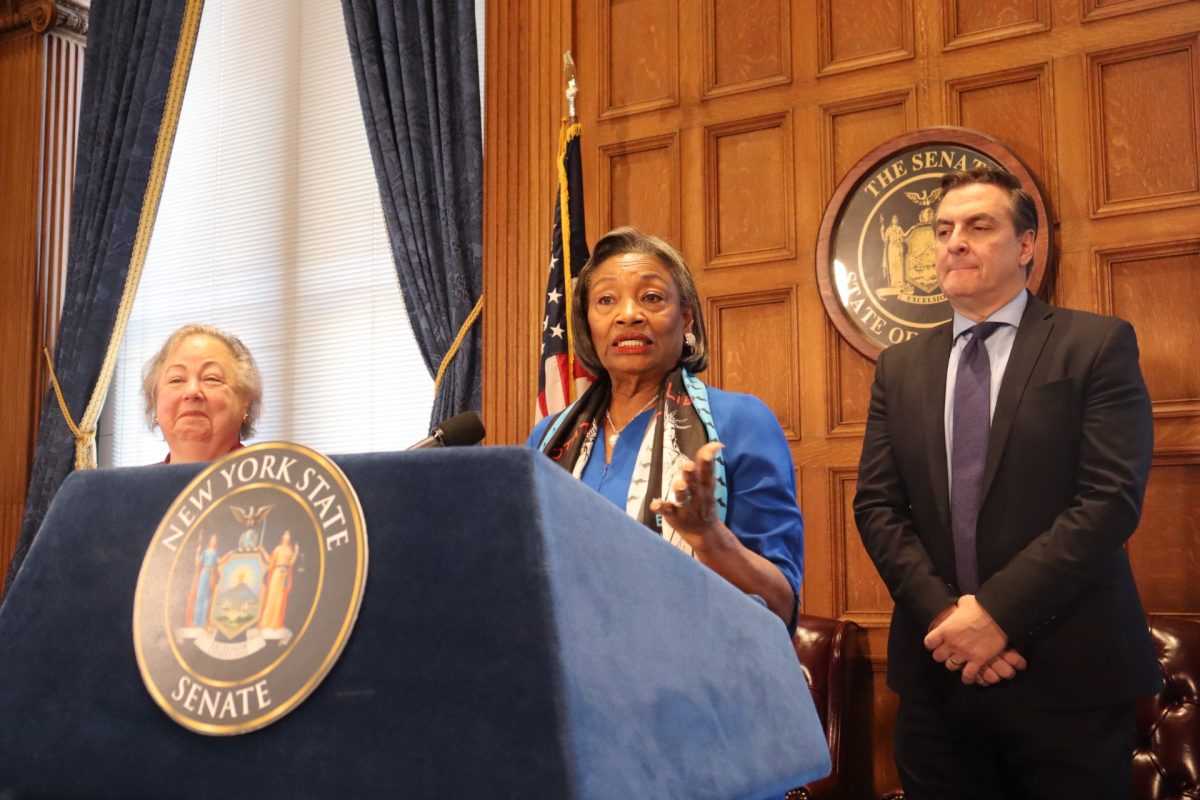
Senate Finance Chair Liz Krueger, Majority Leader Andrea Stewart-Cousins, and Deputy Majority Leader Michael Gianaris unveil the Senate’s one house Budget at a press conference in the Capitol.
New York State’s budget process began in earnest on Tuesday, March 10, as the Senate and Assembly Democrats publicly announced their respective one house budget resolutions. Now, the two legislative bodies and the Governor’s office will begin negotiations to release a final budget.
As part of the state’s budget process, both the Senate and Assembly release their own versions of the budget. Both houses of the legislature modify or remove proposals from Governor Hochul’s budget, as well as adding their own. After they are approved by the respective houses, an intense process of negotiation and compromise occurs, resulting in a final budget to be (hopefully) approved before the start of the new fiscal year on April 1.
A highlight of both budgets includes increasing taxes on New York’s top earners, which could lead to a standoff with Governor Hochul, who has repeatedly stated that she does not intend to raise taxes. However, several advocates and elected officials, including New York City Mayor Zohran Mamdani, have pushed for these increases in taxes to close budget gaps and fund social services.
Part of the Senate’s proposal is to increase the Personal Income Tax (PIT) rate of the top two brackets by 0.5%, and ending certain sales tax exemptions for luxury items like boats valued over $230,000 and sales of gold bullion valued over $1,000 by non-governmental entities. The Assembly also includes PIT rate increases. According to a statement released by Speaker Carl Heastie’s office, “Those making $5 million to $10 million would go from 10.3 percent to 10.5 percent. Those making $10 million to $25 million would go from 10.3 percent to 10.75 percent. Those making $25 million to $100 million would go from 10.9 percent to 11.75 percent. Those making above $100 million would go from 10.9 percent to 12 percent.” The assembly also included a new tax on crypto mining facilities based on how much energy they use.
Senate Majority Leader Andrea Stewart-Cousins said that the senate will “earnestly and honestly push” to keep these tax increases on the wealthiest New Yorkers, saying that “It’s just important.”
“As the affordability crisis continues to touch nearly every aspect of our daily life, it is our responsibility to ensure New York is setting a path forward that supports growth and meets the real needs of our constituents,” Stewart-Cousins said. “This is why our proposal includes responsible revenue actions that ask the wealthiest individuals and corporations to contribute their fair share.”
Deputy Majority Leader Senator Michael Gianaris went further, saying, “One thing we know very clearly is that we have an affordability crisis,” and to deal with the affordability issue.
“We have more millionaires today in New York than we’ve ever had. What we have a lot less of is non-millionaires,” he said. Gianaris then went on to list several programs the budget provides for that aim to tackle affordability, like an expansion of Hochul’s universal childcare program and the expansion of a free bus pilot program.
“But to do all those things requires investment,” Gianaris said. “To get investment you need money, and to get money you need to raise revenue.”
Stewart-Cousins was optimistic about the new taxes passing into the final budget, adding, “I think the momentum is certainly on our side for this.” She did say that the negotiating process will still need to play out, but the senate is ready to make their case to the Governor. “Obviously, there’s always going to be conversations, and I think that we are clear that we are looking to fund things that we know are important to New Yorkers,” she said.
On the Assembly side, Heastie’s focus was less on individual proposals, and more a broader theme of making sure that cities across the state were in good fiscal health. In a press conference to reporters he said, “It’s not so much about taxes or which taxes,” adding that his commitment currently is “to making sure that the city and all of the cities around the state are on solid financial ground.”
Heastie went on to say that even though the governor isn’t on board with the new tax proposals, the negotiation process can move the governor enough that a compromise can be made. “I’m not trying to say that somehow I’m going to change the governor’s mind, but we push the things when the governor wasn’t there. Eventually she recognized there was a necessity.”
As of time of publication, the Governor has not publicly reacted to the legislature’s one house proposals and did not respond to requests for comment.
Republicans in the state legislature spoke out against the tax proposals in the budget, calling it “runaway spending.” According to a release from Assembly Minority Leader Ed Ra, the one house budget “looks like a ‘greatest hits’ list of new taxes. Their answer to every problem continues to be the same: spend more, tax more, and hope the numbers work out later.”
Beyond the tax increases for the wealthiest earners, it is unclear now how negotiations will go, with previous years delivering late budgets. The fiscal year 2025-26 budget passed on May 9 last year, more than a month passed the due date of April 1. However, Heastie believes that discussions about this year’s budget will be easier than in previous years. “I just don’t see these policy discussions rising to the same level of difficulty as the others,” Heastie said. He then added that there will be some difficult conversations, but otherwise believed a budget could be passed in a timely manner.
“I’m pretty confident this will be a very timely budget,” he said.