
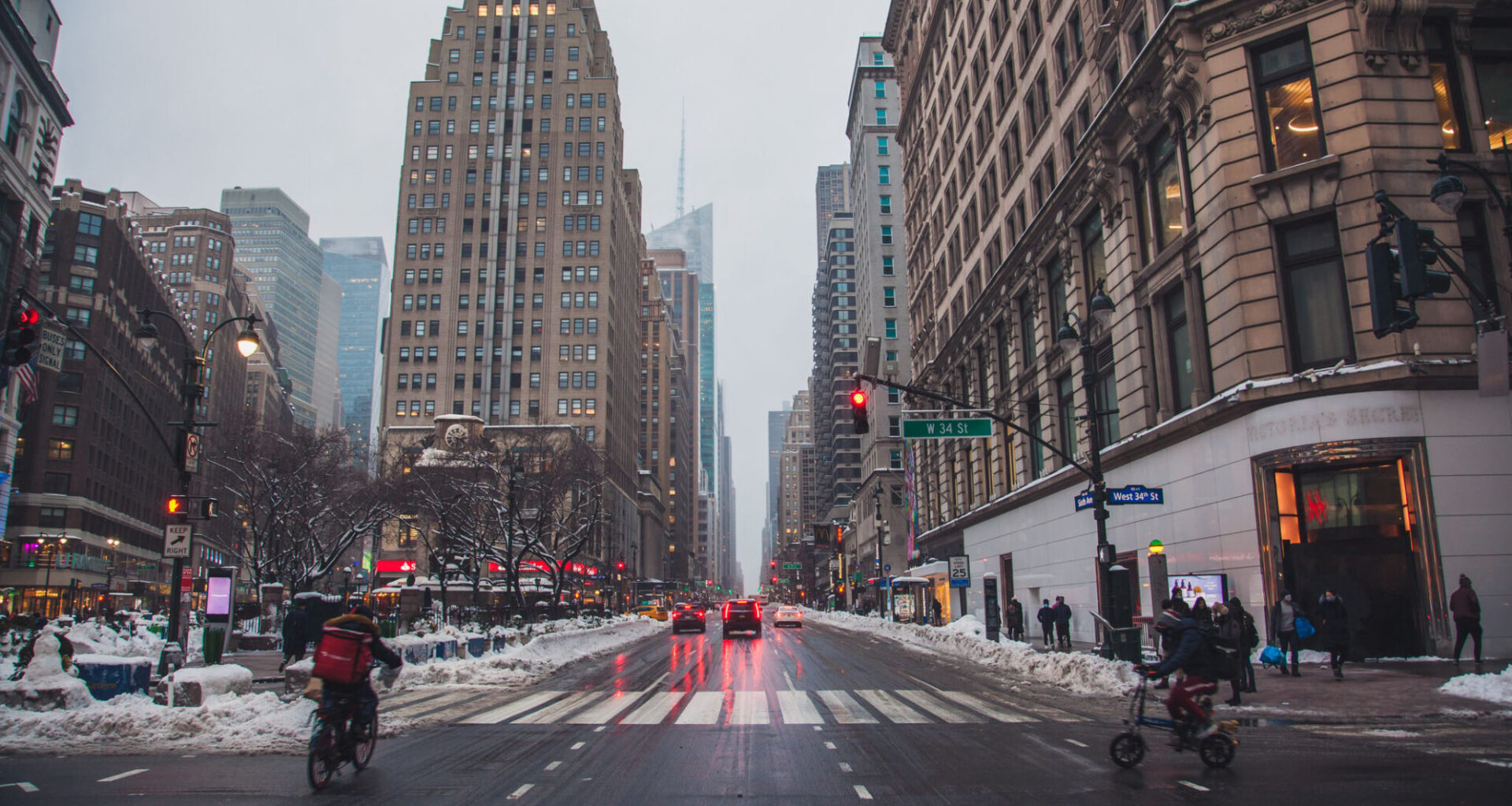
 Located in a reimagined historic building at Herald Square, the new school aims to expand the pipeline of highly trained clinicians and broaden access to care in one of the nation’s largest urban centers. (iStock)
A new dental school in Manhattan is set to welcome its first class this summer—marking the first new dental school to open in New York City in more than a century.
Yeshiva University announced March 11 that its College of Dental Medicine will enroll 150 students annually starting in July 2026, offering an accelerated three-year Doctor of Dental Surgery (DDS) program designed to prepare dentists more quickly for clinical practice.
University leaders say the new school—located in a reimagined historic building at Herald Square—aims to expand the pipeline of highly trained clinicians and broaden access to care in one of the largest urban centres in the United States.
“This marks a defining moment for healthcare education in New York City,” said university president Rabbi Dr. Ari Berman, noting the school will combine clinical excellence, innovation and community service.
Accelerated model for dental training
Unlike most U.S. dental schools, which follow a traditional four-year curriculum, the program will compress training into three years while maintaining full academic and clinical requirements.
Accelerated DDS programs exist at only a small number of U.S. institutions and are designed to help students enter practice sooner while reducing the cost burden of an additional year of tuition and living expenses.
The new college is accredited by the Commission on Dental Accreditation and registered with the New York State Education Department.
Founding dean Dr. Edward Farkas said the curriculum integrates digital imaging, 3D printing, and early clinical exposure to prepare dentists for what he called the “practice environment of 2040 and beyond.”
Related: The effect of the CDCP on dental school education
Large teaching clinic planned
At the centre of the program is Yeshiva Dental Health, a 130-chair teaching clinic designed to serve as both a clinical training facility and a community care centre.
The university says the clinic could treat hundreds of patients each day, providing more affordable dental services while giving students hands-on experience early in their training.
Access to dental care remains uneven in many U.S. cities, particularly among low-income residents and underserved populations.
Related: The impact of AI and technology on dental schools: What students should know
Addressing workforce pressures
The new school also arrives amid broader workforce shifts in dentistry.
According to the American Dental Association’s Health Policy Institute, the U.S. dental workforce is expected to face significant demographic change over the coming decade as older dentists retire. The institute estimates that a substantial share of practising dentists are approaching retirement age, creating pressure to replenish the pipeline of new clinicians.
Meanwhile, the U.S. Bureau of Labor Statistics says that overall employment of dentists is projected to grow 4 percent from 2024 to 2034, about as fast as the average for all occupations.
And that bout 4,500 openings for dentists are projected each year, on average, over the decade. Many of those openings are expected to result from the need to replace workers who transfer to different occupations or exit the labor force, such as to retire.
Expansion of health sciences programs
The dental college is part of a broader expansion of Yeshiva University’s health sciences portfolio, which now includes graduate programs in occupational therapy, physician assistant studies, speech-language pathology and nursing.
The project is supported by philanthropic funding, including a $15-million gift from Morris Bailey and Joseph L. Jerome of JEMB Realty Corporation.