
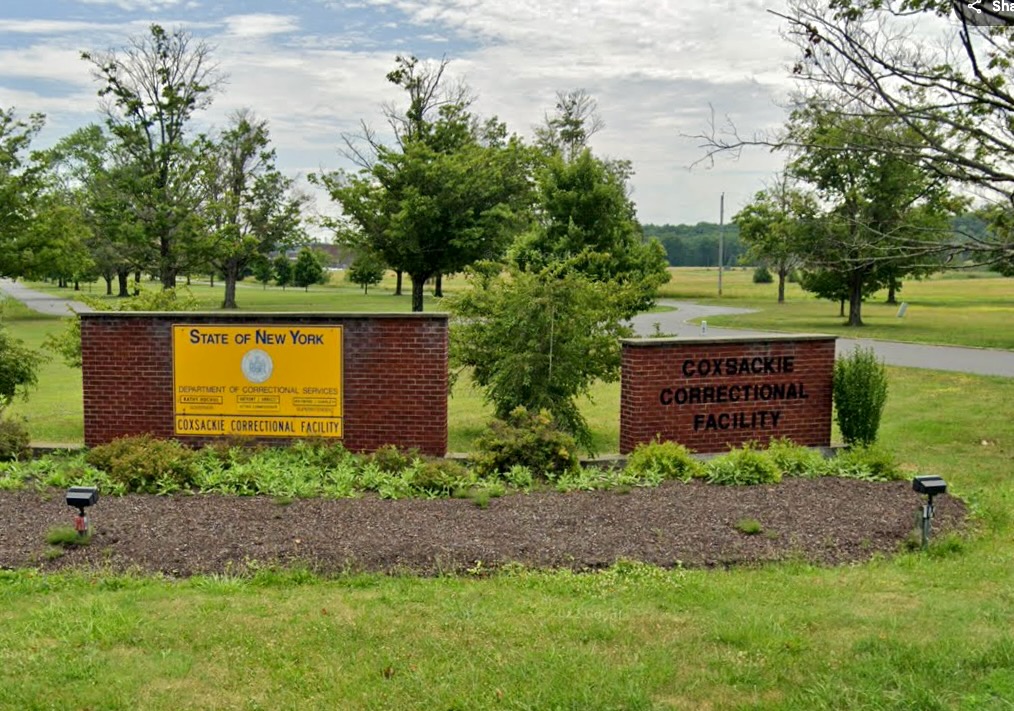
Coxsackie Correctional Facility is one of three state prisons that will be getting a pilot to connect inmates to legal representation for civil cases against the state.
Photo by Google Maps
The New York state court system is building a program that will connect incarcerated litigants with a lawyer to pursue civil claims against the state.
The program aims to reform a process through which the vast majority of inmates are currently forced to represent themselves without the financial resources to hire a lawyer.
“There’s a large number of our cases that are brought by… incarcerated persons that obviously do not have the legal background, have difficulty navigating the Court of Claims Act, and don’t know how to prosecute their claims,” said Court of Claims Judge Catherine Leahy-Scott, who spearheaded the effort through the courts’ Equal Justice in the Courts initiative.
The pilot, which will initially cover only three state prisons in the Albany region, will extend to cases for medical malpractice, negligence and assault. Through the program, the court system will provide a list of attorneys for incarcerated people to pitch their cases to. It’s then up to the attorney to decide whether to proceed with a contingent fee or take it on pro bono. Its overseeing judges expect to expand it to prisons statewide by 2026.
The program comes at a point when New York’s prisons are under increased scrutiny following the 2024 murder of inmate Robert Brooks by a group of prison guards, though its conception in 2022 predates that incident.
The types of cases that inmates bring to the state Court of Claims, the court that handles lawsuits seeking money damages against New York, run the gamut.
Cases can come about “whether they’re injured while they’re in the recreation yard.. when they’re assaulted by another incarcerated person. They claim that excessive force was used by a correctional facility [officer]. They claim there’s medical malpractice from the medical staff in the infirmary,” said Presiding Justice of the Court of Claims Richard Sise.
So far Leahy-Scott said the court has so far compiled a list of some 20 attorneys to participate in the pilot, which will cover claims from the beginning of 2023 at Coxsackie, Green and Washington correctional facilities, but they’re hoping to expand the list as much as they can.
Sise sees it as an opportunity for firms to do some pro bono work or give young lawyers the experience to get into the courtroom early while bringing in some settlement income. Cases will all be conducted virtually, so attorneys across the state can participate.
He noted that the program has gotten buy-in both from Attorney General Letitia James, whose office will be defending the lawsuits and the Department of Corrections and Community Supervision Commissioner Daniel Martuscello III, whose officers are likely to be implicated.
Sise recalled presenting the idea to the DOCCS Training Academy in Albany.
“I said I’m sure you’re scratching your head saying why in God’s name would we be assisting the claimants to bring a suit against DOCCS. And I said, because it comes down to transparency, accountability, quality control,” Sise said. “You want them to be safe during the time they’re here.”