

Forwarded this email? Sign up for free to have it sent directly to your inbox.

Good morning,
Today, we’re looking at the problems with New York’s class-size law, how sports journalism became left-wing, and life in preindustrial New York.
Write to us at editors@city-journal.org with questions or comments.
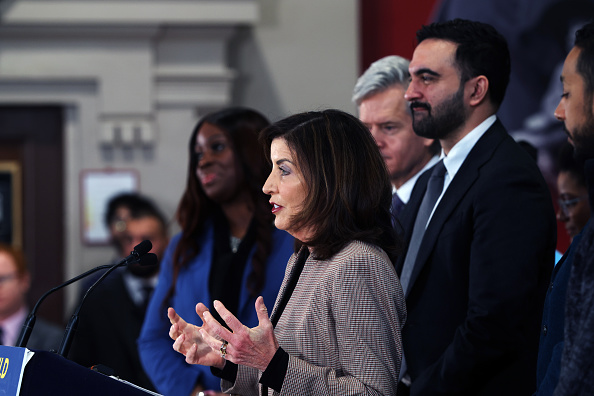
New York’s 2022 class-size law, which requires public schools to reduce class sizes, has increased education costs in the city by more than $1.5 billion each year. “Not only does that make little sense, given steadily declining enrollment; it also provides cover for [Mayor Zohran] Mamdani’s plan to raise taxes in support of unnecessary increases in city spending,” Ray Domanico writes.
Many parents don’t like the law, fearing that their children’s schools will cut enrollment to accommodate the required class-size reductions, forcing students to attend less effective schools. Poor children stand to lose, too, as money will move away from underenrolled, lower-income schools to more affluent, over-enrolled ones.
Read more about the legislation, and what Domanico says Governor Kathy Hochul should do to offset the law’s harms.
Sportswriters used to cover games for local publications. Not anymore. The decline of local newspapers and homegrown sports coverage has led to the consolidation of sports news in national outlets, often in major cities. Today, many sportswriters graduate from left-wing journalism schools and develop political views rarely aligned with those of fans.
“Sportswriting has subsequently become, like much of the rest of journalism, a giant echo chamber that doesn’t admit much outside ‘noise,’” Steven Malanga writes. “That explains why a columnist could accuse the men’s USA hockey team of having ‘lost some of the room’ by visiting Washington or having failed ‘to meet the cultural moment,’ even as fans cheered nationwide. The irony is that while sports journalism spent decades seeking respectability and credibility within its larger profession, in the twenty-first century, it is journalism in general that has ‘lost the room’ and watched its trustworthiness with readers plummet.”
Read his take.

It’s not easy living in New York City. Voters worry about housing costs, disorder, and quality of life, leading some to romanticize the pre-industrial age, when the city was supposedly cleaner, safer, and more affordable.
Not so, Chelsea Follett writes. In fact, if voters could travel back in time, they would likely be horrified. “By modern standards, New Yorkers—like most preindustrial people—were impoverished and lacked even the most basic amenities,” she writes. Many couldn’t afford housing, water quality was terrible, disease was widespread, filth coated the interior of homes, and everyone had rotten teeth. “Life was harsh everywhere,” Follett writes, “and cities around the world contended with the same foul smells, filth, poor sanitation, and grinding poverty.”
Yes, living in New York City is tough, but we’ve come a long way. Read more about what preindustrial life was like.

City Journal Editor Brian Anderson and Rafael Mangual explore the magazine’s history, its influence on urban policy, and the challenges associated with technological change. They discuss City Journal’s distinctive approach to policy journalism and the importance of style and accessibility in conservative media.

“Mamdani does not need a wakeup call, as he’s fully awake. He’s just on the other side.”
Photo credit: Spencer Platt / Staff / Getty Images News via Getty Images

A quarterly magazine of urban affairs, published by the Manhattan Institute, edited by Brian C. Anderson.
Copyright © 2026 Manhattan Institute, All rights reserved.