
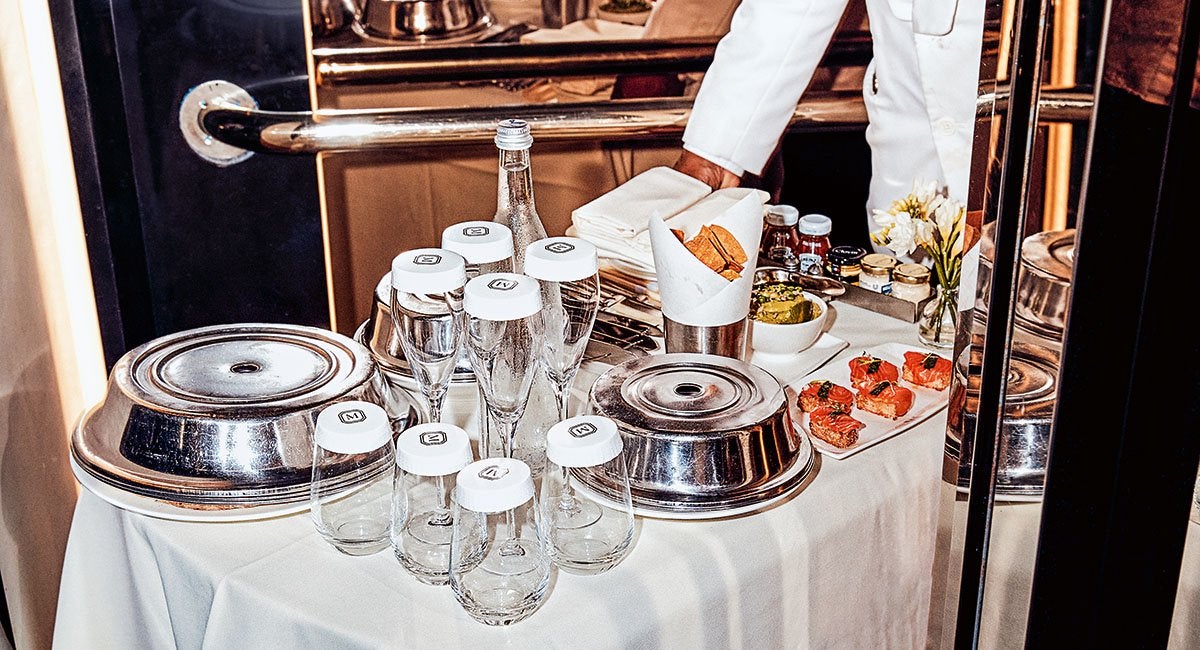
A century after its debut, the Upper East Side staple continues to set the standard for chic New York City elegance through bold design, rich history, and cultural cachet.
Sign up for our weekly home and property newsletter, featuring homes for sale, neighborhood happenings, and more.
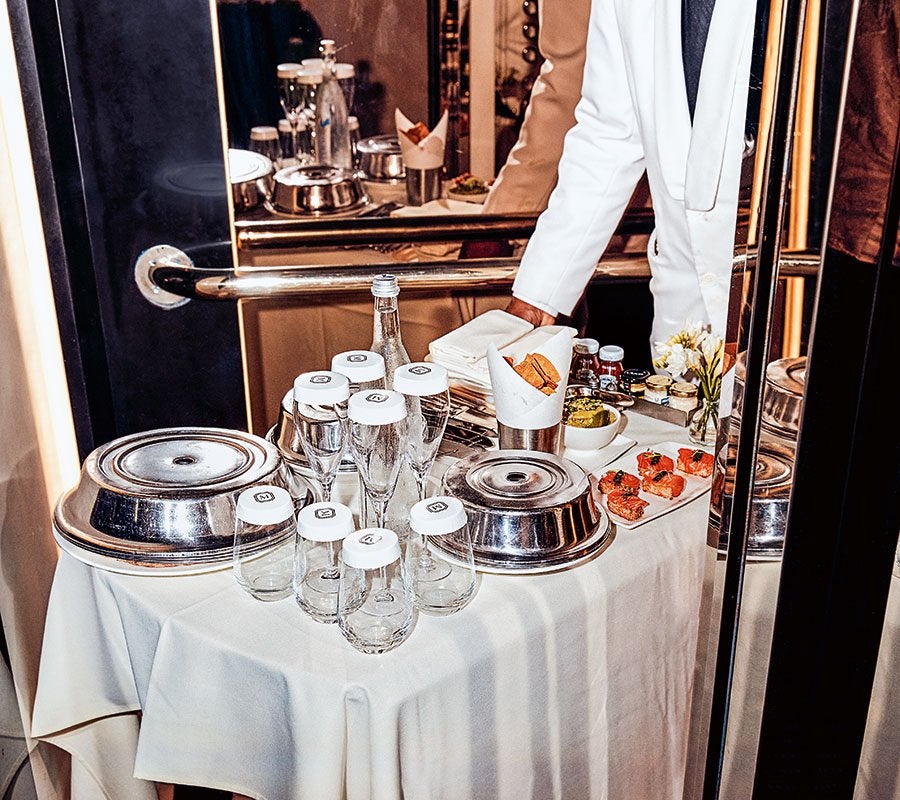
Photo by Oliver Pilcher
This article is from the spring 2026 issue of Boston Home. Sign up here to receive a subscription.
Tucked along a tree-lined stretch of Madison Avenue, the Mark Hotel stands as one of New York’s most distinctive addresses—a place where Upper East Side tradition and contemporary glamour meet with effortless polish. When the original Mark opened in 1927, the neighborhood was transforming from a quiet residential enclave into one of the city’s most refined corridors. The hotel quickly became a preferred retreat for well-heeled travelers seeking both discretion and proximity to Central Park and Museum Mile.
Nearly a century later, that legacy is newly celebrated in The Mark, a new Assouline volume by New York Times bestselling author Derek Blasberg. The book traces the hotel’s evolution—from its early days as an understated residence hotel to its present role as a cultural touchpoint woven into the fabric of uptown life.
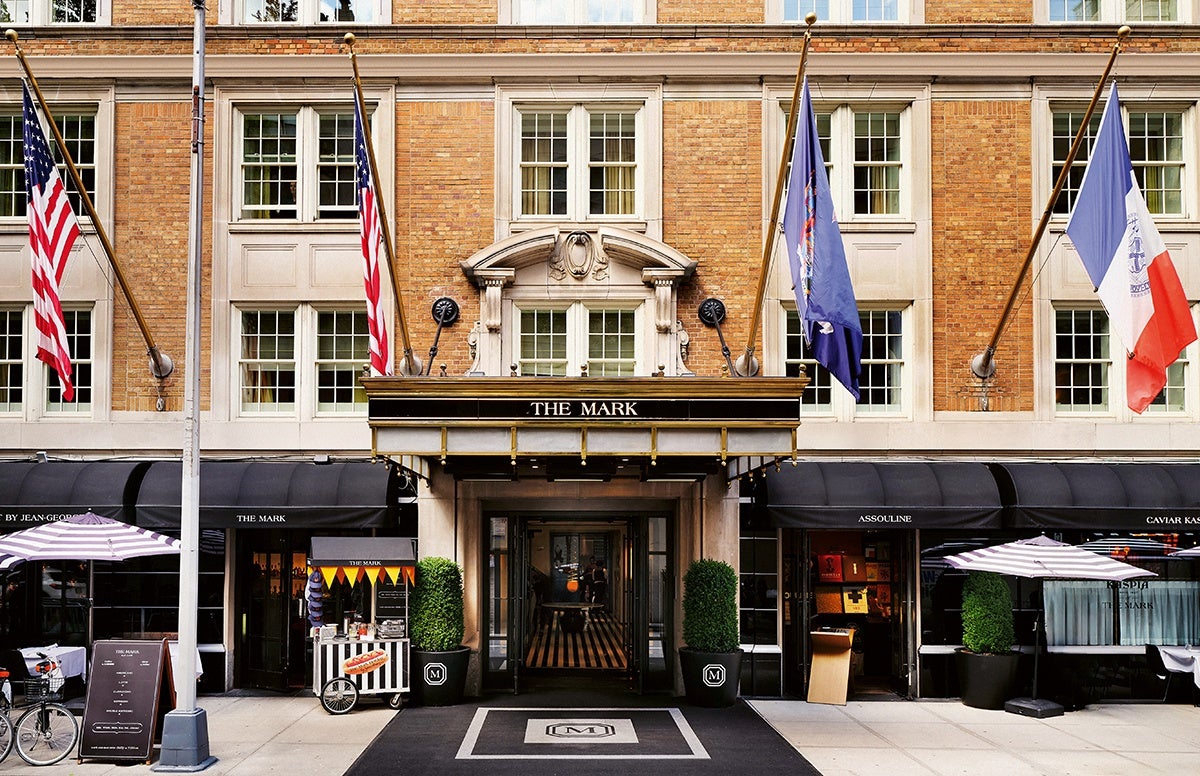
Photo by Adrian Gaut
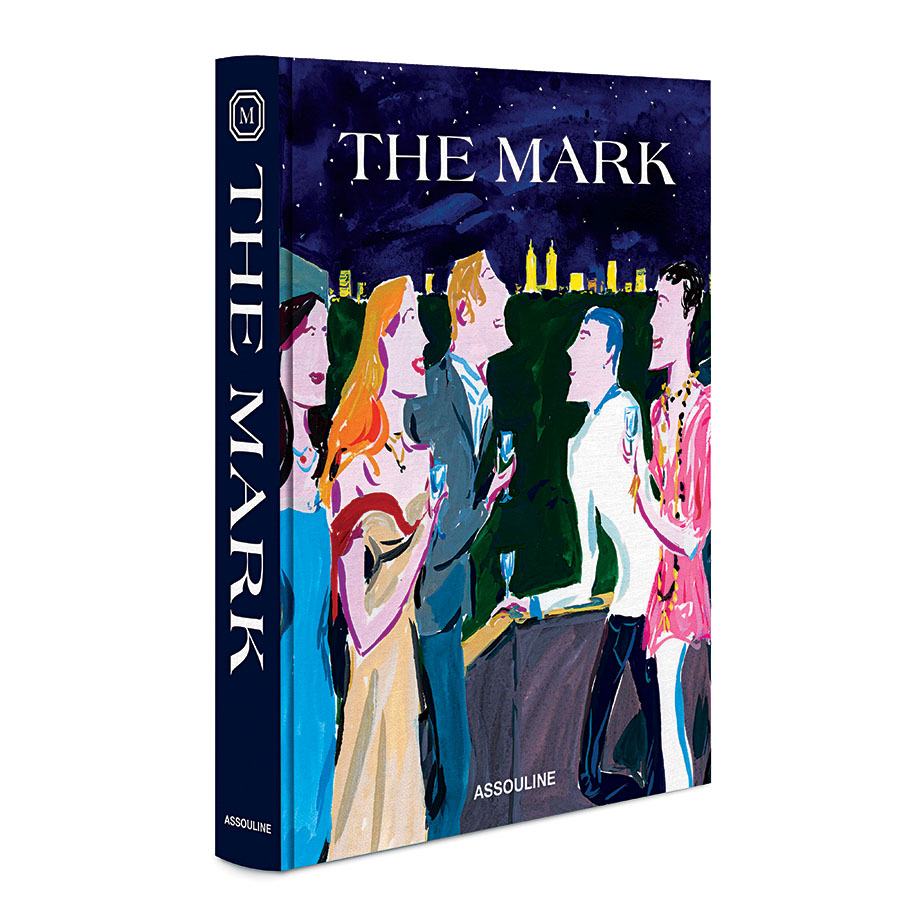
As The Mark homes in on its centennial, the recently released Assouline volume celebrates the hotel’s design and culture.
The Mark’s most defining reinvention came in 2009, when French designer Jacques Grange undertook a top-to-bottom transformation that honored the building’s prewar architecture while projecting it confidently into the 21st century. Grange’s eclectic blend of Parisian chic, bold geometry, and meticulous craftsmanship reshaped the hotel’s identity. The lobby’s now-iconic black-and-white striped marble floor nods subtly to the art deco era while introducing an unmistakably modern visual rhythm. Throughout public spaces and guest rooms, curated artworks and custom furnishings reflect contributions by creative luminaries including Karl Lagerfeld, Guy de Rougemont, Paul Mathieu, and Mattia Bonetti.
The guest rooms build on this dialogue between past and present. Lacquered details and tailored monochromatic palettes evoke European modernism, while plush textiles and oversized soaking tubs offer the comforts expected of a 21st-century luxury stay. Many suites frame sweeping Central Park views—reminders of the hotel’s longstanding relationship with the neighborhood surrounding it. The penthouse, meanwhile, channels the grand scale of early-20th-century apartments, reinterpreted with contemporary opulence.
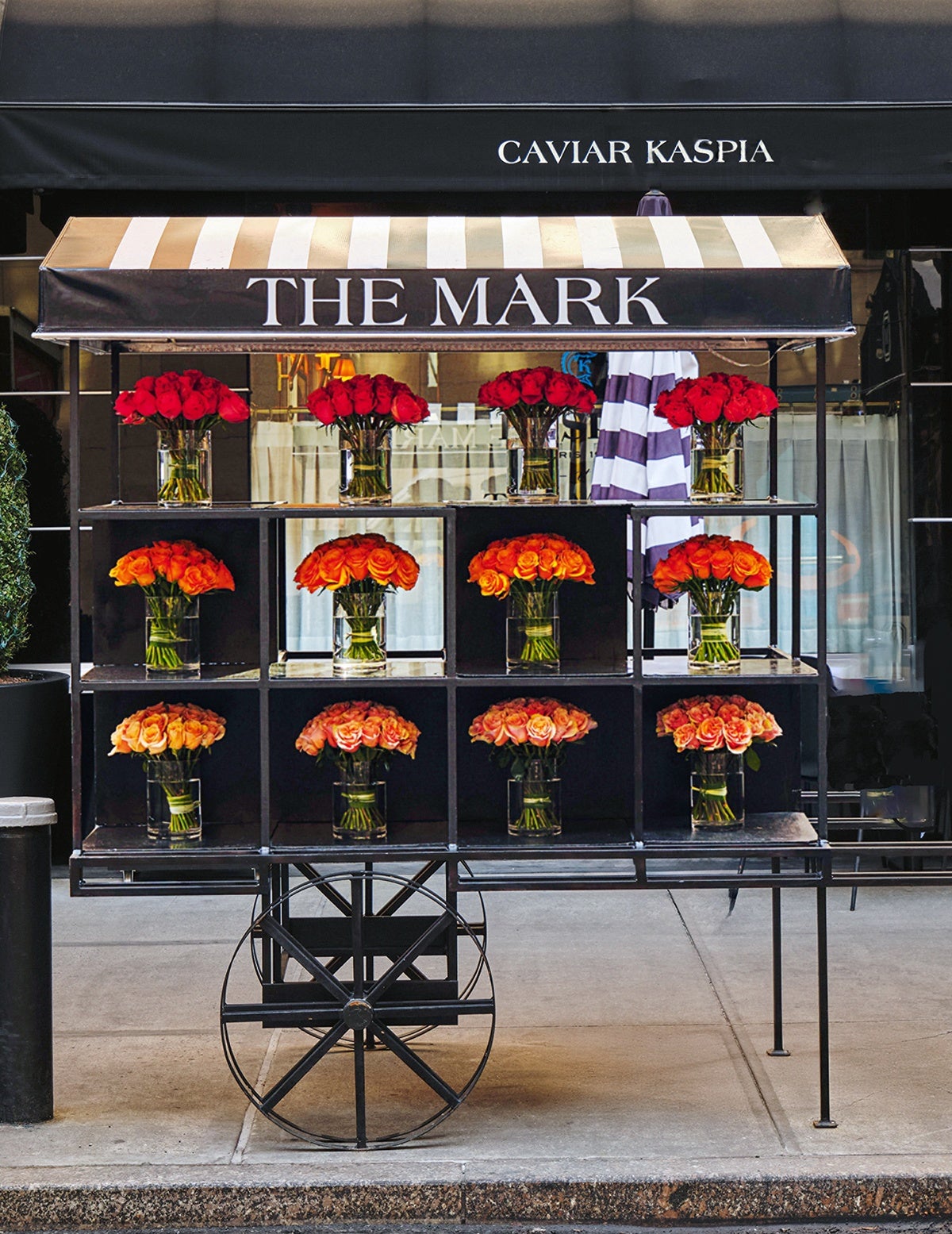
Photo by Adrian Gaut
Over the years, The Mark has cultivated a cultural identity few hotels can claim. Its role as the unofficial headquarters for the Met Gala underscores its place in the city’s creative ecosystem, while curated guest experiences—from a private sailboat to the cheeky Bergdorf Goodman Express pedicab—broaden its sense of playful sophistication.
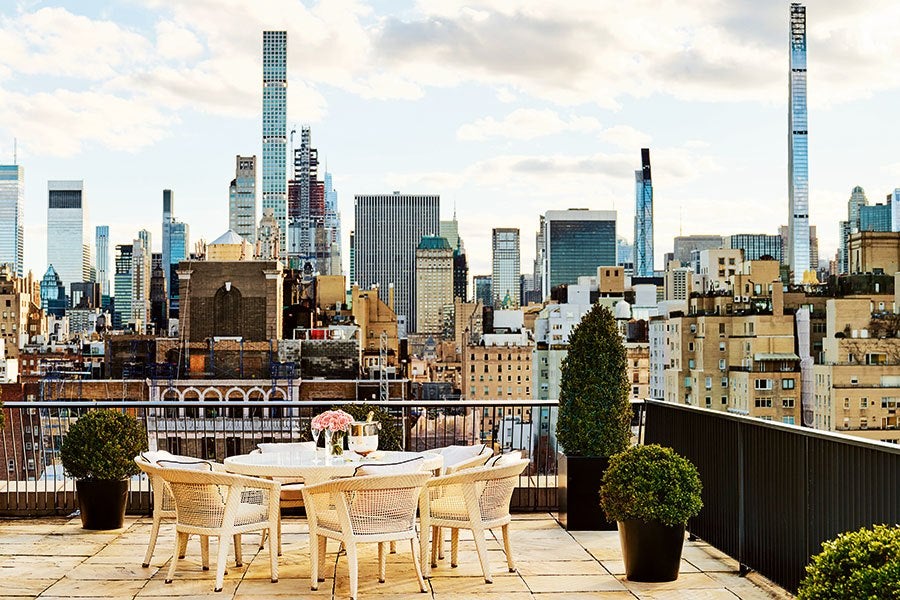
On the rooftop, private dining is available with a bird’s-eye view of the city. / Photo by Adrian Gaut
First published in the print edition of Boston Home’s Spring 2026 issue, with the headline “Uptown Original.”