
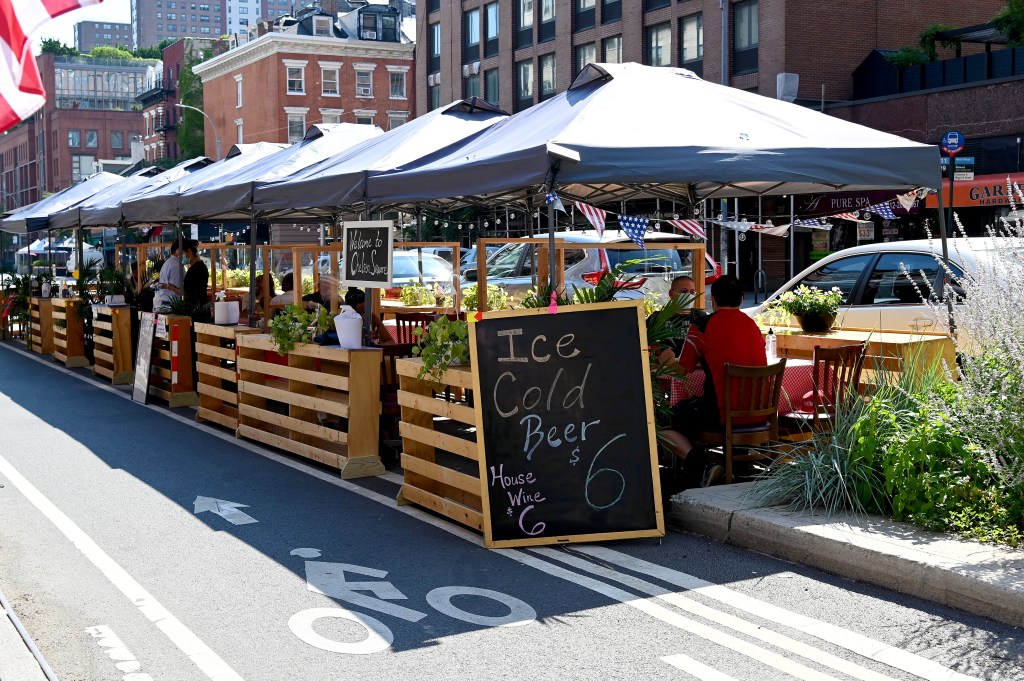
During the darkest days of the pandemic, New Yorkers rediscovered their streets. Parking spaces became dining rooms, sidewalks became gathering places, and outdoor dining quickly emerged as one of the city’s most visible and successful adaptations to crisis.
When indoor dining shut down, the emergency outdoor dining program allowed restaurants to place tables on sidewalks and, for the first time, in roadways. Curbside parking was transformed into vibrant extensions of neighborhood life. It quickly became one of the city’s most popular and effective economic recovery tools. At its peak, roughly 8,000 restaurants participated.
Over the past two years, however, the program has changed significantly. A 2023 law created a permanent program known as DiningOutNYC, but participation has declined as seasonality and cumbersome new requirements have made the program more difficult for businesses to navigate.
Mayor Mamdani has challenged my agency to think big, be ambitious, and make our streetscape the envy of the world. That is why we will work with the City Council to rekindle the spark of outdoor dining — restoring year-round roadway dining and cutting red tape.
The original program succeeded because it was simple. People discovered how much they enjoyed eating outside, gathering with friends and neighbors in spaces that had long been reserved almost exclusively for parked cars. Streets once dominated by vehicle storage became lively public spaces filled with conversation, energy, and community connection.
Just as pedestrian plazas, bus lanes, and bike lanes have reshaped how people experience the city, outdoor dining reminded us that our streets can better serve our communities. For thousands of restaurants, outdoor dining wasn’t just popular — it was the difference between surviving the pandemic and closing their doors.
Today’s permanent program has the right goals, but structural limitations make participation harder for restaurants.
One major obstacle is that roadway dining is now only seasonal. Restaurants must dismantle roadway setups each winter, even though many businesses successfully operated year-round in the past. Building, removing, and storing these structures annually requires time and expense.
Administrative complexity has also slowed the program’s growth. Restaurants must navigate separate applications, fees, and approval processes for sidewalk cafes and roadway cafes, even when both are part of the same establishment. The law also requires multiple review stages involving Community Boards, the Council, and the Department of Transportation, along with a public hearing for every roadway cafe.
These layers of review can stretch the approval process to six or even eight months or more — far longer than many restaurants can reasonably wait.
Despite these challenges, demand for outdoor dining remains strong. The city received 3,000 applications — more than double the size of the pre-pandemic sidewalk cafe program. Interest spans every borough, demonstrating how important outdoor dining has become to neighborhood restaurants and local economies.
The mayor has made clear that the streets should serve people — not just vehicles. This year, NYC DOT will work with the Council to restore year-round roadway dining and streamline the application process.
Outdoor dining was one of the few silver linings of a difficult chapter in our history. With the right adjustments, it can remain a defining feature of the city’s streetscape — helping small businesses flourish while creating vibrant public spaces that bring neighbors together.
Flynn is New York City’s transportation commissioner.