
New York, NY (March 14, 2026)
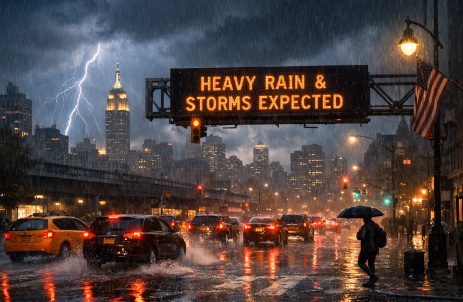
New York City is preparing for a wet and windy stretch of weather as a strong frontal system is forecast to move through late Sunday night and Monday, bringing rounds of rain, gusty winds and the potential for thunderstorms.
Forecasters indicate showers could begin Sunday evening before becoming steadier overnight. Rain is expected to continue into Monday morning, creating the potential for slower travel during the early commute. Conditions may briefly turn less organized later in the morning or early afternoon, but the overall weather threat is expected to build again as the main front approaches.
The most disruptive period is expected Monday evening, when heavier rain bands and embedded thunderstorms may sweep across the five boroughs. That window could bring the greatest risk for intense downpours, sudden wind gusts and reduced visibility on roads. Wind speeds are expected to increase through the day, with stronger gusts developing by evening as the front passes.
Rainfall totals across the city are likely to reach around an inch, with some neighborhoods seeing somewhat higher amounts where thunderstorms become more concentrated. While widespread major flooding is not expected, localized street flooding and ponding remain possible in low-lying spots, underpasses and areas with poor drainage. Brief bursts of heavier rain could quickly overwhelm storm drains in isolated locations.
Temperatures are forecast to climb into the low 60s on Monday before colder air arrives behind the system Monday night. As the storm pulls away, rain should gradually diminish overnight into early Tuesday, followed by a cooler and drier pattern.
City residents are being urged to plan for slower travel, especially during the evening commute, and to use extra caution on water-covered roads. Officials are also advising people to secure outdoor items ahead of the stronger winds and move indoors if thunder develops. Keeping nearby drains clear of debris, when it can be done safely, may also help reduce localized flooding problems.
