
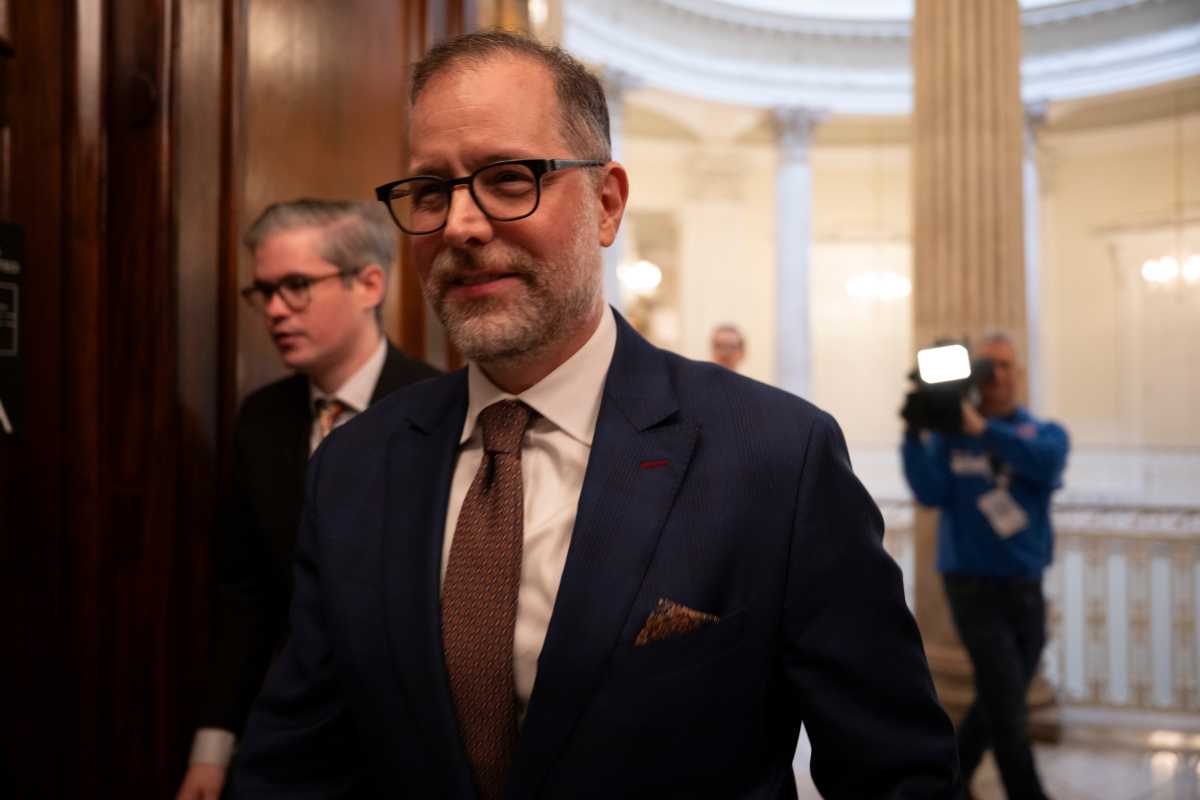
City Comptroller Mark Levine said on Wednesday that the NYC budget gap now stands at a projected $7.3 billion over the next two fiscal years.
Photo by Lloyd Mitchell
New York City is facing one of its worst fiscal crises since the 1970s, and the reason comes down to simple math: It is spending far more money than it is taking in.
The problem may be making headlines now, but the city’s Independent Budget Office (IBO) revealed it months ago. In its December 2025 analysis of the late Adams administration’s revised spending plan, it found one example after another of the city spending way more than it budgeted for an array of programs.
Both Mayor Zohran Mamdani and City Comptroller Mark Levine have said the city underbudgeted for years, and that the consequences from that overspending are finally coming home to roost. The city must now close a massive budget deficit this June; Levine said on Wednesday that the gap now stands at a projected $7.3 billion over the next two fiscal years.
On that same day, the city received yet another ominous warning about its spending problems — this time from outside City Hall. Moody’s Ratings downgraded New York’s financial forecast from stable to negative, citing an underlying structural imbalance in the budget and reduced financial flexibility.
Moody’s forecast downgrade is the proverbial canary in the coal mine. Should New York refuse to dramatically change how it spends, and how much it spends, we could face a ratings downgrade in municipal bonds. That would be catastrophic for the city’s finances, as it would make it much more costly to raise capital for essential services.
The reality of our situation is clear: We’re spending too much.
The IBO report cited the usual suspects, such as ballooning overtime costs for the shorthanded NYPD, the Correction Department, the FDNY and the Sanitation Department, as contributing to the budgetary imbalance. But there are also programs such as CityFHEPS (City Fighting Homelessness and Eviction Prevention Supplement), which has noble intentions but has instead completely gone awry.
When CityFHEPS, which provides city-based housing vouchers to low-income New Yorkers, launched in 2019, just $25 million was budgeted toward the endeavor. But over the years, as housing costs skyrocketed, so did the need for CityFHEPS — and the cost became exorbitant.
Last year, the IBO says, the city spent $1.2 billion on CityFHEPS vouchers, about $169 million more than it budgeted for the program. Out-year spending gaps for CityFHEPs were projected to be even higher.
Mamdani has said he refuses to adopt austerity measures in the budget that impact the most vulnerable New Yorkers. But as mayor, he may not have any other choice — especially since Gov. Kathy Hochul remains steadfast in opposing tax increases on the rich, and City Council Speaker Julie Menin has declared property tax increases a “non-starter” in budget negotiations.
We’re spending too much. The answer to the city’s budget problems isn’t to spend more with other people’s money.
The answer is to get the city’s fiscal house in order — to better manage overtime, to improve efficiencies, to abandon programs that aren’t working and/or find alternative sources of funding to keep them going.
And the answer is to never write a check that the city cannot cash.