

IN BRIEF
When Brigadier General Wilmer F. Lucas retired from the United States Army Reserve, he did so as a war hero who had led the Harlem Hellfighters at the World War II battle of Okinawa. For his heroics, he won the Army’s Legion of Merit and other awards—but he was also a hero on the home front too, as he was the first African American CPA in the state of New York, and the fifth in the nation. His firm made it possible for many other African American CPAs to receive the necessary audit experience to qualify for certification. General Lucas was a trailblazer in the accounting profession.
***
In 1929, the first African American to pass the CPA Examination in the state of New York was Wilmer F. Lucas, who was 32 years old at the time (“Captain Wilmer F. Lucas First Negro [sic] Certified Public Accountant,” New York Age, Sept. 7, 1929, p. 6; T. A. Hammond, A White-Collar Profession: African American Certified Public Accountants Since 1921, University of North Carolina Press, p. 21, 2002). In 1938, he joined Alfred W. Tucker to form the New York City CPA firm of Lucas, Tucker & Company. By hiring African American apprentices, the firm was able to employ many young accountants in New York who themselves went on to become CPAs. While practicing as an accountant, Lucas was also active in the US Army Reserve—specifically the 369th Infantry Regiment of the New York National Guard—and progressed through the ranks, reaching the rank of Lieutenant-Colonel in the group also known as the Harlem Hellfighters. The National Guard unit was called up to active service in early 1941, just before the United States’ entry into World War II; Lucas had advanced to the rank of Lieutenant-Colonel. His wartime service in the Pacific Theater earned him several accolades, including the Legion of Merit, the second highest military decoration given to American soldiers. After the war, Lucas continued both his accounting and military careers and was eventually promoted to Brigadier General in the Army Reserve in 1957 (G. Harris, “Gen. Lucas Dies at 82,” New York Amsterdam News, p. 4, May 10, 1980). He was active with the NYSSCPA, serving as a member of various Society committees and later as a director of the then 16,500-member Society (New York Amsterdam News, 1969, p. 32). In his later years, he founded and served as chairman of Carver Federal Savings and Loan Association, the second largest Black-owned institution of this type in the United States (Harris 1980).
Because of his service to the nation during wartime, and for his firm’s services in expanding the number of African American CPAs in New York, Lucas is deserving of recognition for his many accomplishments during both of his intertwined careers. Wilmer F. Lucas contributed to the field of accounting, the success of his clients and employees, and his nation. This story highlights the contributions of an inspirational leader who paved the way for African Americans to enter the accounting profession.
The Early Years
Wilmer Francis Lucas was born on July 11, 1897, in Washington, DC. He was the son of John and Eliza Lucas, both natives of the state of Virginia. Shortly after the turn of the 20th century, the family moved to New York City, where Wilmer attended public schools and graduated from DeWitt Clinton High School. His parents were listed as living together in the 1910 Federal Census, but they were living apart by 1920. In between those dates, Lucas’s mother married Albert L. Jordan, “one of the leading deacons of Abyssinian Baptist Church,” who became Wilmer’s stepfather. Jordan was still married to Eliza at the time of his death in 1938. The short obituary noted that Jordan, aged 70, had served as “treasurer-trustee of the Abyssinian Baptist Church for more than twenty years” (“A. L. Jordan Dead,” New York Age, p. 1, July 9, 1938). Lucas was even referred to as “Wilmer Francis Lucas Jordan” after becoming the only Black finalist and winning a debate tournament (“Wins First Prize in Memorial Contest,” New York Age, p. 6, June 15, 1916). This article also noted the beginnings of a fledgling accounting career, as Wilmer was listed as the auditor of Abyssinian Baptist Church and treasurer of the Douglass Students’ Club. On his August 24, 1918, draft registration card, his last name was given as Lucas, but Albert Jordan was listed as his “nearest relative” and “stepfather.”
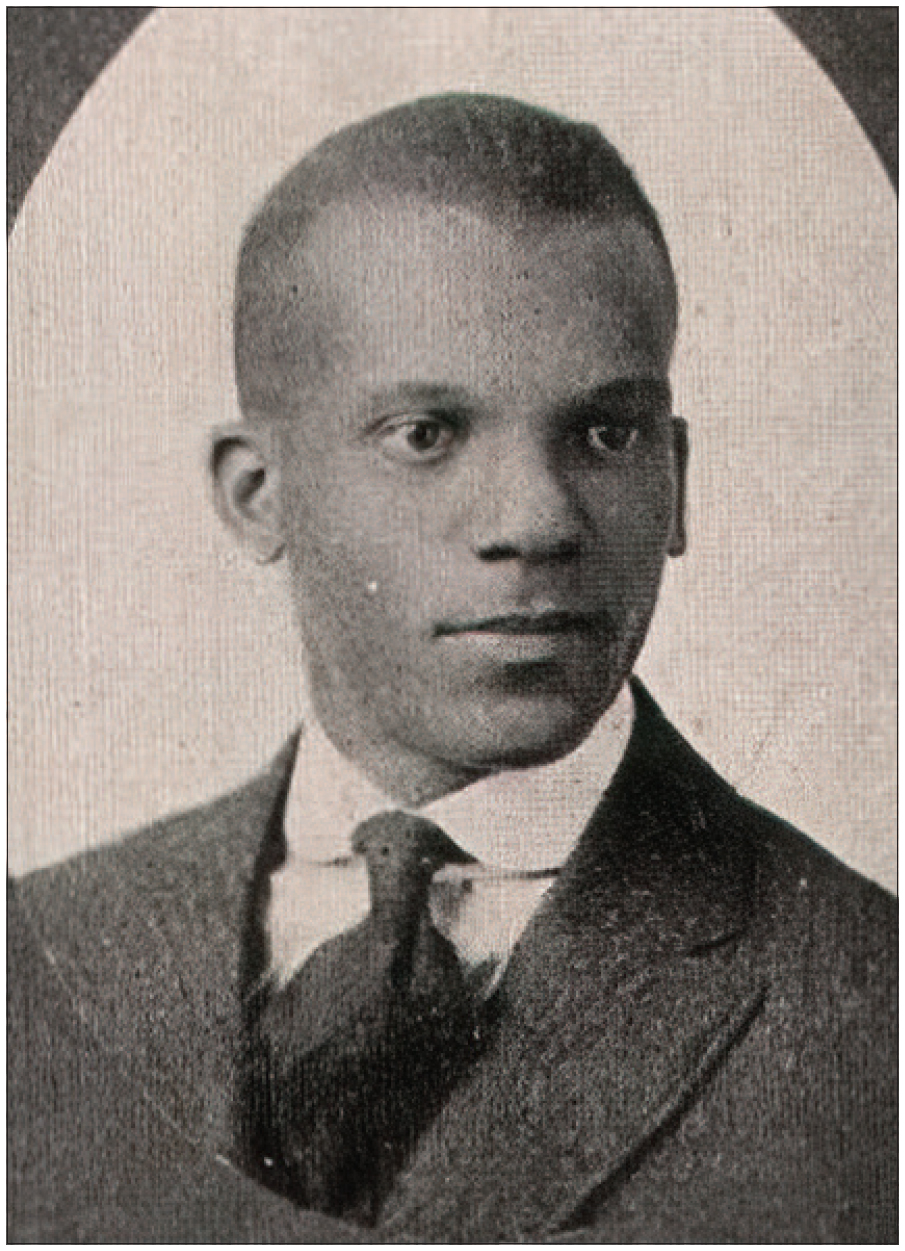
Wilmer Francis Lucas as an NYU undergraduate student in 1919
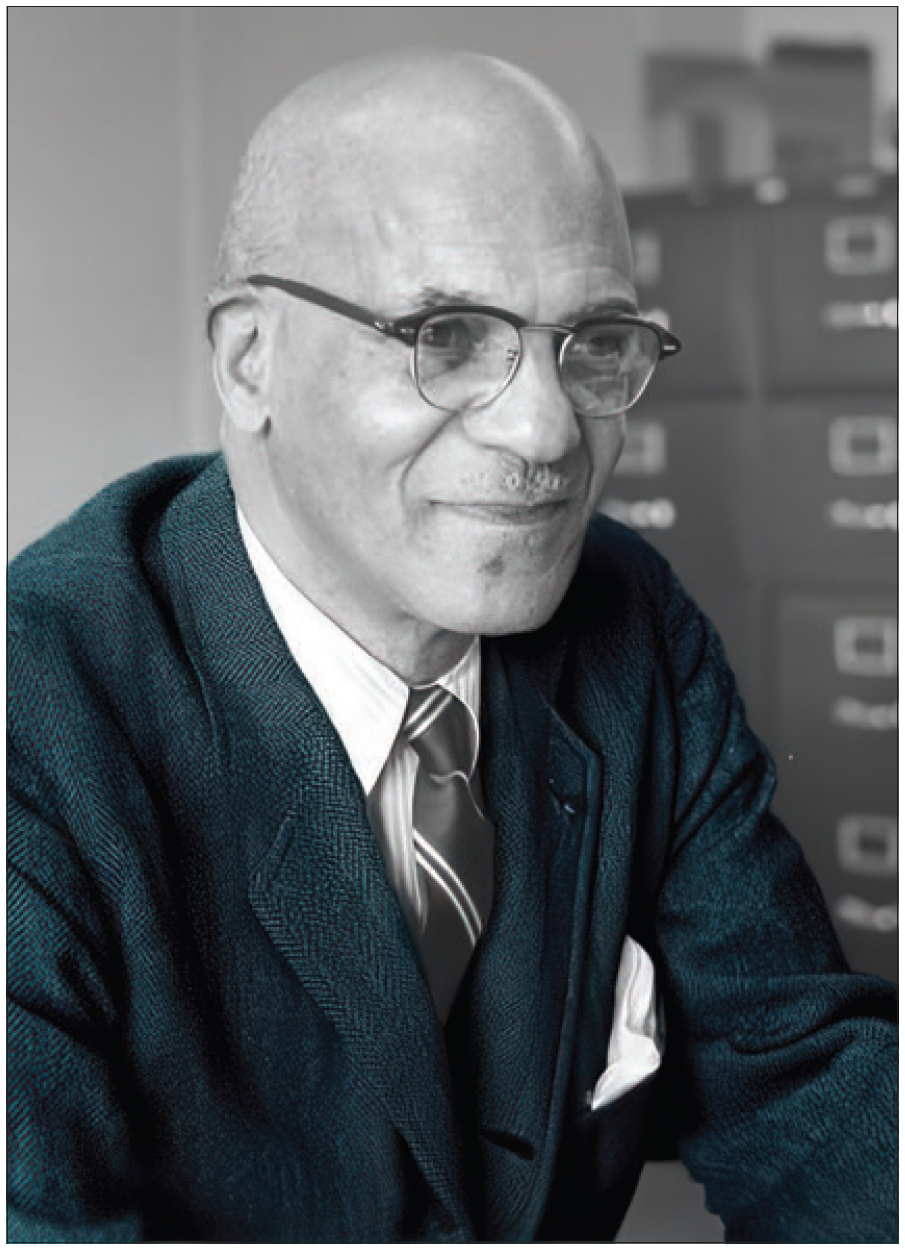
Wilmer Francis Lucas as a CPA practitioner, circa 1970
Lucas went on to receive his undergraduate degree from NYU in 1919 and an MBA degree in 1922 (Walter H. Waggoner, “Gen. W. F. Lucas, 82; Served as Commander During World War II,” New York Times, May 6, 1980). In July 1922, he married Inez Clyde Williams, a teacher (“Lucas-Williams Marriage,” New York Age, p. 8, July 15, 1922). The couple had one child, in 1927, a son named Wilmer F. Lucas, Jr. (Waggoner 1980).
The senior Wilmer Lucas worked in an accounting or auditing capacity for several New York City and State agencies during the 1920s. Then, in 1929, he passed the New York CPA Examination and became the first African American CPA in the state, and the fifth in the nation (“Captain Wilmer F. Lucas First Negro Certified Public Accountant,” New York Age, p. 6, Sept. 7, 1929). Lucas had received auditing experience as a result of his work with the Jewish CPA firm of Daniel Levy & Company in Manhattan. According to Theresa Hammond’s book on African American accountants, Lucas’s son and namesake reported that “Father said he was always indebted to the Jewish people for giving him an opportunity” (Hammond 2002, p. 21).
The only known publication authored by Lucas was a 1932 article in Opportunity, Journal of Negro Life in which Lucas lamented the fact that so few Black students majored in business. As a result, there were not many Black people who were qualified to work as service providers to Black-owned businesses (W. F. Lucas, “Educating the Negro for Business—An Investment Loss,” Opportunity, Journal of Negro Life, Vol. X, No. 4, pp. 105-107, April 1932). He also encouraged Black-owned businesses to attempt to find Black employees to serve their businesses and to avoid hiring white-owned firms to provide services such as accounting and insurance. The publication in which Lucas’s article appeared was a prestigious journal published by the National Urban League, which often included among its authors some of the leading African American businessmen and literary figures. Even before starting his own business, Lucas was promoting younger men to go into the business professions.
Additional African American partners were added in the 1960s, making the firm the largest Blackowned CPA firm in the country.
Professional Partnership
In 1937, Lucas started his own firm, Lucas & Tucker, at 209 West 125th Street in Harlem, in partnership with Alfred W. Tucker. Tucker was not a CPA at that time, but he received his certificate in 1938, becoming the second African American CPA in New York and the eighth in the nation (Hammond 2002, p. 147). Tucker was born on July 24, 1894, in the Williamsbridge section of the Bronx. Following his graduation as an accounting major at Columbia University, he taught in public schools (“Tucker Passes Certified Public Accountant’s Test,” New York Amsterdam News, p. 3, Aug. 6, 1938). In 1950, he became an attorney after graduating from Fordham University Law School. Tucker was the first Black CPA/lawyer in the state (“First Race CPA is Made Lawyer,” New York Amsterdam News, p. 3, June 24, 1950). Similar to Lucas, Tucker was active on the board of the Carver Bank, the Uptown Chamber of Commerce, the Morningside Gardens Cooperative, and the NYSSCPA in the 1950s. Tucker was also a World War I veteran (New York Amsterdam News 1959, p. 1).
Before becoming a CPA, Tucker held several accounting-related positions with state agencies such as the New York State Transit Commission, the Municipal Civil Service Commission, and as a senior Public Service Accountant in the Bureau of Valuation and Research of the Public Service Commission, a position that involved the examination of the books of the Consolidated Edison System Companies.
Despite working as partners in their own CPA firm, the volume of business in the early years was such that both continued to work for New York state agencies even after the firm was founded. At the time of his death in April 1959, Tucker was the Principal State Accounts Auditor, and his obituary referred to him a “prominent state official” (“Harlem Mourns Passing of Alfred Tucker,” New York Amsterdam News, p. 1, April 18, 1959). The attendance of over 500 Harlem civic and business leaders (including 15 of the firm’s previous apprentices) at his funeral spoke to his impact and popularity (“500 Attend Funeral for Alfred W. Tucker,” New York Amsterdam News, p. 4, April 25, 1959).
Following the death of his partner, Lucas remained in charge of the firm until his retirement in 1967 (“Gen. Lucas Retires from His CPA Firm,” New York Amsterdam News, p. 6, February 4, 1967). Additional African American partners were added in the 1960s, making the firm the largest Black-owned CPA firm in the country. Although retired, Lucas was still providing consulting work to the firm in 1971 (J. Nolan, “Black Accounting Firm Faces Future,” Journal of Accountancy, pp. 22-26, March 1971). By 1972, the firm had offices in six states and more than 100 employees, and one of these partners was the venerable Bert Mitchell, whose writing and research highlighted the quantity and quality of Black CPAs in the 1960s and 1970s (J. Zamgba Browne, “How Harlem CPA Firm Proved Blacks Are Capable Businessmen,” New York Amsterdam News, p. D8, July 29, 1972; B. N. Mitchell, “The Black Minority in the CPA Profession,” Journal of Accountancy, pp. 41-48, October 1969).
The Contributions of Lucas & Tucker
Passing the CPA Exam was only one of the challenges of becoming a certified public accountant. Perhaps even more daunting than the exam was meeting the experience requirement needed to receive the CPA certificate. Many early African American CPAs were forced to wait years to obtain their license because they could not get employment in a CPA firm due to racial prejudice, often due to clients who did not want Black advisors working on their engagements, thereby discouraging firms from hiring them. African American CPAs were limited in number, but those few who established firms often tried to hire others in order to provide them with experience and, ultimately, their licenses. This was particularly true in the case of Lucas & Tucker.
Following the death of Alfred Tucker in 1959, an editorial in The New York Age, a newspaper for the Black community, lamented the loss of one of the firm’s founding partners and noted the contribution that Lucas & Tucker made in providing relevant experience to younger CPAs:
One of the employees of the firm … reminded us that up until five years ago it was difficult for a Negro graduate in the accounting field to acquire the necessary experience for certification. Lucas and Tucker met this challenge by making it possible for well-trained young people to work in their firm. Since these were inexperienced trainees, the two men gave much time and supervision, as well as money toward this program. A number of individuals who now have offices of their own, or work for city and state government, received their basic experience through Lucas and Tucker (A. A. Hedgeman, “Alfred Tucker Served Us All,” New York Age, p. 9, May 16, 1959).
Lucas, Tucker & Co. … “provided the required experience for more than 25 percent of all of the Black CPAs … in New York.” However, the firm was not as progressive in hiring women.
Further, Lucas, Tucker & Co. has been credited to have “provided the required experience for more than 25 percent of all of the Black CPAs who have obtained their certificates in New York” (Bert N. Mitchell, “The Black Minority in the CPA Profession,” Journal of Accountancy, pp. 47, October 1969). However, the firm was not as progressive in hiring women. Hammond noted that one of the earliest Black female CPAs in 1954, Bernadine Coles Gines, who held an MBA from NYU, reported that in the early 1950s, the firm did not hire women (2002).
Military Career and Rise to Brigadier General
While he was pursuing an accounting career, Lucas was also active in the military. On June 19, 1924, Lucas joined the 369th Infantry Regiment, an all-Black unit of the New York National Guard, as a captain. The high rank was perhaps because he was a college graduate with a master’s degree. The all-Black reserve unit had a rich heritage of active service during World War I, and Lucas was promoted to major in November 1933 (“Wilmer F. Lucas Is Promoted to Major in 369th Regiment,” New York Age, p. 1, Nov. 25, 1933). Throughout the 1930s, there were many newspaper articles about Lucas, primarily related to his leadership activities with the 369th regiment, but also because of his and Inez’s social and charitable activities. One 1934 article noted that they had hosted one of the best New Year’s Eve parties in Brooklyn in their home (“Gay New Year’s Eve Party Given by Popular Matrons,” New York Age, p. 7, Jan. 6, 1934).
Lucas was promoted to Lieutenant Colonel in December 1940, and then on January 13, 1941, his unit was activated. He held his rank as the 369th was shipped out to California for training as an anti-aircraft artillery unit. Many CPAs who were drafted or enlisted in World War II were assigned to accounting-related duties, especially the officers, but Lucas served as a combat officer (M. E. Jobe and D. L. Flesher, “Eminent Accountants During World War II,” The CPA Journal, vol. 85, no. 8, August 2015, pp. 44–53).
The early years of the war were spent in Hawaii, but by 1945, the regiment had been broken up into three units, one of which was the 870th Anti-aircraft Brigade with Lucas in command. It was with this brigade that Lucas was to receive the Army’s Legion of Merit Award “for exceptionally meritorious conduct in the performance of outstanding services during the period June 12 to August 2, 1945,” in the area around the Okinawa Archipelago in the China Sea. The citation noted that during this period, the “battalion at two-thirds its regular strength performed daily and nightly amphibious combat missions for 95 days in a most creditable mission until relieved just before V-J day” (“Col. Lucas Given Legion of Merit,” New York Amsterdam News, p. 14, Nov. 1, 1947). Lucas would also receive the Conspicuous Service Cross from the State of New York, and, eventually, in 2021, the battalion as a whole received a Congressional Medal of Honor.
The first couple of months of the campaign in Okinawa was reported on by a New York newspaper in July 1945:
Under command of Lt. Col. Wilmer F. Lucas and directed by colored officers, this hard-hitting outfit of former New York State Guardsmen has, during the past 69 days on a combat infantry mission in the Kerama Retto, added the following achievements to the glorious record compiled by its parent organization during World War I. On May 30, during its first patrol in the Kerama Retto captured a Japanese major, one lieutenant, two superior privates, one female nurse, one heavy machine gun, eight rifles and large quantities of ammunition without the loss of a man. Two members of the patrol suffered slight injuries. The Jap [sic] major personally surrendered his sword to Lt. Col. Lucas. … Through kind treatment of the captured Jap major, the unit succeeded in setting the stage for peace negotiations with an enemy garrison entrenched on a nearby island in which the Jap major volunteered to act as intermediary.
In a day of blazing action on June 24, the unit captured a valuable hill position from the Japs, killed 20 enemy soldiers and wounded 10, captured an enemy grenade launcher, destroyed 2 machine gun nests and supplies of ammunition, knocked out 2 enemy pillboxes and burned an enemy encampment. … In 60 days of operations the men have captured in the neighborhood of 700 prisoners, including Jap officers, soldiers, Korean and Okinawan labor troops (C. Loeb, “Lt. Col. Wilmer F. Lucas, Led New York’s 369th Troops as Part of Invasion Forces that Took Jap Held Okinawa,” New York Amsterdam News, p. A1, July 14, 1945).
Lucas was an inspirational leader in both the accounting profession and the military.
Some of the details of the fighting during that 95-day mission were summarized in a 1945 article in the Chicago Defender:
Upholding the fighting tradition of the oldest Negro national guard outfit in the United States, the anti-aircraft battalion commanded by Lt. Col. Wilmer F. Lucas, of New York City, once a part of the de-activated 369th Coast Artillery Anti-Aircraft Regiment, is seeing action in the Western Pacific, where it is the only all-Negro combat unit in action. The organization has scored a number of successes which are noteworthy because of the sudden conversion of the outfit from anti-aircraft to infantry (E. P. Waters, “‘Ack-Ack’ Unit Converted to Infantry ‘Overnight,’” Chicago Defender, p. 10, Aug.11, 1945).
Lucas and the 369th Regiment received a hero’s welcome when they returned home in October 1945, and were stationed in Fort Dix, New Jersey (“369th Regiment Due at Ft. Dix,” New York Amsterdam News, p. 1, Oct. 20, 1945). Lucas was released from the Army on May 6, 1946, but not before being promoted to full Colonel. All in all, he was out of the profession for more than five years between the start of 1941 and mid-1946. Lucas stayed active with the National Guard unit as a Selective Service officer (Waggoner 1980). In 1957, he was promoted to Brigadier General.
The Life and Impact of Wilmer F. Lucas
Following the War, then-Colonel Lucas returned to accounting and played a small role in politics. In 1946, he became the vice chairman of the campaign to re-elect New York Governor Thomas E. Dewey (“Churches Sponsor Republican Rally,” Knickerbocker News, Albany, NY, p. 17, Oct. 8, 1946). In 1948, Dewey ran for president of the United States and lost to incumbent Harry S. Truman. Again, Colonel Lucas was a leader in the campaign, holding the title of assistant campaign manager (“Elks Leader for Dewey,” New York Age, p. 2, Oct. 23, 1948). When Dewey declared his intent to forgo reelection as Governor again in 1950, Lucas urged him to run again. Dewey ran and was reelected by a landslide vote.
Lucas was financially successful. The 1950 Federal Census shows that Lucas earned $19,000 in salary in 1949, and Mrs. Lucas earned $4,750 (they also reported additional income from dividends and interest). His $19,000 salary in 1949 would be equivalent to about $250,000 today. Mrs. Lucas, sometimes accompanied by her husband, avoided the hot summers of the city by summering at their cottage at a resort, Oak Bluffs, in Martha’s Vineyard, Massachusetts (“Col. Wilmer Lucas and his wonderful Inez,” New York Amsterdam News, p. 5, June 27, 1970). There were about 200 Black families who had second homes on the island, including such notables as New York Congressman Adam Clayton Powell Jr., and Massachusetts Senator Edward Brooke (L. D. Powell, “A Bit About Oak Bluffs, Mass.,” New York Amsterdam News, p. 7, Aug. 31, 1968). She may have moved there full-time following Lucas’ death, as that is where she died in February 1985 (“Lucas, Mrs. Inez,” Knoxville News-Sentinel, p.17, Feb. 6, 1985).
Lucas was an inspirational leader in both the accounting profession and the military. He died on May 2, 1980, at the age of 82; although a long-time Brooklyn resident, his funeral was held at the Abyssinian Baptist Church near the armory of his beloved 369th Infantry Regiment in Harlem (G. Harris 1980; Waggoner 1980). Survivors included his wife Inez and namesake son. Lucas was a social and business leader in Harlem and Brooklyn and did much to promote African Americans into the accounting profession. Perhaps New York CPA Edward Mendlowitz, who served in the once all-Black 369th regiment in 1965, said it best in a recent newsletter article: “He was a trailblazer” (E. Mendlowitz, “Harlem Hellfighters: Personal Reflections,” Withum, Partners’ Network, Feb. 20, 2024).
Dale L. Flesher, CPA, PhD, is an emeritus professor of accountancy and holder of the Roland & Sheryl Burns Chair in the Patterson School of Accountancy at the University of Mississippi in Oxford.
Craig Foltin, DBA, CPA, is an associate professor of accounting at the Monte Ahuja College of Business, Cleveland State University, Cleveland, Ohio.
Gary Previts, PhD, CPA, is the E. Mandell de Windt Professor of Leadership and an emeritus professor of accountancy at Case Western Reserve University, Cleveland, Ohio.