
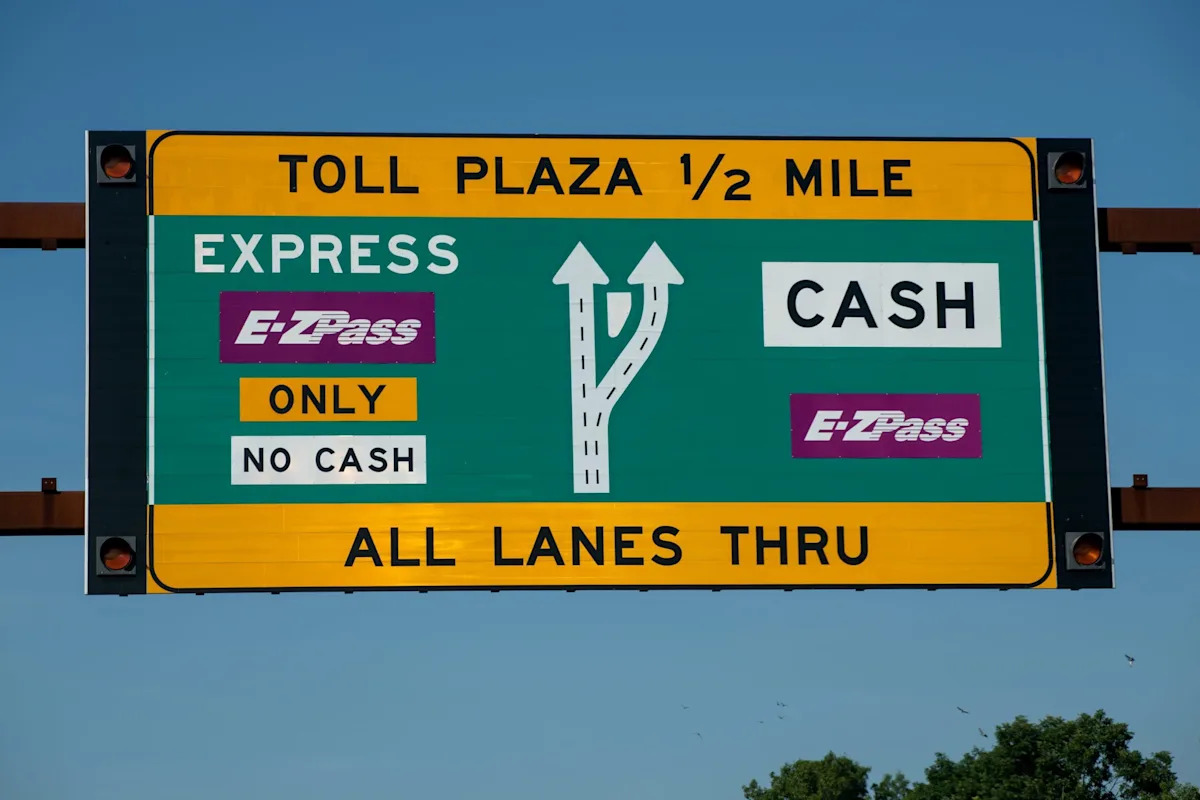
If you’ve ever nervously side-eyed your E-ZPass transponder as it beeped through a toll, wondering whether it actually registered… Congratulations, you may have more in common with Luis Corporan than you’d like.
Corporan, a professional driver licensed with New York City’s Taxi and Limousine Commission for over a decade, thought he was doing everything right. He monitored his E-ZPass account. He paid his bills through the app. He kept his nose clean for years on the road — which, if you’ve ever driven in New York City, deserves its own medal.
And yet, as of February 9th, his car is parked. Not because he wants it to be. Because the DMV suspended his registration, citing unpaid tolls and fees reported by the MTA.
The bill? A breathtaking $14,034.71.
To put that in perspective: that’s roughly the cost of a used car. Or fourteen thousand McDonald’s McDoubles. Or, apparently, just existing as a driver in New York.
How Do You Get to $14,000 Without Knowing?
Here’s where it gets maddening, at least to me! According to the DMV’s own breakdown, Corporan’s actual unpaid tolls come out to $2,134.71. The remaining $11,900 — more than five times the original toll amount — is entirely in fees.
Corporan says he did receive some notices, but assumed they were for tolls he’d already paid. He also raises a fair question: his transponder seemed to work at some toll points but not others. “Why wasn’t it reading it here, but then it actually started reading here?” he said.
That’s a reasonable thing to wonder. Car enthusiasts will tell you that technology is infallible and that transponders never glitch. Those people have clearly never owned a car in a city where potholes have their own ZIP codes.
CBS News New York investigative reporter Mahsa Saeidi took up Corporan’s case and reached out to the MTA with detailed questions about how the fees ballooned so dramatically without any apparent warning to the account holder.
The MTA’s response was a masterclass in not answering the question: “People who pay their tolls don’t pay fines.”
Cool. Helpful. Thanks.
A Family, Four Daughters, and a Parked Car
Image Credit: Michael T Hartman / Shutterstock.
Corporan isn’t driving for fun. He’s a husband and father of four daughters, and his livelihood depends entirely on being behind the wheel. Since February 9th, he’s been without a paycheck; which means the debt isn’t getting any smaller, and neither is the pressure on his family.
When he tried to negotiate with the MTA, the agency offered to settle for around $8,000 — but only if he paid by end of day. He didn’t have it. He has even less now.
He also reached out to the MTA’s toll payer advocate on February 17th. As of the time of this reporting, he’s still waiting to hear back. Nothing says “we care about toll payers” quite like leaving someone on read for weeks while their registration stays suspended.
He’s Not Alone — Not Even Close
What makes this story more troubling is that Corporan himself predicted it best: “I’m not the first and I probably won’t be the last.”
He’s right. CBS News New York’s ongoing series “Driven Into Debt” has uncovered a pattern of drivers who believed they were current on their tolls, only to get blindsided by DMV suspension notices and five-figure bills they never saw coming.
One Staten Island driver ended up owing $25,000 after allegedly never being notified about late fees. A Brooklyn resident was hit with a $35,000 bill — though he eventually negotiated an 80% reduction, bringing it down to around $10,000. Another driver’s nightmare stemmed from a simple error in her license plate number.
The MTA, for its part, says it is “perplexed” by the coverage and characterizes these cases as “willful persistent toll evasion.” Which is a fascinating way to describe people who say they were paying their bills and are confused about why their transponders weren’t reading consistently.
A Lawmaker Steps In
State Assemblymember Mike Reilly isn’t buying it either. He’s introduced legislation to cap the fees the MTA can charge, calling the current situation a direct threat to his constituents’ financial stability.
“Even though something is legal doesn’t necessarily mean it’s the right thing to do,” Reilly said. “That just means that we haven’t passed my legislation yet.”
Here’s a number worth sitting with: the New York State Thruway caps its fees at $600 per year. The MTA’s fees, by contrast, have no such ceiling; which is how a couple thousand dollars in tolls can quietly metastasize into $14,000 before anyone picks up the phone to warn you.
For Corporan, the math is simple and brutal. Every day his car sits parked is another day his family doesn’t eat. He’s asking for people to speak up: not just for him, but for every driver who’s one unopened notice away from the same situation.
“I just want people to come together and speak out,” he said.
Given how many New Yorkers are apparently in similar boats — or, more accurately, parked cars — that conversation may be long overdue.