
Real journalists wrote and edited this (not AI)—independent, community-driven journalism survives because you back it. Donate to sustain Prism’s mission and the humans behind it.
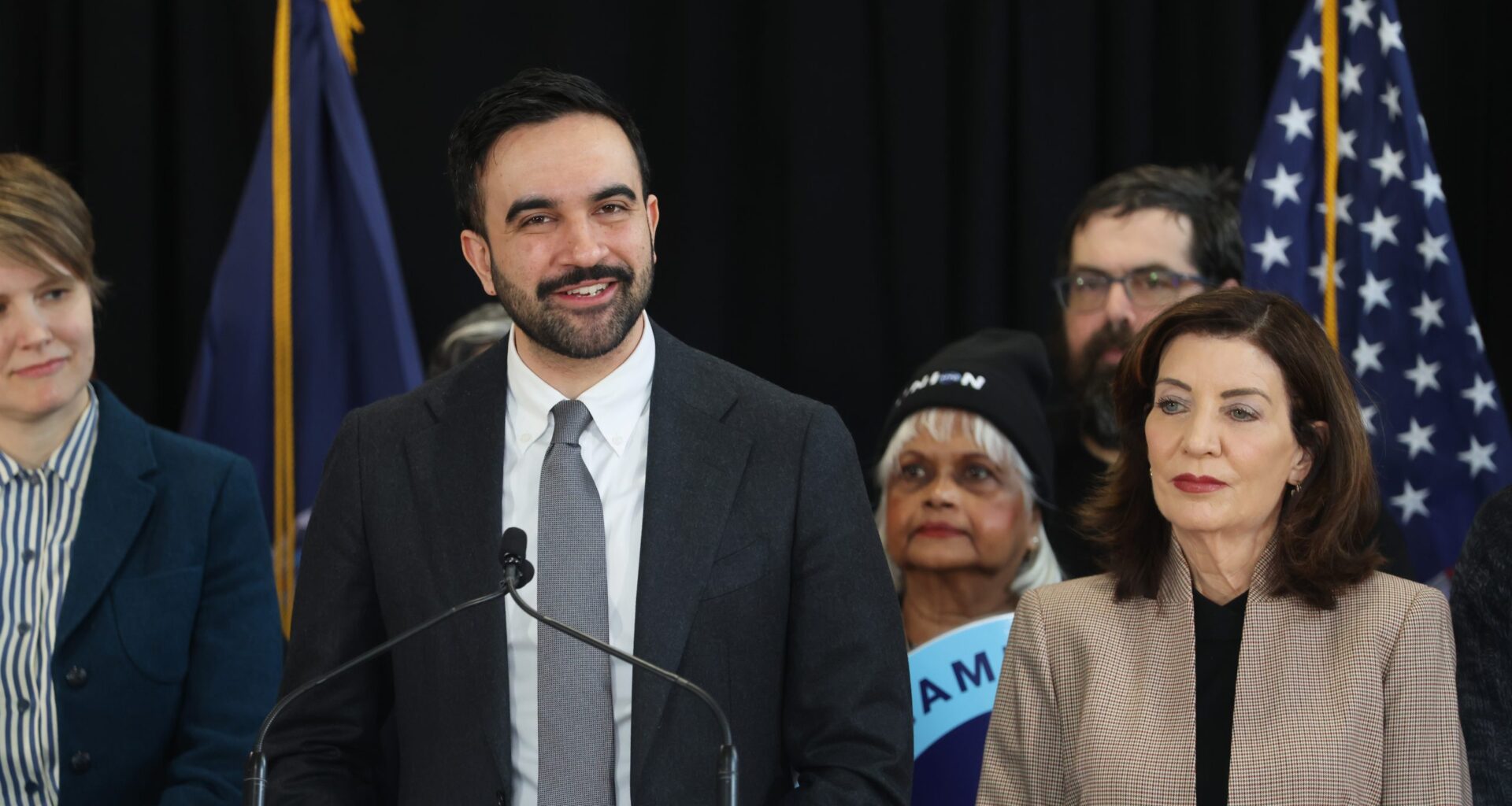
Last week, New York City Mayor Zohran Mamdani announced the creation of the Office of LGBTQIA+ Affairs, fulfilling a key promise he made to queer and trans New Yorkers on the campaign trail. The office’s appointed director, Taylor Brown, who worked in the Civil Rights Bureau of the New York Attorney General’s Office, becomes the first openly transgender person to lead a New York City office or agency.
As queer and trans New Yorkers celebrated the announcement, some advocates were left wondering about another major campaign pledge Mamdani made to the community: investing $65 million to protect and expand gender-affirming care.
On Feb. 17, the Mamdani administration released its $127 billion preliminary budget for fiscal year 2027, but, according to an analysis by Prism, the $65 million funding increase has not been explicitly allocated.
The mayor’s office did not respond to multiple emails about where the funds are in the budget and how Mamdani planned to fulfill his campaign promise.
Concerns about whether trans health services would be bolstered in New York come as the U.S. Department of Health and Human Services (HHS) seeks to eliminate all federal funding for youth gender-affirming care. The department has proposed rules that would prevent hospitals that provide treatments such as puberty blockers and hormone therapy for trans youth from receiving Medicare or Medicaid funding, and restrict payments to outpatient providers. While the rules have yet to go into effect, two major hospitals in New York, NYU Langone Health and Mount Sinai, preemptively ended their transgender youth health care programs, leaving many young people and their parents scrambling to continue care.
Budget experts and sources within city government acknowledged the lack of clarity around whether Mamdani’s budget would increase funding for gender-affirming care. Some said the money could be apportioned under other budget items, or the administration could be waiting to determine the amount after the state budget is finalized.
Amid the Trump administration’s threats to trans health care, trans advocates told Prism that it’s more important than ever that Mamdani live up to his promises.
“You are in office because this community showed the hell up to get you in office,” said Ceyenne Doroshow, founder and executive director of GLITS, a Black-led trans advocacy organization, and one of New York’s most prominent trans activists. “Our babies were up at 6 o’clock in the morning getting people to vote, canvassing, fighting to make you mayor. Now we need you to fight to keep us alive.’”
The $65 million pledge
Amid a busy mayoral primary season last spring, Mamdani held a Trans Community Town Hall to share his platform for LGBTQIA+ New Yorkers.
His platform focused on three pledges: to make New York a “sanctuary city” for queer and trans people, including by expanding protections against the criminalization of gender-affirming care; to create the Office of LGBTQIA+ Affairs to oversee and implement LGBTQIA+ initiatives; and to invest $65 million in public providers for gender-affirming care. According to the platform, $57 million would go to public hospitals, community clinics, federally qualified health centers, and nonprofits that provide gender-affirming care and $8 million to expand telehealth appointments and broader health access programs for trans New Yorkers. The platform also pledged to “hold private entities abetting Trump’s attacks to account.”
Lorelei Crean, a lead organizer of NYC Youth 4 Trans Rights, sat in the front row at the town hall. Crean had spoken alongside Mamdani at a protest a few months prior, when hospitals first started curtailing gender-affirming care programs for youth under 19 in response to a Trump executive order, which was blocked in court. Crean said he had been denied care at Mount Sinai, and many of his friends were similarly impacted.
Prior to the town hall, “the last time I’d met Zohran was literally at the rally protesting the removal of gender-affirming care,” Crean recalled. He said it was “really impactful” that the next time they met, Mamdani promised that under his leadership, things would change.
Mamdani’s $65 million pledge received widespread news coverage. Yet shortly after the city’s preliminary budget was published last month, budget experts and trans advocates, including Doroshow, noticed that there was no mention of gender-affirming care. Prism’s review of the budget found that funds have not been explicitly appropriated for gender-affirming care, and no departments that would typically disburse such funds have been given an increase in funding equivalent to $65 million.
Members of city government have also noticed a lack of clarity over where the money appears in the budget, including the City Council’s Committee on Health. “We are aware of these discrepancies, and we intend to ask questions about this at the Health Committee’s Preliminary Budget Hearing on March 19th,” Jonathan Boucher, chief of staff for New York City Council Member and health committee Chair Lynn Schulman, said in an email. As part of the budget process, the City Council holds a series of public hearings in March and April to address concerns about the mayor’s preliminary budget.
When asked to identify whether the funds are in the budget, Malek Al-Shammary, the press secretary of the Independent Budget Office, noted that the Mamdani administration has apportioned some additional funds to the city’s public hospital system and the Department of Health and Mental Hygiene, including several millions toward a “new public health lab” and “comprehensive adolescent care.”
“Those totals do not add up to $57M/yr,” Al-Shammary said in an email. “With that said, we do not know what the administration’s plans are currently for that specific proposal. Barring more details, there isn’t much else we can share.”
Al-Shammary added that it’s difficult to know whether the funding is appropriated in the preliminary budget. Instead of being expressly listed, some programs or activities can be subsumed under a broader unit of appropriation: For example, pens would likely be incorporated into a category for general office supplies, Al-Shammary said.
“It really depends on the Unit of Appropriation and how the budget is structured,” he said.
The mayor’s office did not respond to Prism’s requests to detail which departments were apportioned the $65 million pledge, the amounts by department, and unit of appropriation.
Threats to gender-affirming care
Questions surrounding Mamdani’s campaign pledge to gender-affirming care arise as care for trans youth is under threat nationally.
In December, the HHS introduced two rules intending to restrict youth access to gender-affirming treatments. The first rule would eliminate all Medicaid and Medicare funding for hospitals that provide gender-affirming care for minors. Hospitals that continue to offer such care would be barred from billing Medicaid or Medicare for any patient—essentially forcing hospitals to choose between providing gender-affirming care and remaining solvent.
The second rule applies to non-hospital medical settings and would eliminate federal Medicaid payments for youth gender-affirming care. If this rule comes to effect, states would no longer be able to split the cost of puberty blockers and other treatments with the federal government, and instead be forced to cover the total cost of care, as is already the case for abortion care.
The public comment period for the proposed rules ended Feb. 17. If the rules are published, they would go into effect 30 days after. The rules are being challenged in federal court, and a judge could issue an injunction that would temporarily bar them from going into effect.
Hospitals in New York and across the country have already begun shuttering their youth gender-affirming care programs. Last month, NYU Langone announced that it would cease providing gender-affirming care to people under 18. State officials said the decision violated New York’s anti-discrimination laws. The state attorney general gave the hospital until March 11 to reinstate its transgender youth health care program. It is not clear whether Langone responded to the attorney general’s order.
Mount Sinai has also reportedly followed suit in ending services for trans youth.
In preparation for the potential imposition of the HHS rules, state legislators have been pushing for the passage of bills to absorb any additional costs.
State Sen. Kristen Gonzalez sponsored a bill to create an $8 million gender-affirming care fund, which could help outpatient providers cover the cost of accepting patients previously seen in hospitals. Assembly Member Linda Rosenthal also introduced legislation mandating Medicaid and insurance companies to continue covering gender-affirming care regardless of federal funding rules. (State regulations require that Medicaid as well as private insurers cover gender-affirming care, but these rules are not yet codified in state law.)
Movement on the state level to fund gender-affirming care may explain the delay to set aside money in the city budget, said Michael Kinnucan, the director of health policy at the New York-based Fiscal Policy Institute. The $65 million for gender-affirming care does not appear to be in the preliminary budget, according to Kinnucan, but that doesn’t mean Mamdani has reversed course.
“It’s too soon to tell whether the mayor has backed down from his pledge because there’s a state-level push to protect funding,” Kinnucan said in an email. “If the state-level push succeeds then there won’t be a need for city funding.”
The state budget must be approved by April 1. The mayor usually releases a revised city budget in May, following input from the City Council, which the council votes on by June 30.
Trans advocates are asking Mamdani to do more to defend access to youth gender-affirming care in New York. Trans journalist and advocate Erin Reed has called on the mayor to instruct the Commission on Human Rights to investigate NYU Langone and other hospitals for violating the city’s anti-discrimination protections.
Doroshow of GLITS told Prism that the announcement of the new Office of LGBTQIA+ Affairs left her no less unsettled about Mamdani’s promises to queer and trans New Yorkers. She still has faith in him, she told Prism, but he needs to act with the urgency this moment demands.
“What the federal government is about to do to all of us and the politicians and everybody is make us the new slaves. We need somebody that represents saving and helping and making this a sanctuary city right now,” she said. “It was this community that pushed you to success. We rang the bell for you. Now answer the door.”
Editorial Team:
Rashmee Kumar, Lead Editor
Lara Witt, Top Editor
Saba Keramati, Copy Editor
Related