
The Trump administration is being dragged into court again in the latest funding fight over a key New York transportation project.
The MTA on Tuesday filed a lawsuit that accuses the federal government of withholding $60 million in contractually obligated money for the nearly $7 billion extension of the Second Avenue Subway from the Upper East Side to East Harlem.
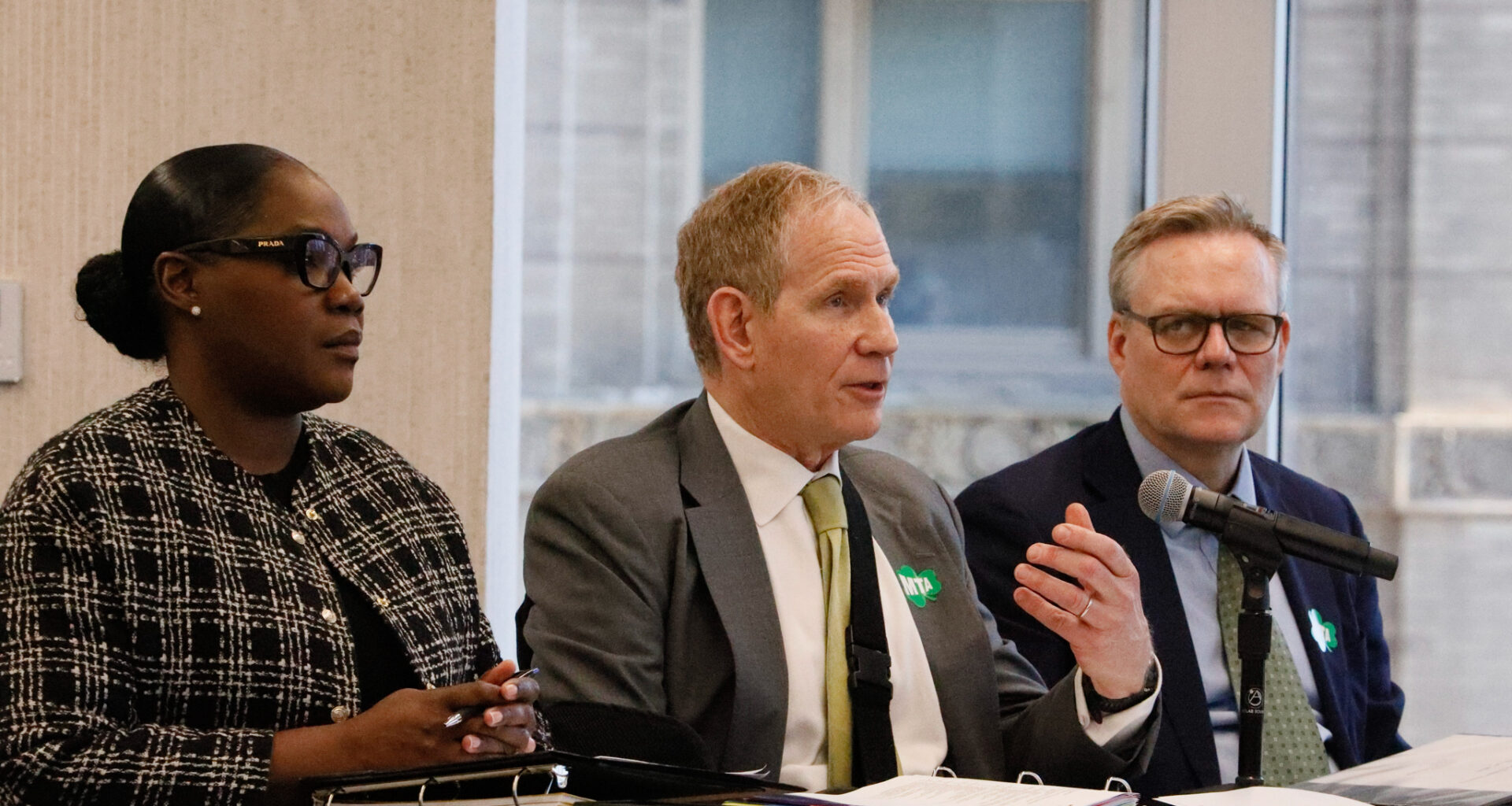
“We intend to get every cent of what has been promised and frankly, based on the agreements, what’s owed to New Yorkers,” Janno Lieber, MTA chairperson and chief executive said Tuesday while testifying before the City Council. “And we’re not afraid to fight for it in court, just as we have successfully taken on the feds over congestion pricing.”
The latest legal scrap comes weeks after a federal judge rejected the Trump administration’s attempts to terminate the Manhattan vehicle-tolling plan launched in January 2025. It also comes on the heels of construction resuming last month on Gateway, the massive Hudson River rail tunnel project whose funding had been frozen by the feds last year, leading to another court battle and a brief shutdown to work on sites in New York and New Jersey.
Gov. Kathy Hochul said Trump had been warned that more legal action was likely over the freeze on funding. The lawsuit landed as the subway expansion project is on the verge of having a contract awarded for excavation on Second Avenue.
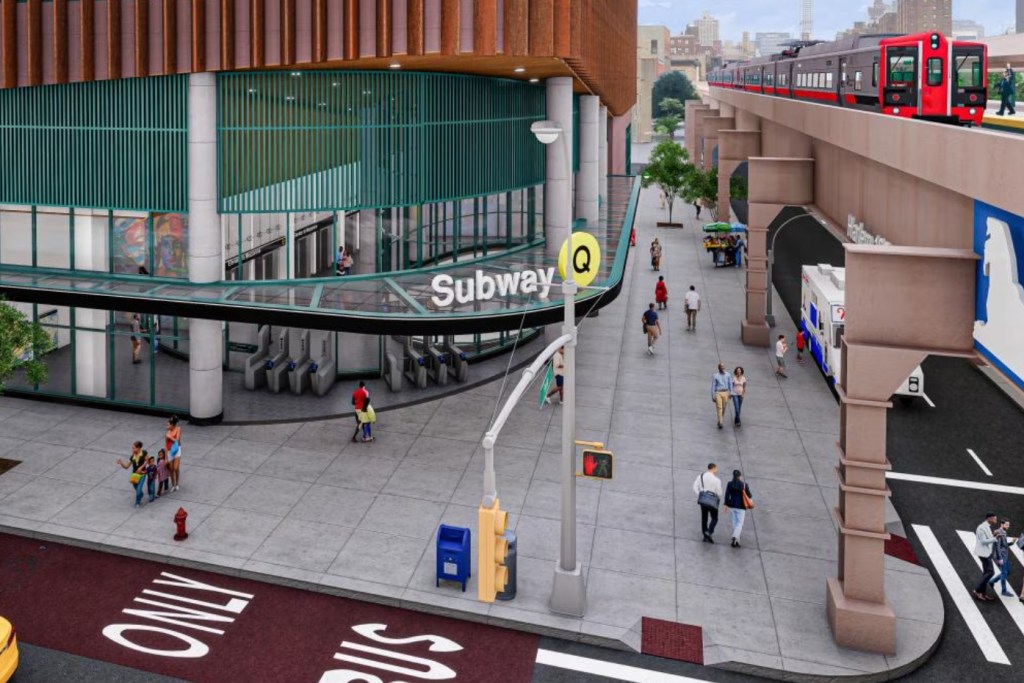 The MTA released renderings of the Second Avenue Subway extension to 125th Street. Credit: Rendering via MTA
“We told Donald Trump that if he did not restore the funding for this project, we’d see him in court — today, we are doing just that,” Hochul said in a statement. “Just like Gateway, Donald Trump has two options: restore the money now, or wait for a judge to force him to.”
The second phase of extending the Q line from 96th Street to new stations at 106th, 116th and 125th streets would deliver on decades-old commitments to bring subway service to East Harlem after elevated lines over Second and Third avenues were demolished in the mid-20th century. The first stretch — with stations at 72nd, 86th and 96th streets — opened Jan. 1, 2017.
“Second Avenue Subway is an incredibly worthy project, long overdue transit justice for East Harlem, promised since the 1940s,” Lieber said. “And Phase 2 is well underway.”
Two of the four contracts have already been awarded for the subway expansion project, which is partially funded by revenue from congestion pricing.
The first contract was awarded in January 2024 for the relocation of underground utilities, while another followed last August for construction of a new tunnel north from 116th Street. The second segment of the Second Avenue project will also make use of a tunnel built in the 1970s that has sat dormant for more than half a century.
It instead has become the latest New York megaproject to be tangled up with the Trump administration, which has been critical of construction costs. The feds put funding on ice last fall for the Second Avenue line, as well as Gateway, questioning whether the projects comply with a a USDOT rule on disadvantaged business enterprises.
“USDOT is committed to ensuring hardworking taxpayer dollars are being spent responsibly,” a spokesperson for the federal Transportation Department said in a statement. “We are considering all legal avenues.”
Brian Fritsch, of the Permanent Citizens Advisory Committee to the MTA, cited the feds’ spotty track record on court fights over congestion pricing and the Gateway rail tunnel project, adding, “This crap is getting old.”
“You’d think [U.S. Transportation] Secretary [Sean] Duffy would get tired of losing lawsuits for clearly unlawful behavior, but here we are again,” he said. “We’re confident the court will find in the MTA’s favor and applaud Gov. Hochul and MTA leadership for standing up to Washington again.”
The Second Avenue Subway was initially proposed in 1929 and Hochul has more recently floated the idea of extending the line west beneath 125th Street.
Lieber said the funding freeze has yet to affect ongoing construction on the next phase, but said the time for the feds to pay up is now.
“I am very confident the Second Avenue project is going to keep moving forward,” he said. “We just need to get through this process with the federal government.”
Related