
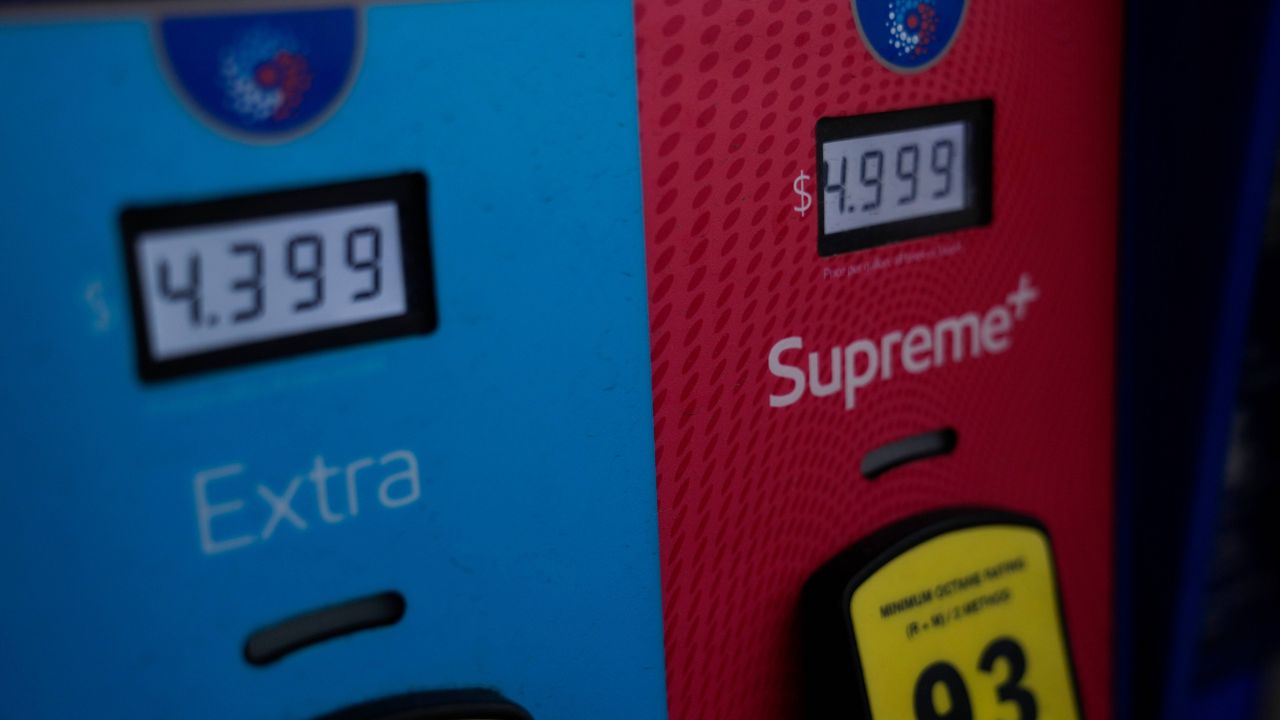
On the Upper West Side, drivers are pulling up to $5.39 a gallon.
“$5.39 here, it’s crazy,” Harlem resident Kyle Richardson said.
What You Need To Know
Gas prices are now averaging $3.74 in New York City, up more than 70 cents from $2.98 just a month ago
The ongoing conflict involving Iran is now disrupting global oil supply routes, including a key shipping corridor in the Middle East
In response, the White House is temporarily waiving the Jones Act, a century-old shipping law, to try to ease rising fuel costs
Robert Sinclair Jr., of AAA Northeast, said the disruption in the global gas supply due to the war in Iran could be long-lasting
For many, there’s no way around it.
“We are definitely survivors out here, and we are learning how to survive even more now, Brooklyn resident Trini said.
Across the city, prices have steadily climbed. Gas prices are now averaging $3.74, up more than 70 cents from $2.98 just a month ago. A year ago, the average was $3.09.
The ongoing conflict involving Iran is now disrupting global oil supply routes, including a key shipping corridor in the Middle East.
“Right now, we have real supply problems, at least globally, with the Strait of Hormuz blocked, with which roughly 20% of the world’s crude oil transits,” the senior manager of public affairs of AAA Northeast, Robert Sinclair Jr., said.
In response, the White House is temporarily waiving the Jones Act, a century-old shipping law, to try to ease rising fuel costs.
But analysts like Sinclair said it may not move the needle much.
“The problem is not getting the fuel from wherever it is made to wherever it may be needed. The problem is the key component of that fuel, mainly crude oil, which is a globally traded commodity,” he said.
While prices are still rising, they’re not at record levels. Back in 2022, prices topped $5 a gallon in the city because of the war between Russia and Ukraine.
This time, Sinclair said the disruption could be more complex and longer-lasting.
“This situation will be much more difficult to recover from,” he said.
That means that relief may not come quickly.
“I try not to look at it that much. I have to drive for work, so I really don’t have that much choice, so I’m going to have to pay for it anyway,” Washington Heights resident Turner Smith said.
Even if the war were to end tomorrow, Sinclair said it would likely take months for gas prices to come back down because of infrastructure destroyed in the war.