
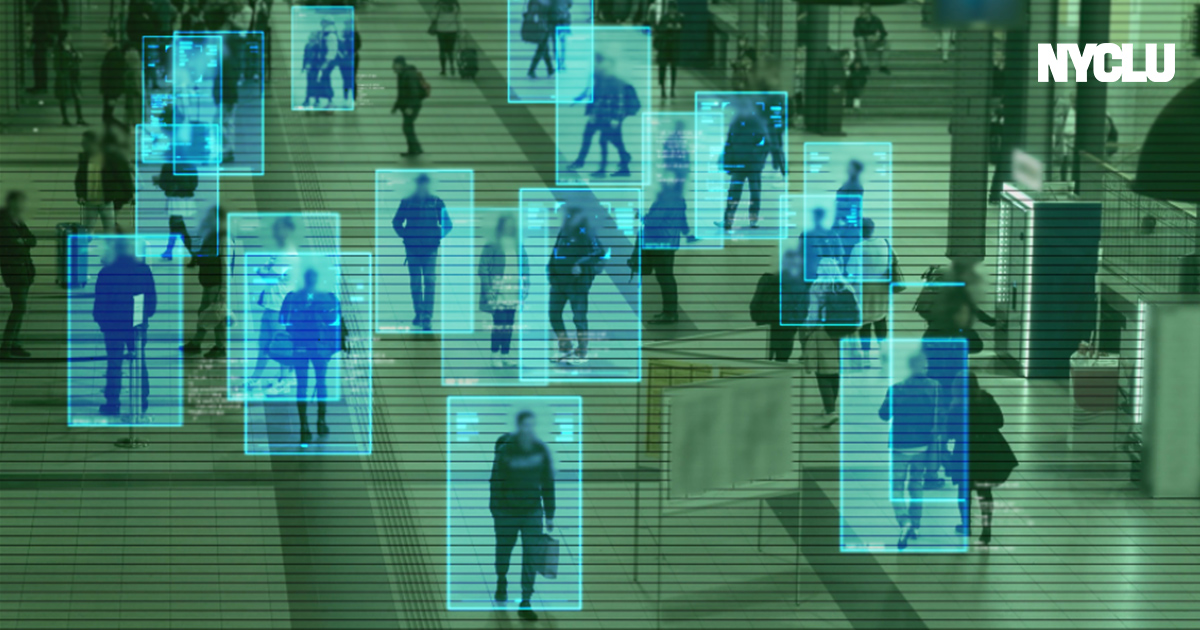
Imagine you are grocery shopping, perusing the aisles, and choosing which cereal or eggs to buy for breakfast. Meanwhile, unbeknownst to you, your face is being scanned, stored, and checked against a watch list full of untold numbers of fellow New Yorkers.
This is not a scene from a dystopian science fiction film set far in the future. It is a realistic depiction of what’s happening to many New Yorkers without their consent at stores, venues, and possibly other places of public accommodation across the state.
Biometric surveillance, including facial recognition, is dangerous. It is error-prone, racially biased, and it opens people up to being falsely arrested or barred from stores based on faulty information. And now shoppers must subject their faces to constant scanning just to pick up a carton of eggs.
It doesn’t have to be so dystopian. New York can ban biometric surveillance in places of public accommodation to ensure you can visit businesses, grocery stores, and bars without fear of being tracked or wrongly excluded from daily life.
Facial Recognition at Wegmans and Beyond
Earlier this year, Wegmans posted a notice outside its grocery stores in Manhattan and Brooklyn alerting customers that the store was using biometric surveillance. The disclosure stated that anyone entering the store could have data on their face, eyes, and voices collected and stored.
Backlash and confusion from the public swiftly followed. Businesses in New York City that collect biometric data are required to post standardized signs announcing the practice because of a modest 2021 city law. But this minimal notice doesn’t tell people what specific biometric surveillance tools the store is using, how long their sensitive data is retained, or who it’s shared with. And Wegmans’ shoppers outside of New York City are left to wonder if the surveillance tech was being used in their grocery store too.
The practice is not limited to just Wegmans; Macy’s and Whole Foods are utilizing similar biometric surveillance. Madison Square Garden has deployed facial recognition to remove perceived adversaries of its owner.
In 2023, Rite Aid was banned from using facial recognition tech by the Federal Trade Commission after falsely tagging thousands of customers, particularly women and people of color primarily in minority neighborhoods, as shoplifters.
The Dangers of Facial Recognition
Biometric surveillance technology, including facial recognition, creates a threat to New Yorkers’ privacy and civil rights that far outweighs any perceived safety or security benefit.
Facial recognition and other biometric surveillance tools let retailers watch, track, and collect highly personal information about shoppers’ every move. The technology is highly flawed and racially biased, especially when used on women and children of color. There are countless stories of this technology resulting in the misidentification and wrongful arrest of innocent people.
Biometric surveillance technology is not secure, and the information gathered can be susceptible to hacking. Unlike a password or credit card number, we can’t change our biometric data if there is a security breach. And what we have witnessed so far should inspire little confidence in many companies’ ability to adequately guard against misuse.
The risks are even higher for immigrant New Yorkers. As the Department of Homeland Security continues to rely on surveillance technologies to target immigrant communities, immigrants live in fear not only in public as they go about their daily lives, but also in their own homes. Once biometric recognition systems collect data, the companies or other entities that possess that data can create a huge database of highly personal information that could be exploited by immigration officials.
Ending Mass Biometric Surveillance
Nobody wants to live in a world where pervasive surveillance identifies them, tracks their movements, and impacts which places they can visit. These concerns stretch beyond retail establishments and extend to any areas where there might be a severe imbalance between everyday New Yorkers and entities that govern their lives.
In New York City, a bill under consideration by the City Council would go beyond disclosure and actually prohibit places or providers of public accommodations from using biometric recognition technology to identify customers. Its sister bill would prohibit landlords from deploying facial recognition in residential buildings.
Lawmakers at the state level can also act to ensure biometric surveillance isn’t used by law enforcement or in places of public accommodation, housing, schools, and other areas where our fundamental rights are at stake or where informed consent cannot be given.
Visiting retail stores, restaurants, museums, entertainment venues, or health care sites should not require us to surrender our faces. Our most sensitive information shouldn’t be scooped up by invasive, error-prone, biased technology every time we go about our daily lives.