
A striking Daily Mail story highlights a familiar but often underexamined issue in modern cities: The economic ripple effects of poor road infrastructure.
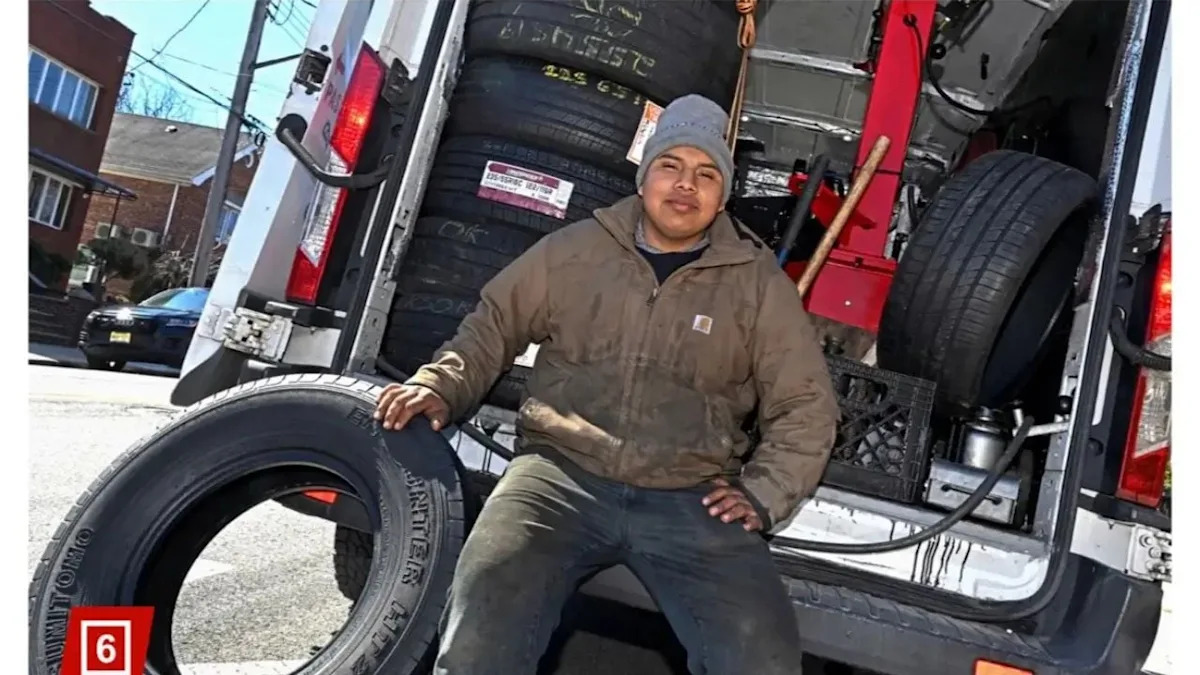
The star of this particular story is 23-year-old Brooklyn-based tire technician Javier Yat, whose nightly earnings have surged due to a single, persistently neglected pothole on the Belt Parkway.
According to the Daily Mail, Yat has turned what is essentially a public infrastructure failure into a steady source of income, reportedly earning up to 2,200 dollars per night assisting stranded drivers.
The pothole, located near Exit 9A, is described as being roughly 12 inches deep, enough to cause severe tire damage and immobilize vehicles. For drivers, the consequences are immediate and costly. For Yat, it has created a demand-driven business model rooted in rapid roadside response.
A Symptom of Systemic Failure
This story points to a broader pattern in urban mobility where gaps in public service delivery create opportunities for enterprising individuals. Yat’s mobile tire repair service, which he runs with his brother Emilio, demonstrates how small businesses can adapt quickly to localized problems.
Equipped with a van carrying multiple tire sizes, he responds to distress calls, often at night when visibility is low and the hazard becomes even more dangerous. The pricing structure, ranging from 150 to 300 dollars per repair, reflects both urgency and convenience.
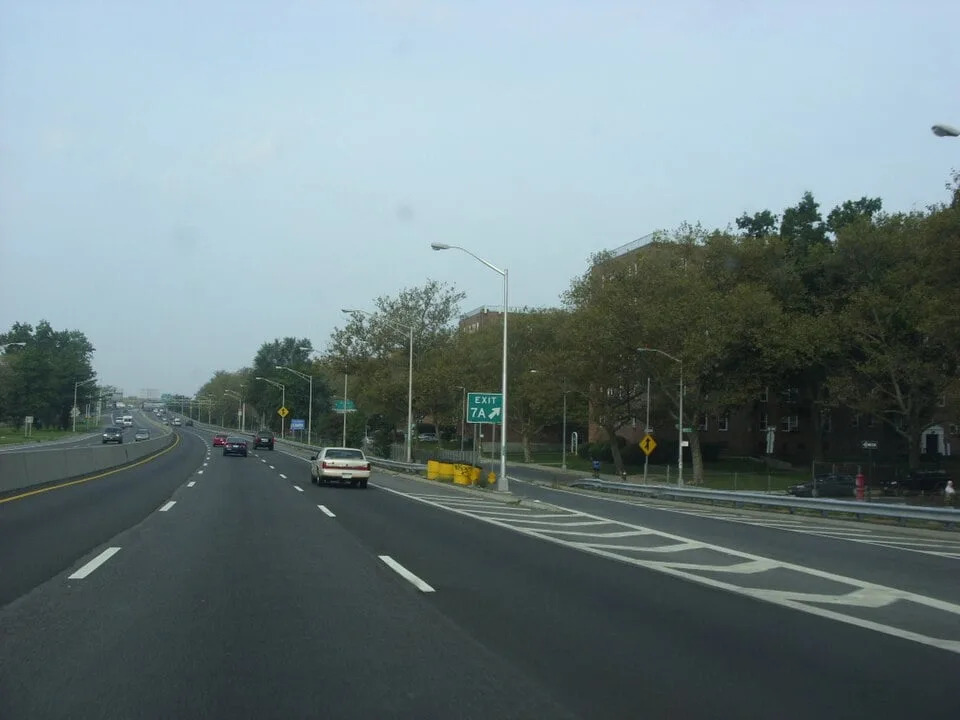
Image Credit: Dougtone – CC BY-SA 2.0, Wikimedia.
After operational costs, the business reportedly clears about 1,500 dollars on busy nights.
Yet the story is not simply about entrepreneurship. It underscores systemic inefficiencies. The persistence of a single pothole causing repeated incidents, predictably concurrent enough that one man has made a business out of it, raises questions about maintenance priorities and response times.
Officials from the New York City Department of Transportation insist that staffing is not an issue. Margaret Forgione stated that the agency is adequately equipped to address such conditions. However, comments from Mike Flynn suggest a more complex reality, pointing to weather constraints and the broader challenges of road maintenance.
This divergence in official messaging highlights a critical tension in infrastructure governance. On paper, resources may be sufficient. In practice, execution can lag due to environmental factors, bureaucratic processes, or prioritization frameworks.
Potholes, while seemingly minor defects, are often symptoms of deeper structural wear in road surfaces. Addressing them requires not just patchwork repairs but long-term investment in durable materials and consistent monitoring.
The Human and Financial Toll
The human cost of delayed action is also evident. The Daily Mail notes that potholes in New York City have contributed to serious accidents, including a recent fatality involving a scooter rider in Queens. This elevates the issue from inconvenience to public safety concern.
Each unrepaired defect becomes a potential hazard, particularly for smaller vehicles and two wheelers that are more vulnerable to sudden surface irregularities.
Mobile tire shops like Yat’s might make a living off this problem while helping desperate drivers, but that also shows how significant the financial burden can be for drivers. It’s not just about the tire.
Indeed, tire damage is among the most common and immediate consequences of poor road conditions, but repeated exposure to such hazards can also affect suspension systems, alignment, and overall vehicle longevity.
In this context, Yat’s business serves as both a solution and a symptom. He provides essential assistance, yet his success is directly tied to an unresolved civic problem.
There is also a compelling narrative of immigrant entrepreneurship. Yat and his brother, originally from Guatemala, built their business from the ground up, transitioning from a purely mobile service to operating a physical shop within two years.
Their story smells of resilience and adaptability, qualities often seen in small business owners navigating urban economies.
Ultimately, the Daily Mail report offers more than a human-interest story. It presents a case study in how infrastructure gaps can reshape local economies, influence driver behavior, and even create niche industries. The unanswered question is whether the pothole will eventually be repaired, and if so, what happens to the micro economy that has formed around it.
Read More