
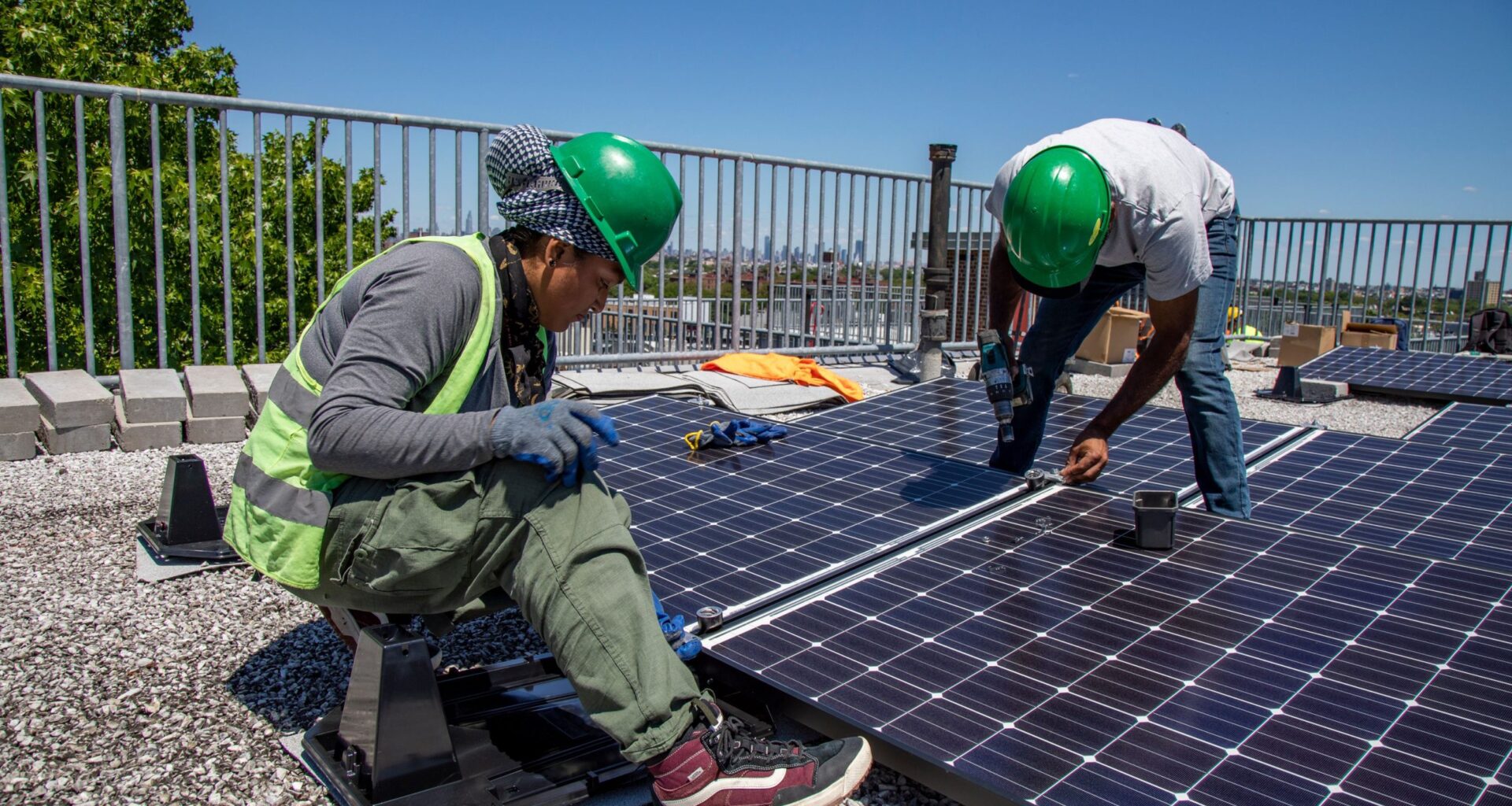
Gov. Kathy Hochul on Friday came out with specific measures she’ll propose to state lawmakers in a bid to weaken the state’s climate law as part of the budget process.
New York is behind on implementing the Climate Leadership and Community Protection Act of 2019, which requires the state to drive down planet-warming greenhouse gas emissions and shift away from fossil fuels, touching on nearly every sector of the economy.
In an op-ed published Friday, Hochul proposed changing the law on three counts: requiring already-overdue regulations to drive down greenhouse gas emissions to be issued at 2030’s end, revising the mandates that limit how much carbon the state can spew and switching how the state counts its emissions.
Hochul emphasized she supports the climate law’s intentions, but was moving forward with affordability in mind.
“While I am still committed to working toward our targets, with all the stress our residents are under, New Yorkers expect their elected officials to prioritize affordability,” she wrote. “The fact is, we will be dealing with a White House outright hostile toward renewable energy for at least another three years, making it impossible for us to meet our targets without imposing higher costs on homeowners, renters, and businesses.”
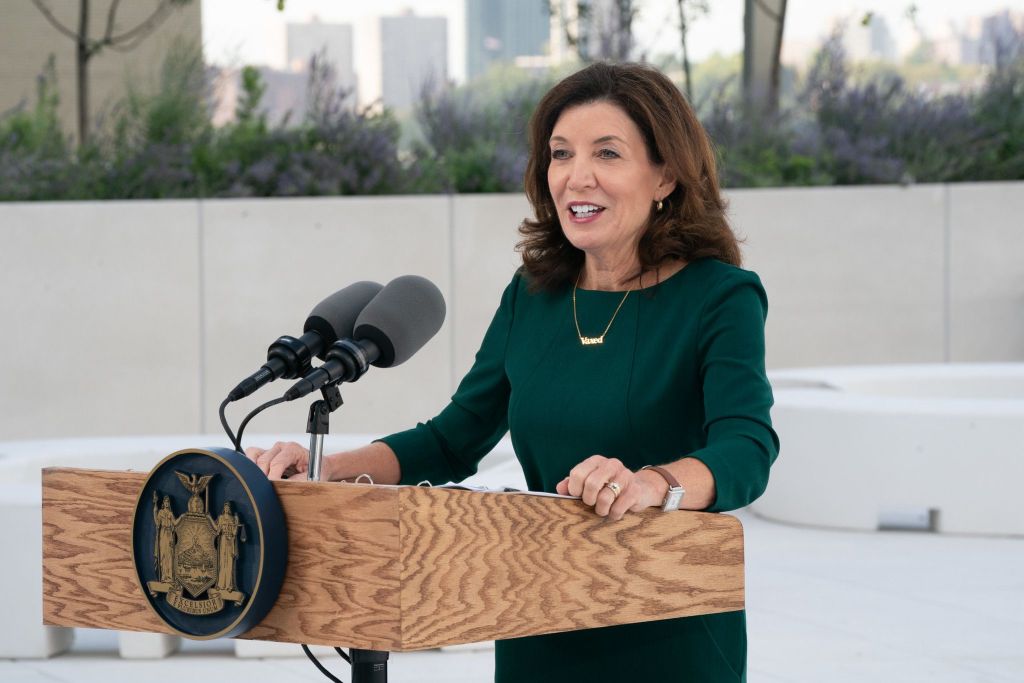 Gov. Kathy Hochul speaks at a Climate Week event on the roof of the Javits Center, Sept. 21, 2021 Credit: Governor Hochul’s Office
Hochul’s op-ed follows comments she’s been making for years suggesting the state legislature needs to take another look at the climate law. Earlier this month, she pointed to a memo with cost estimates released by the New York State Energy Research and Development Authority to underscore additional expenses households could incur under the climate law.
It remains to be seen how, or whether, state lawmakers will give Hochul what she is looking for and amend the climate law as part of the budget, which is due by April 1. In New York State, the often policy decisions and laws are negotiated and settled during the budget-making process as opposed to through separate bill-making.
Spokespeople for Senate Majority Leader Andrea Stewart-Cousins and Assembly Speaker Carl Heastie did not reply to requests for comment on Hochul’s proposals.
A spokesperson for Sen. Pete Harckham (D-Hudson Valley), chair of the State Senate’s environmental conservation committee, declined to comment on negotiations but pointed to a recent op-ed he penned with Sen. Liz Krueger (D-Manhattan), chair of the powerful finance committee, and Sen. Kevin Parker (D-Brooklyn), chair of the energy committee.
“A conversation about anything other than deploying renewable power faster is a diversion from the challenging but essential work of driving down New Yorkers’ bills,” the lawmakers wrote. “There is no doubt that we are behind on our climate targets — but when you’re behind, real leaders don’t quit, they work harder.”
Krueger in a statement said she hadn’t seen “an actual written proposal” from Hochul beyond her op-ed.
“Rather than blowing up yet another budget negotiation with huge last-minute demands, let’s have a constructive conversation about the ways we can move forward together,” she said.
In an interview, Parker said he disagreed with the idea of changing the climate goals.
“There’s other ways to create affordability in the state without moving back the climate goals. I’m looking forward to the conversation with the governor, but I fundamentally have a different position on what the possibilities are and the way forward,” he said.
Minority Leader Sen. Rob Ortt (R-Niagara) criticized Hochul’s move and instead called for a full repeal: “She’s not proposing meaningful changes to Albany’s unaffordable energy policies, but meaningless delays that will do nothing to help lower New Yorker’s utility costs today or in the near term.”
Emissions Challenges
Under the current climate law, New York State must source 70% of its electricity from renewables like solar and wind by 2030, and reduce greenhouse gas emissions 40% below 1990 levels by 2030 (and 85% by 2050).
Hochul proposed changing the emissions limits and setting a new 2040 benchmark in her op-ed, but didn’t go into details.
The governor in 2023 unsuccessfully attempted to change the formula for how the state measures its emissions as part of the law. The change she sought — and is seeking again — would’ve made it appear as though the state was closer to achieving the climate law’s emissions reductions goals.
Those changes would be in line with how almost all other states count their emissions.
Heather Mulligan, president of the Business Council of New York, in a statement called Hochul’s proposals “reasonable and necessary corrections to avoid onerous and costly mandates based on impractical emission-reduction targets.”
Hochul also wanted to push back when rules for how to reduce emissions were due to be created — though her administration is already behind in issuing them. Environmental groups sued the state to release those regulations, and a state court judge in January directed the state to do so.
The state is appealing the ruling. Hochul said Monday that implementing regulations as the judge directed would drive up costs for New Yorkers.
Caroline Chen, New York Lawyers for the Public Interest’s director of environmental justice and a co-counsel in the case, on Tuesday expressed confusion as to why Hochul was angling to make changes through the budget process. She emphasized the lawsuit aimed to get the state to “commit to bringing down emissions while protecting affordability and equity.”
The mandates of the climate law have become harder to achieve since New York’s legislature passed it in 2019. The pandemic gave rise to supply chain constraints and inflation, which drove up the costs of clean energy development. On top of that, President Donald Trump’s hostility towards renewable energy, notably with offshore wind, further stymied the state’s progress in building cleaner forms of energy.
Hochul has long been sensitive to anything that could hit New Yorkers’ wallets, including measures that could help the state reach the climate law’s targets. She has embraced an “all of the above” energy strategy that includes fossil fuels for longer than the law foresaw.
Recent events have significantly influenced the prices of fossil fuels, which show up on utility bills and drive up prices of consumer goods. This winter’s cold weather made gas and electricity bills climb, and the war in Iran has spiked the costs of oil, gasoline, diesel and other fuels.
Related