
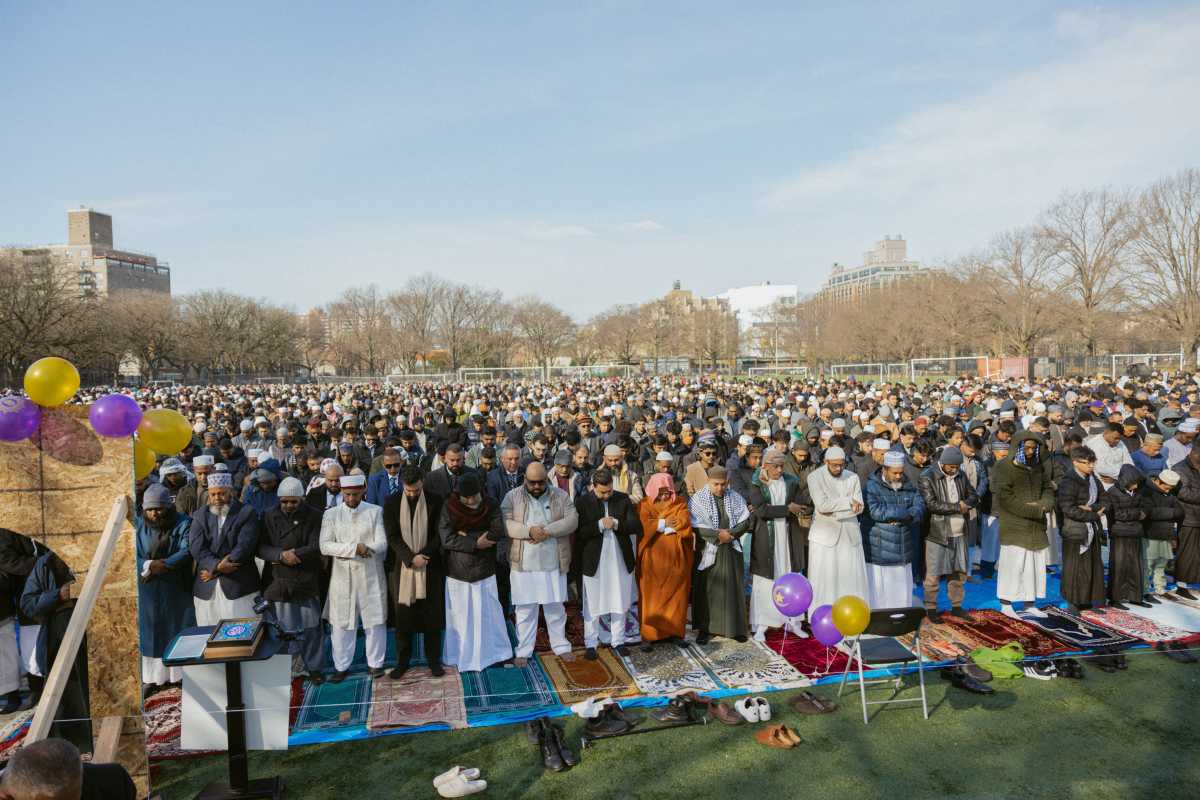
Mayor Zohran Mamdani gives remarks and joins in morning Eid prayers with Brooklyn Islamic Center at Prospect Park on Friday, March 20, 2026.
Photo by Kara McCurdy | Mayoral Photography Office.
On Eid-al-Fitr morning in Prospect Park on Friday, worshippers packed the parade ground as Mayor Zohran Mamdani reflected on the month of Ramadan that had just ended.
“I stand here before you as our city’s first-ever Muslim mayor,” he said. “When I reflect on the past 30 days of suhoors and iftars, when I think of fasting alongside the people of our incredible city, I am filled, frankly, with a deep gratitude and a renewed love for this place that we call home.”
For Mamdani, Ramadan unfolded not only as a religious observance but as a public one. Over the course of the holy month, New York City’s first Muslim mayor moved across the city, joining iftars (fast-breaking dinners) with teachers, delivery workers, firefighters, Bosnian New Yorkers, and taxi drivers; praying Jummah in Jamaica; and breaking fast with Muslim New Yorkers on Rikers Island.
Those appearances made him newly visible to many Muslim New Yorkers, not just as mayor, but as a Muslim public official openly practicing his faith while in office. They also unfolded as he faced intensified Islamophobic backlash, both online and outside his front door at Gracie Mansion.
Among the most stops of the month that will stay with Mamdani “for quite some time” was his visit to Rikers Island, where he broke fast with Muslim New Yorkers in custody and Muslim corrections staff.
“People sharing what little they have: breaking bread, offering prayer, making space for one another’s dignity even in the hardest place,” he said afterward.
“In a system too often defined by what it takes, I was reminded of what it means to give—mercy, dignity, and humanity,” he added. “May we extend that mercy as far as we can.”
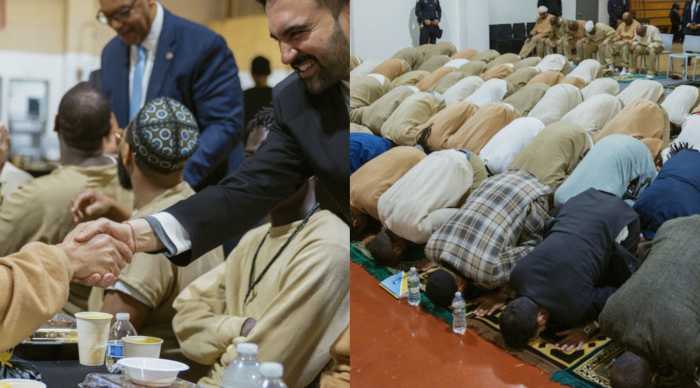 Mayor Zohran Mamdani breaks fast with Muslim New Yorkers in custody and Muslim corrections staff during an iftar at Rikers Island on March 16.Photo by Mayoral Photography Office.
 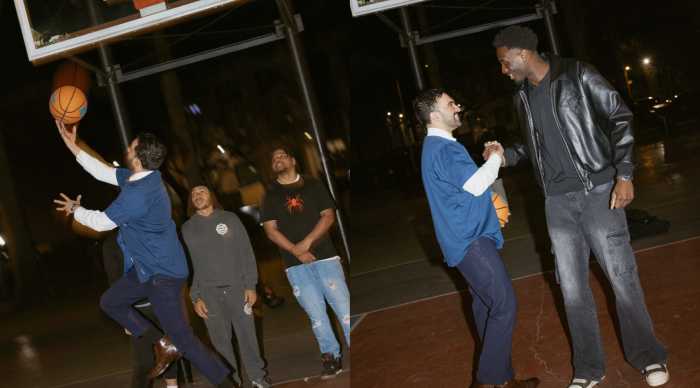 Mayor Mamdani shoots hoops with Knicks forward Mohamed Diawara after the two broke their fast together in Harlem on March 14.Photo by Kara McCurdy | Mayoral Photography Office.
Muslim New Yorkers say Mamdani ‘influencing the world’
In his Eid remarks on Friday, Mamdani described the month as a window into the breadth of Muslim life across the city, which he shared with his millions of followers on his social media channels. For many of those gathered in Prospect Park, that visibility carried deep personal meaning.
Imam Sirajul Islam of the Brooklyn Islamic Center, which organized the event, led the Eid prayers. In an interview afterward, he said many in the community took pride in Mamdani because “he is a member of the Muslim community” who has embraced the diversity of faith across the five boroughs and because “he asserts his identity as Muslim” while “working for everyone in the city.”
For some worshippers in Prospect Park, what stood out most was not simply that he publicly marked the holy month, but that he continued to do so despite the attacks. The Imam noted that, in the face of Islamophobia, the mayor “was not holding back” and continued “participating in his regular Muslim faith activities besides carrying out his official duties.”
One attendee, Zubair, 35, told amNewYork that while he was excited to pray alongside the new Muslim mayor on Friday morning, he was more grateful for the dignified way in which Mamdani has handled those attacks on his faith – hostility he said he could relate to.
For Abar, an international student from Bangladesh studying at LaGuardia Community College in Queens, the city “feels like home.” Surrounded by several of his friends while speaking to this paper, he was grateful to be pursuing his dream of mechanical engineering in a city where the mayor is not afraid to be proud of his faith.
The 25-year-old says he is not one for social media, but his father, back in Dhaka, regularly texts him Mamdani’s Instagram reels. “They’re all excited about the Muslim mayor in New York City.”
“He’s influencing the world,” another attendee contended as they chased down their daughter on the parade ground, enjoying the festivities, moving too fast to share his name. “He’s showcasing that Muslim is not a bad word. He’s representing us.”
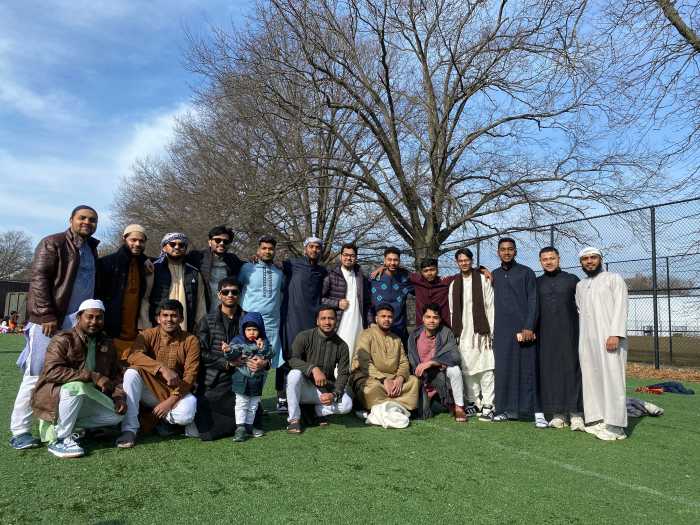 Abar poses with friends after Eid prayers in Prospect Park on March 20, as worshippers celebrated the holiday and Mayor Mamdani’s presence on the parade ground.Photo by Adam Daly
Mamdani addressed that tension directly in his Eid remarks while discussing the resilience of Muslims in the Big Apple.
“I say resilience because it is not always easy to practice our faith in this city that we know is our home,” he said. “And yet I know that so many here and beyond always find a way, whether that means breaking fast while in the back of an ambulance or walking on the beat.”
Still, he framed Ramadan less as a story of exclusion than as a lesson in solidarity.
“The beauty of Ramadan is that we break fast not by asking the person next to us of their name or their faith, but simply by asking if they are hungry,” he said.
On Eid, Mamdani urged New Yorkers not to leave that spirit behind as Ramadan came to a close.
“What I have seen over the course of this past month across our city has been too powerful and too precious to leave behind,” he said. “So let us continue these acts of solidarity.”