
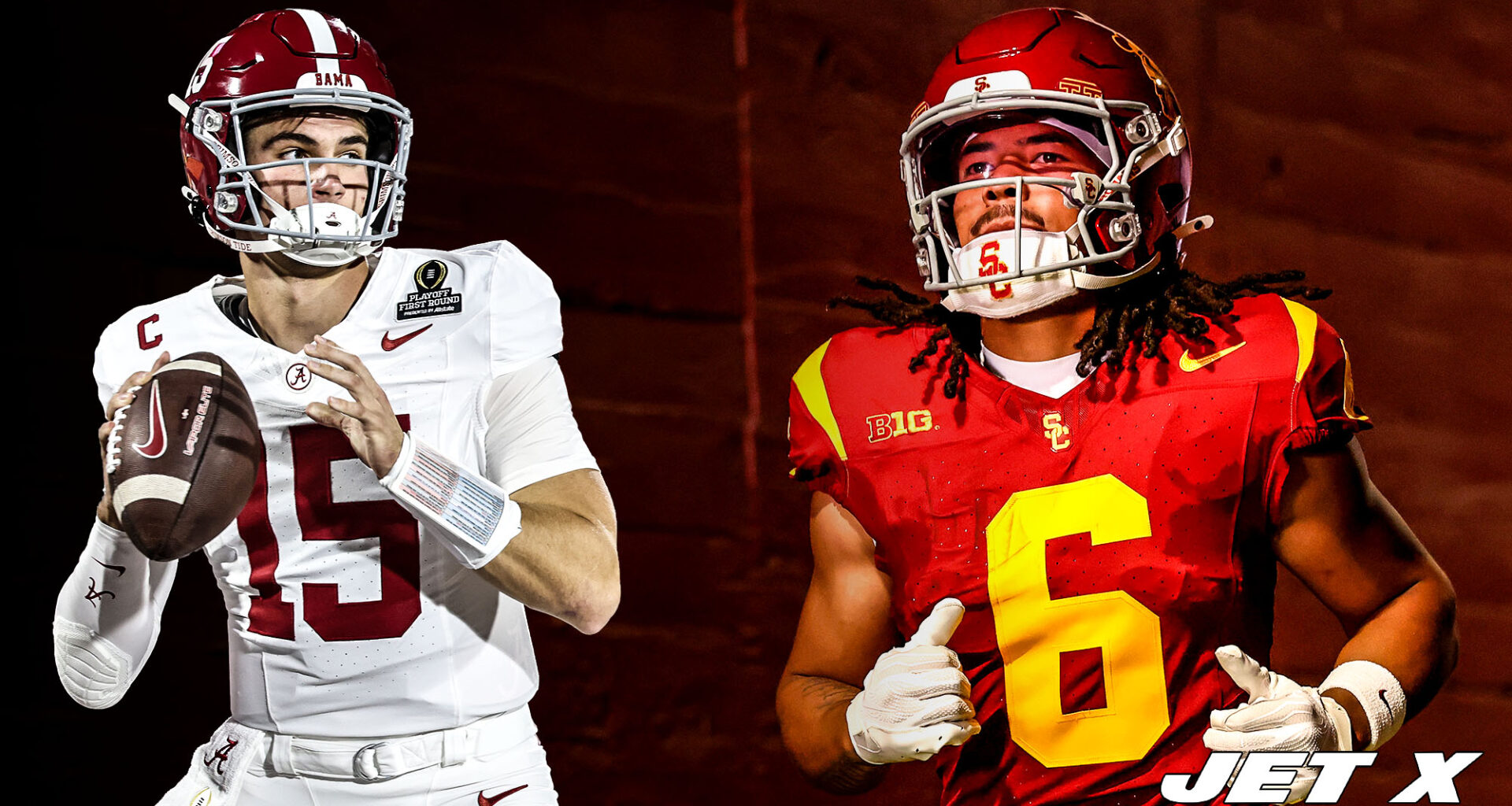
It may not be Sophie’s Choice, but the New York Jets have a pretty difficult decision on their hands when they enter the 2026 NFL draft.
Armed with two first-round picks and four in the first 50 overall selections, New York will be able to acquire some top talent for a roster that was one of the weakest last season.
Most draft pundits believe that the team will go with the best available pass rusher with the second overall pick. Arvell Reese, out of Ohio State, remains the betting favorite at No. 2.
What happens at 16, though, remains a mystery. New York could simply target the best player available, whether it be a wide receiver, offensive lineman, or quarterback.
But when it comes down to need, there’s really only one debate the Jets need to have.
Should the team target a quarterback or receiver with that additional first-round pick?
Jets’ draft needs
To better understand the Jets’ draft needs, we first need to recognize the work the front office has done to address other roster issues. When the new league year began, Gang Green had weaknesses at every level of its defense, holes on its offensive line, and a skill set that left much to be desired.
Eleven acquisitions later, the Jets look much better on paper than they did a month ago.
Stars like Minkah Fitzpatrick and Demario Davis were brought in to stabilize the defense. They’ll soon be aided by the top non-quarterback of the 2026 draft class.
Even quarterback Geno Smith was acquired to be the team’s starting quarterback next season.
But with Alabama’s Ty Simpson representing a wild card in the upcoming draft class, and with a deep collection of receivers as well, the Jets will need to determine what is more important for them when they make their pick at 16.
New York’s quarterback woes are well-documented, but the team’s three 2027 first-round picks are expected to collide with a stouter quarterback class. If they were to target a prospect like Simpson, it would be because they had fallen for the player and were willing to let him grow behind Smith this season.
Simpson would not walk in as the starting quarterback, though, even as a potential first-round pick.
The wide receiver room is different. Outside of Garrett Wilson, New York does not have a quality second option (WR2) out wide to help improve the league’s worst passing offense from 2025.
Top prospects like Carnell Tate, Jordyn Tyson, and Makai Lemon would be able to walk in and instantly upgrade the unit. Of course, there are other quality receiving names like Denzel Boston, Malachi Fields, and Omar Cooper Jr., who the team could target in the later rounds.
So, what makes more sense for the Jets? The questionable quarterback prospect who won’t start in 2026, or a receiver who can be a plug-and-play starter?
QB or WR?
Context matters when discussing projected places to target in upcoming drafts. The quarterback position is considerably more valuable for a team like the Jets, a team perpetually stuck in quarterback purgatory.
If the organization truly falls in love with a player like Simpson, then they should do everything in their power to get him. It doesn’t matter if fans or analysts believe Simpson’s red flags are better avoided (only 15 college starts and a late-season slide), New York should be able to pick the guy they want to lead the team.
Even if the Jets were to take a quarterback, the receiver need isn’t going away. Sure, they could still draft a player in the second-round to address the position, but the player would be walking in with less upside compared to the top three names of the class.
For New York, it’s better to target the top-flight talent as much as it can to improve the ceiling of the team than to hitch its wagon to major gambles.
To simplify it: Unless the Jets truly fall in love with Simpson, they should be targeting a wideout with the 16th overall pick.
The New York Jets have alternative (and more fruitful) avenues to find their future franchise quarterback.