
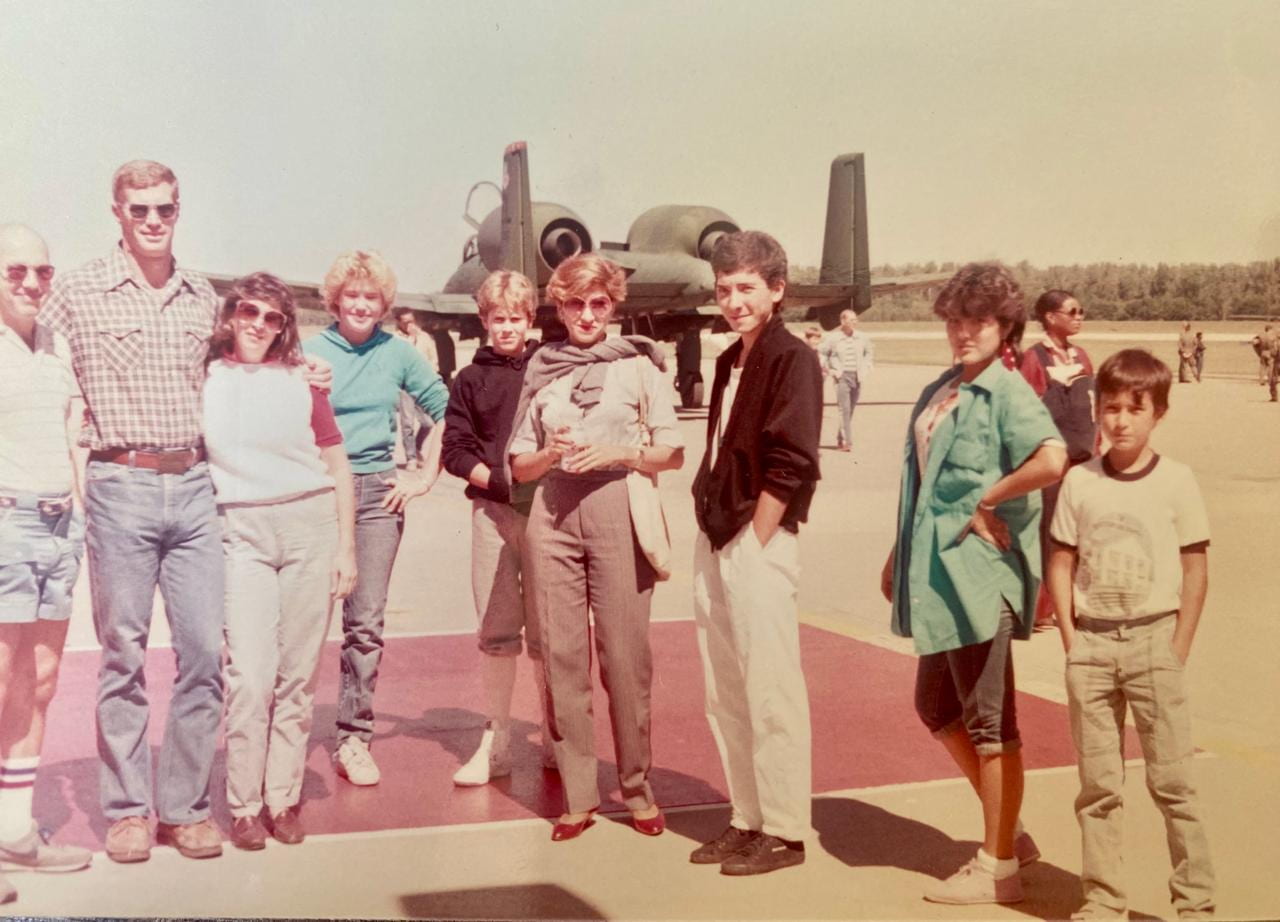
Fort Leavenworth was, in 1984, exactly like all the military posts that I’d ever seen in the movies. A small town inside another, Leavenworth, 25 miles northeast of Kansas City in the middle of the United States. On its east bank, the Missouri River was a witness to the history of the place, marked by the force of a skin color of enormous symbolism because African American fugitive slaves crossed the river to find refuge in Leavenworth during the Civil War. And they found it. A history that, many years later, I would come to understand in a greater and more complex dimension, this time on Ellis Island in New York.
Fort Leavenworth was also part of one of the important scenes in my 2023 book, El color de las ovejas negras. Crónica de un parricidio (The Color of Black Sheep: Chronicle of a Parricide), that tells the story of the fall of Bolivia’s last military dictator, General Luis García Meza, in 1981. In fact, this was the reason my family and I ended up in this small Kansas town that fall of 1984. My dad, a military man, had rebelled against the García Meza dictatorship, the most nefarious in contemporary Bolivian history, and after two attempts to overthrow him, ended up in exile. The dictatorship fell shortly afterwards; my dad returned to the Bolivian Army and was sent to Fort Leavenworth, and just as the regime fell, so did some myths.
For me, the first to fall was not a myth, but a certain adolescent disdain in revolutionary rebellion. I had never been particularly interested in visiting the United States of North America. I was living my own Cold War. Early on, I understood that it was not even necessary to be, live or visit the country of the north, but that in my country, Bolivia, we had the United States everywhere. I could even register a manner of daily life episodes, somewhat like this: learn English / Cindy Lauper and Madonna / El paraíso terrenal / drugtrafficking, politics / American Visa / the American Dream / New York, New York.
Learn English: Cindy Lauper, Madonna and el Paraíso terrenal
In Latin America, the 1980s were particularly agitated because the ruling dictatorships began to crumble and finally fall. Bolivia in 1982, Argentina in 1983, Uruguay in 1985, Paraguay in 1989 and Chile at the beginning of 1990. The United States had shifted course and stopped supporting those military governments, shifting its attention to Central America. The departure of Jimmy Carter (1977-1981) and the arrival of Ronald Reagan (1981-1989) seemed to mark a long pause in the Cold War in the world. A pause, however, that was only apparent. Because if the brand new democratic governments of the South had opted for moderate stances allied with the West, one had to concentrate on the Communist guerrilla threat in the middle of the continent. Thus, if the War was “Cold” for some, in Central America, it was the opposite: a hot spot that left thousands of dead with direct intervention by the United States in Nicaragua, El Salvador, Granada, Honduras and Panama from 1981 to 1989.
But middle-class youth of my generation—the 80s—without today’s Internet or social media, were barely interested in politics; our parents were obsessed enough with politics. We were interested in reading Donald Duck comics and in going to the United States on an exchange program to learn English. Three simple affairs that would take on political overtones in the universities at the hands of Armand Mattelart (Para leer al Pato Donald, 1971, [To Read Donald Duck]) and now are a question of necessary survival to live in this world.
Even then, I’d say, in spite of Mattelart and his warnings about the different manners of North American imperialism, U.S. pop culture took root in Bolivia, comfortably and inevitably. For example, and paradoxically, in music. Previously, the dictatorships had banned rock as anarchist and rebellious, and as the 80s and their accompanying democracy progressed, middle-class urban teenagers like myself favored pop, which we listened to on records and on the radio. The most competitive radio stations and the most informed about the world of entertainment were those that introduced us to U.S. musicians and singers, whom we found cooler than their Latin American counterparts.
As we all know, in the history of humanity, the travelers were those who carried music, stories, cultures and customs from one part of the world to the other. And in those years, very much influenced by the cool middle-class fashion, I loved Cyndi Lauper and the Queen of Pop, Madonna, who not coincidentally had in common Italian roots in their family trees based in the Big Apple, of course. One sang Girls just wanna have fun and the other one sang Material Girl. This kind of feminist satire of the times later fed into their respective discourses and activism as LGBTQ allies. And they celebrated increasingly publicly this option and their rights with no turning back. Cindy Lauper and Madonna were two of the many “godmothers” (Liza Minnelli, Gloria Gaynor, Cher) who in the 1980s opened up this metaphorical and daring umbrella to provide protection to millions of gays throughout the world and, of course, in Bolivia. The stage was the United States of North America, the country of liberty, and for me, Leavenworth.
Thus it was, clothed in liberty, eccentric costumes and pink-dyed hair, my brother and I went to the concert of Cindy Lauper in Kansas City. Ever since, we understood better the neighborhood kid who, when we were children, had traveled to Miami and praised everything that was “American” (from the United States). Our life in Leavenworth sealed this very particular status that, if we felt we were living on Mars, a good part of Latin America saw it as living in a kind of Paraíso Terrenal—paradise on earth.
American Visa and the American Dream
But to reach this Paraíso, this paradise, one first must get permission to enter: the American Visa. That green light that would open the gates of Eden has transformed into a kind of moral guarantee that at the same time divides people into able and unable, rich and poor, trustworthy and untrustworthy. That is, acceptable and unacceptable. All this in the global context of the surge in drug trafficking—the 80s—in which Bolivia and Colombia played a central role and their citizens paid the price. Everyone was lumped together and the innocent paid for the sins of the guilty. That stigma remains even today as a reason and excuse for discrimination. What’s more, obtaining a U.S. visa has become mission impossible for ordinary citizens, who are always suspected of wanting to emigrate to pursue the American Dream. Although the Bolivian community in the United States is very small in relation to other Latin Americans, in Bolivia, North America remains an important destination and ranks fifth in preference. Data varies depending on the source, although it’s estimated that between 80,000 and 150,000 Bolivian citizens live in the United States, most of whom have legal immigration status.

New York, New York
And if, for some, it was and still is important to achieve this Dream, for me it had never been the case… except for New York. I always wanted to visit New York. Maybe Woody Allen is to blame. So, towards the end of 2024, decades after my experience in Leavenworth, I traveled to New York for family reasons. My son got married to a New Yorker of Jewish heritage, like Woody Allen. The first thing I learned is that no one is completely a New Yorker in New York, that the least heard language on the streets is English, that the most common food is literally the entire world and that what abounds is diversity, just like at that memorable Cindy Lauper concert in Kansas City. If we had to take a census of the world’s cultures, the sample would probably have to be in New York.
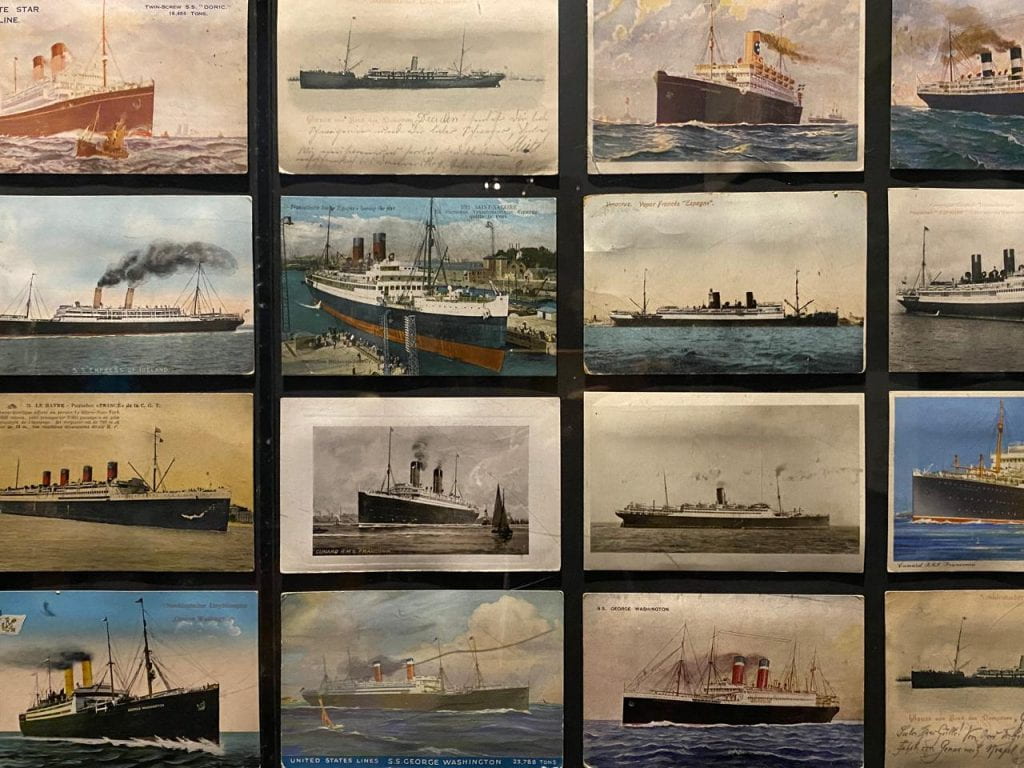
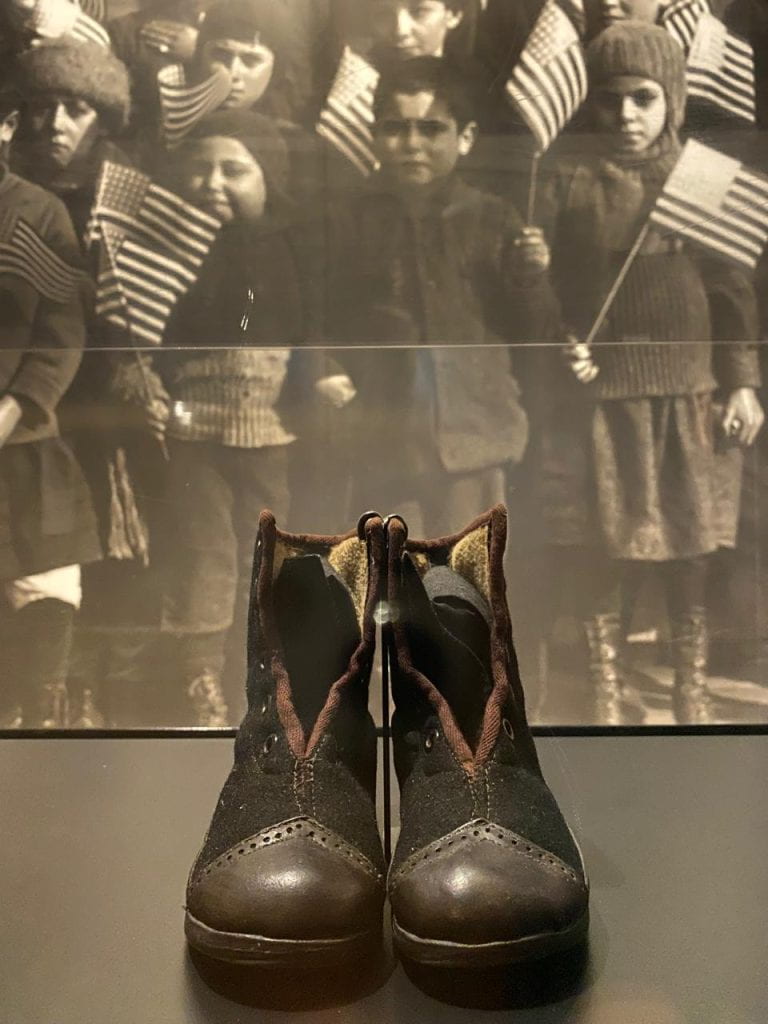
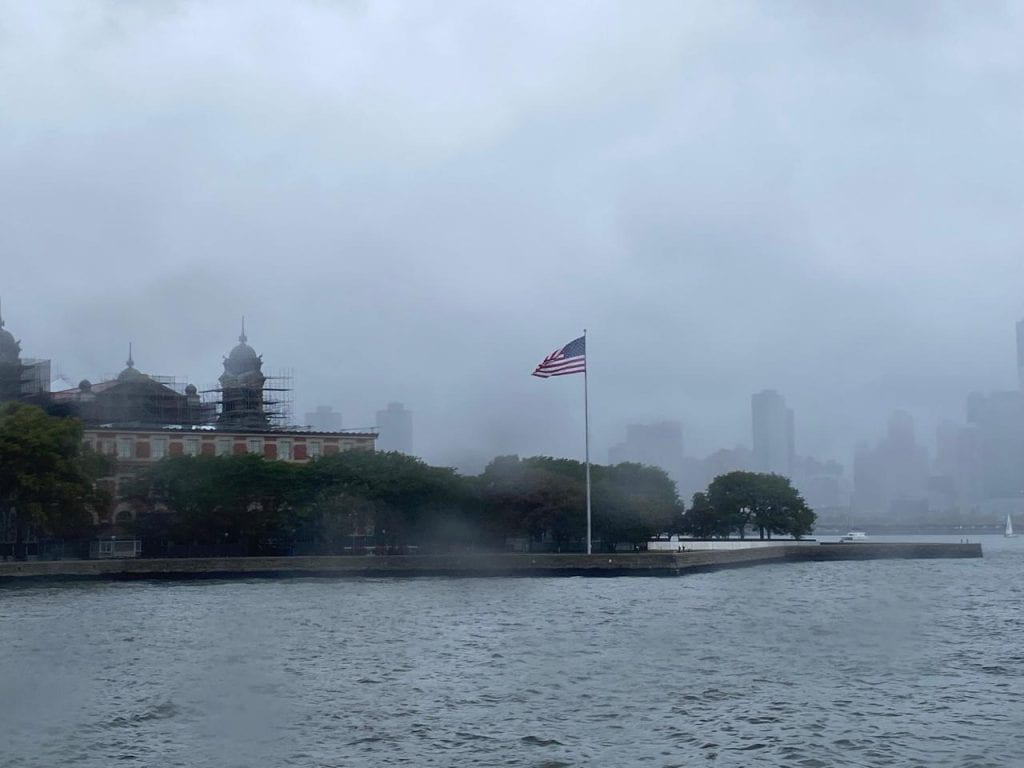
The explanation appeared to be on Ellis Island, a small islet in the New York Harbor, where the first and main processing center for immigrants was built in 1892. It operated until 1954 and now houses the National Museum of Immigration. U.S. immigration did not start with this island—it dates back much further—but it emphatically demonstrates the character of a country that is not possible to understand except as an immense mosaic of all the cultures of the world. Precisely because of this, and in spite of the turbulent waters that ran and still run with the history of racism and discrimination, particularly in these times, the National Museum of Immigration provokes a profound emotion: millions of human beings, pushed by wars and hunger, came and saw in the United States hope and liberty. And they were welcomed. And in spite of the many nuances and even the paradox that rejection of immigration in the United States represents today, the memory of Ellis Island perhaps demonstrates the grandest quality of the United States. Twelve million immigrants from all over the world passed through the island and it’s said that 40% of U.S. Americans have some ancestor in the Museum books. How is it possible to ignore the foundations of one’s own history?
It isn’t. It would be like cutting down millions of trees whose deep roots one cannot tear up. And now we know that, due to a natural process called “mycelium”—a vast, branching network of threadlike structures—, these roots extend throughout the nation, including the Missouri River in Kansas, whose history also sheltered thousands of African Americans who migrated from the South in search of opportunities and freedom. Because of this, I celebrate my new New York family, always present on the streets when it’s necessary to remind their fellow citizens and the entire world that immigration was and is the founding narrative of the American nation, that leafy tree with immovable roots.