
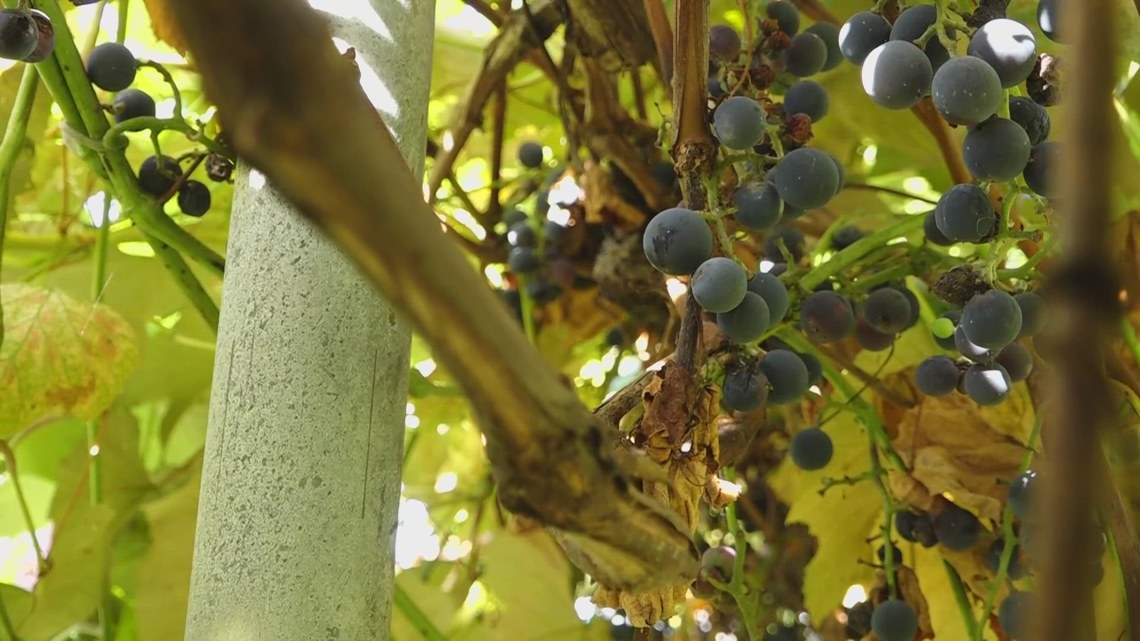
Western New York’s grape industry faces uncertainty after Refresco, a major processor, canceled contracts, impacting jobs and farms across the region.
BUFFALO, N.Y. — Western New York’s grape industry is facing a major disruption after Refresco, a leading processor of Concord grapes, abruptly canceled contracts with growers across the Lake Erie grape belt.
Lawmakers say the decision impacts a region that stretches across western New York, Pennsylvania, and Ohio, one of the largest Concord grape-growing areas in the United States. The industry supports thousands of jobs and generates millions in economic activity tied to farming, processing, and retail products.
Cornell viticulture specialist Jennifer Phillips Russo says the loss of a major buyer is a significant blow.
“It is a bit of a hit for us because this is such a huge economic driver for Western New York and for our grape industry in the entirety of New York State,” she said.
Without one of their primary processors, many growers are now left without a place to sell their grapes. Experts say smaller farms are especially vulnerable, while larger operations may be able to pivot by relying on existing relationships with other processors.
“Smaller acreage growers … are not going to fare well,” Phillips Russo explained. “Some … only delivered to Refresco, and they’re the ones who are going to get hit the hardest because there is no home for their grapes.”
The timing makes the situation even more difficult. The cancellations came just as growers had already invested time and money into preparing their vineyards for the season, pruning, tying, and maintaining vines in anticipation of harvest.
With limited options, some farmers are now considering “mothballing” their vineyards. That means scaling back maintenance to reduce costs while keeping vines alive until new contracts or buyers can be secured.
However, even that approach comes with financial losses.
Phillips Russo says the impact will extend beyond individual farms. Ripple effects are expected across the regional economy, including labor availability, pricing, and supply chains.
Consumers, for now, may not notice immediate changes at the store. Products like grape juice, jam, jelly, and wine are still expected to remain on shelves in the short term. But behind the scenes, growers are facing mounting uncertainty.
“This is a very trying time,” she said. “There are some growers out there who will lose their livelihood.”
As industry leaders and state partners explore potential solutions, the future of this long-standing agricultural sector remains uncertain leaving many farmers waiting to see what comes next.