
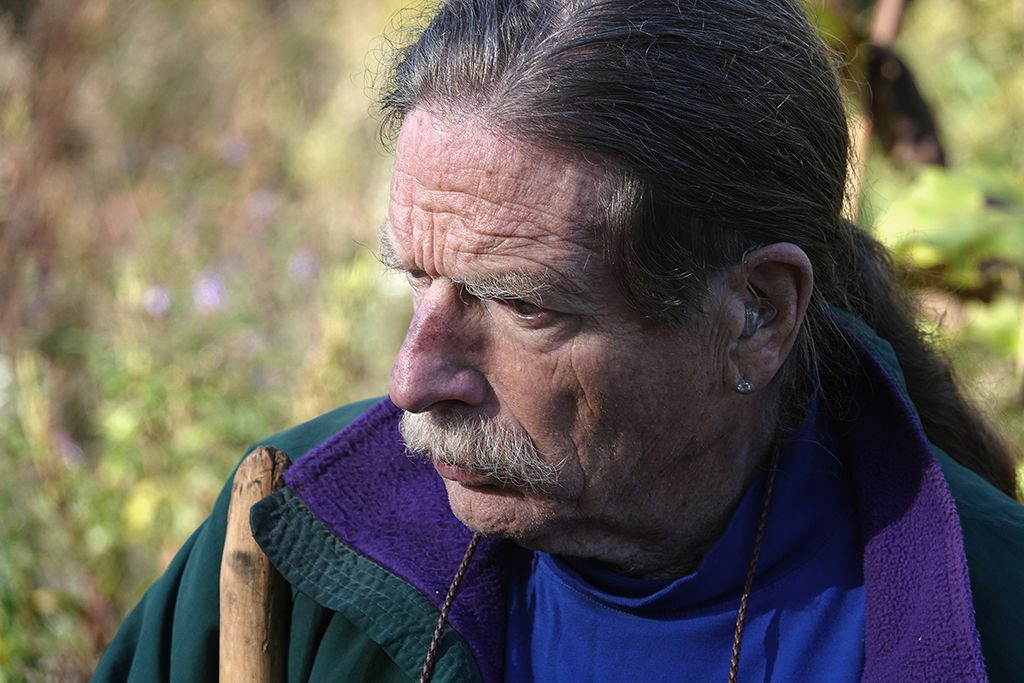
Sid Hill serves as Tadodaho, or spiritual leader of the Haudenosaunee. He has known Joe Heath for decades, because Heath — a Syracuse lawyer — serves as general counsel for the Onondaga Nation.
I asked Hill the other day if he has one particularly vivid memory of Heath. Hill does, though it isn’t from any of the tense moments when Heath was in the middle of complex negotiations involving the Haudenosaunee and their efforts to protect the lands where they’ve lived for countless generations …
Such as, say, the day a few years ago when the Onondagas learned they would regain 1,000 acres of land in Tully Valley from Honeywell International, including the headwaters of Onondaga Creek. The transfer was finalized after multi-governmental talks, and Heath said the agreement is of particularly historic meaning because the land is now under total Onondaga control, without asterisks.
A big day, yes. Still, asked for one specific memory, Hill spoke instead of the multitude of quiet hours the two men have spent together, often traveling Upstate highways, and Hill recalled one particular conversation. Thinking of so much the Onondagas have lost or endured over the past few centuries — from phony land deals to the suffering in state residential schools — Hill asked Heath how he defines the word “justice.”
The answer to that question is also the answer, really, to why I wrote this piece.
I met Heath decades ago. I’ve talked to him about countless stories in which he represented the Onondagas — particularly their longstanding effort to address the consequences of losing so much of their vast territory to state agents centuries ago, transfers the Haudenosaunee maintain were in clear and direct violation of federal law.
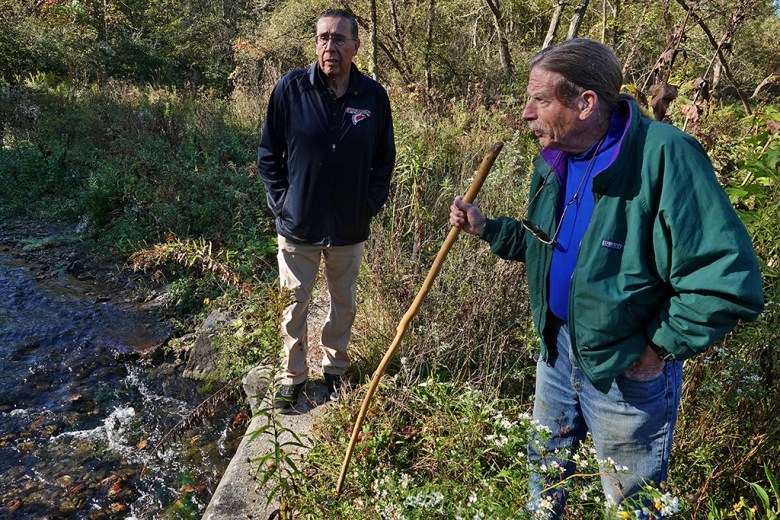 Tadodaho Sid Hill of the Onondaga Nation, at left, and Nation attorney Joe Heath stand next to Onondaga Creek – within the 1,000 acres of land finally returned by Honeywell to the Onondaga Nation. Credit: Mike Greenlar | Central Current
In 2016, after 27 years of writing in Central New York, I left my work in this region to serve for nine years as a columnist in Buffalo. By the time I returned to Syracuse, many friends and contemporaries I knew well from my long years here had stepped away — or passed away — from the nonstop push-and-pull of public affairs.
Heath turned 80 last week. He’s still there.
My big question as he observed that birthday was simply: How long before you stop?
I asked him that a few days ago at a Freedom of Espresso at Franklin Square, because there was no better place for the conversation. “I always say Joe Heath is a hero who walks on Earth,” said Anna Dobbs, co-founder of the place.
They are longtime friends, though her professional connection with Heath goes back 30 years, when Anna and her ex-husband John, still her close friend and business partner, decided to open a coffee shop called “Federal Espresso.”
Corporate lawyers from Federal Express, the national shipping giant, didn’t take to that all. They went to court to force this little coffee shop to change its name. Heath, who says he never likes a bully, agreed to represent John and Anna, and did it for free.
The name “Freedom of Espresso” was the final result of all those battles — three words Heath reacts to with love, whenever he sees the sign, as a statement and reminder of larger principle. Anna and John named a specialty roasted blend of coffee in Heath’s honor, and while they’re grateful for his work, that’s not why Anna describes him as a hero.
It’s because of “what he did for the Attica prisoners and guards and how he’s represented the Onondaga Nation,” she said.
She referred specifically to Heath’s dogged, ongoing, decades-long advocacy for hundreds of families after 39 hostages and prisoners were killed in a state siege at the Attica Correctional Facility — all dying, it eventually turned out, from law enforcement gunfire — following a September 1971 prisoner uprising against harsh, overcrowded conditions.
The rebellion happened on Heath’s third day of law school at the University at Buffalo. Following the siege, when state leaders blamed the prisoners for all the bloodshed, “something in me said that can’t be true,” Heath said.
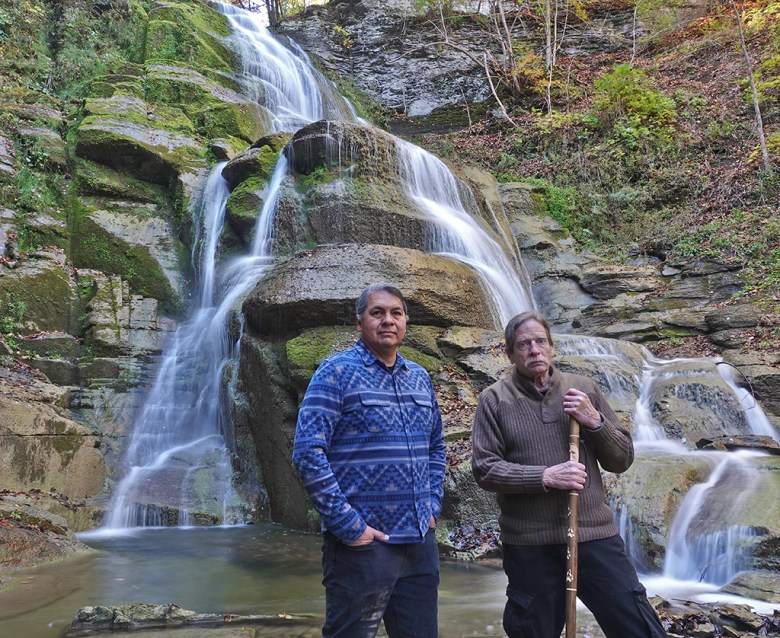 Joe Heath with Onondaga Nation Council member Brad Powless at a waterfall within the reclaimed 1000 acres Credit: Mike Greenlar | Central Current
By his second semester of law school, he was meeting with the prisoners, many still isolated from the general population. It took Heath and three other lawyers 29 years, but they eventually secured a $12 million state settlement — damages involving both the siege and subsequent reprisals — for roughly 500 prisoners and their families, the group Heath calls “the Attica brothers.”
He is “the most generous activist and human I know,” said Heather Ann Thompson, who grew close to Heath as she wrote “Blood in the Water: The Attica Uprising of 1971 and its Legacy,” a detailed and revealing narrative about the uprising and the aftermath that received the Pulitzer Prize.
She said Heath is “a really humble piece of many bigger justice projects,” a guy she said she’s never seen worry about the spotlight. She described him as “steadfast” in making sure she had the documents, interviews and access she needed for a full accounting in her book, and she said she will always appreciate his “kindness and vision.”
Heath, at Freedom, pushed all that credit back to Thompson — speaking of her as a tremendous writer and researcher with an instinct for justice.
That word, before we’re done, will return us to Sid Hill’s point.
Over coffee, I learned a lot about Heath I never knew. He grew up in Sandy Creek, the middle child of five siblings. His parents were teachers. In high school, he played football and ran track and was class valedictorian. He spent a summer as a laborer on crews helping to build Interstate 81 — the highway that to a large part around Syracuse is now being pulled out — and he went to Syracuse University with plans to be an engineer.
It didn’t last. Heath switched over to history, where he vividly remembers stunning lectures by legendary professor Michael Sawyer in the Maxwell School auditorium. He graduated in 1968, understanding he would almost certainly be drafted to serve in the Army, on the ground in Vietnam.
 Joe Heath at an anti-nuke rally in downtown Syracuse.
He enlisted instead. He went to Navy Officer Candidates School and was soon training as a weapons officer on a submarine with nuclear weapons. Heath realized — if a sudden conflict ever occurred with another nuclear power — he would be the guy pushing a button that could kill millions of human beings.
What that felt like — the madness of that capability — never leaves him.
“I was waking up,” Heath said. He applied for conscientious objector status. The case was eventually assigned to federal Judge A. Leon Higginbottham, revered as a champion of human rights. At a hearing, the government argued Heath was insincere about his beliefs.
Higginbottham, in response, was incredulous:
Heath, he noted, had turned down a promotion — when accepting it would have made his life much easier — to instead pursue his CO status.
“Who that judge is,” Heath said, “determines my life.”
What he means: If things went the other way in that process, he could have been locked up. Instead, Higginbottham released Heath from service with an honorable discharge. While that paperwork was being finalized, Heath served on a Navy hospital ship. An officer noticed the length of his hair and ordered him to get it cut.
Heath did, but he also knew:
Never again.
“That was my last true haircut,” said Heath, who — on the job — now keeps his long hair tied back, in a pony tail.
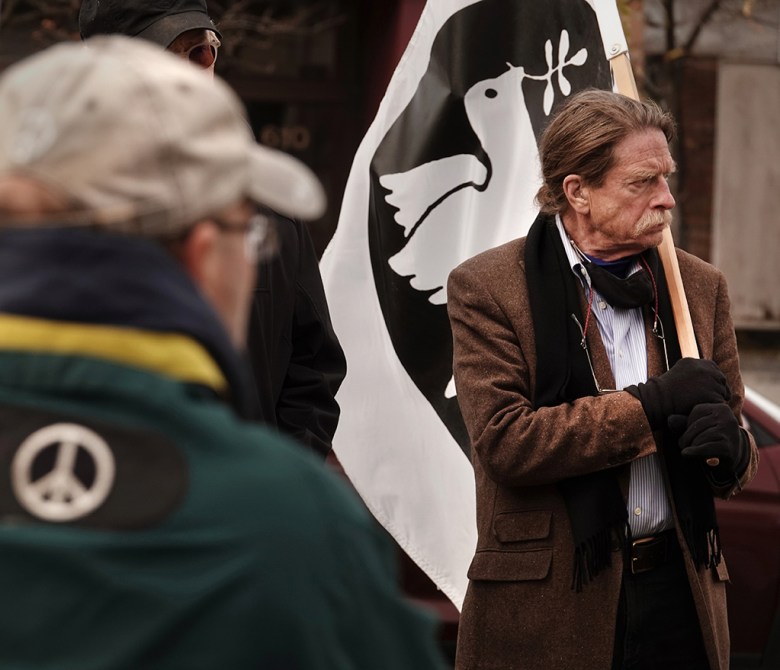 Joe Heath attends an annual Veterans for Peace rally on Veterans Day. Mike Greenlar | Central Current.
After the Navy, he ended up in Ithaca, teaching at a “free school” called East Hill. He started counseling young people fighting the draft, work that inspired him to go on to law school.
That led him to UB’s law school, and Attica.
Over the years, he became close both with many prisoners and guards, all injured in some way in the uprising, all seeking redress and sunlight from state leaders. Heath stayed with the case long after he returned to Syracuse, where he made the connections that led to his ongoing work with the Haudenosaunee.
That included many trips to Onondaga, on the recommendation of famed lawyer William Kunstler, when American Indian Movement leader Dennis Banks — wanted by the law in South Dakota — found sanctuary there.
The result was a particularly deep friendship between Heath and the late Onondaga Nation Chief Irving Powless Jr., trust that grew into Heath’s longtime bond with such Onondaga leaders as faithkeeper Oren Lyons.
“He’s been with us,” Lyons told me last week, four words that say a lot and wrap in many years.
Lyons is 96, and still at it. Heath, at 80, sees that energy as a good model. He and his wife Tarki live in Preble, where Heath, a longtime runner, still gets out there a few times a week — mainly for the way running helps to clear his mind and sort things out.
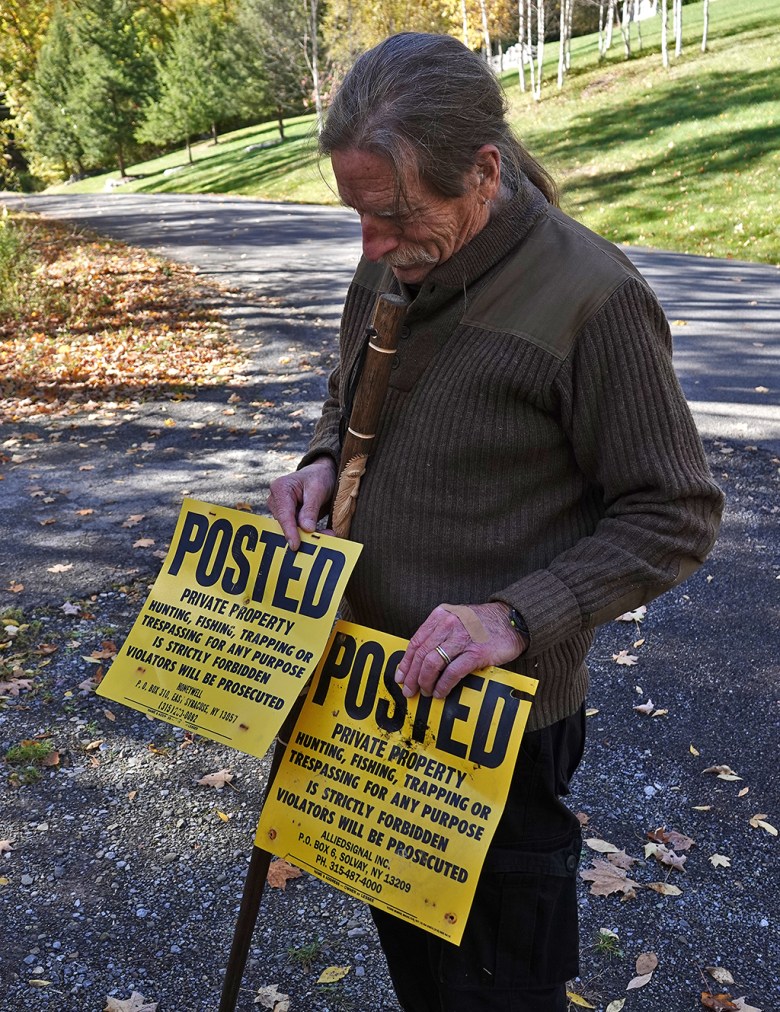 Joe Heath holds posted signs he took down on the 1,000 acres of land returned to the Onondaga Nation. Credit: Mike Greenlar | Central Current
He still has countless matters on the table, whether it’s trying to help the Onondagas regain some sacred land along the shoreline of Onondaga Lake or sounding a warning about the potential ecological fallout from the vast Micron plan or providing a voice for Onondaga objections to the presence of a statue of Christopher Columbus in the heart of Syracuse.
As for stepping back, the best response is really found in Hill’s story. Heath and the Tadodaho were talking once about the long struggle of the Onondagas and their relentless quest — day by day by day — for the regional communion that might help to heal those wounds, when Hill suddenly asked Heath:
How do you define justice?
Heath thought about it. Justice, he said to Hill, is the place where the law meets doing the right thing.
On the day he sees that everywhere, Joe Heath can retire.