
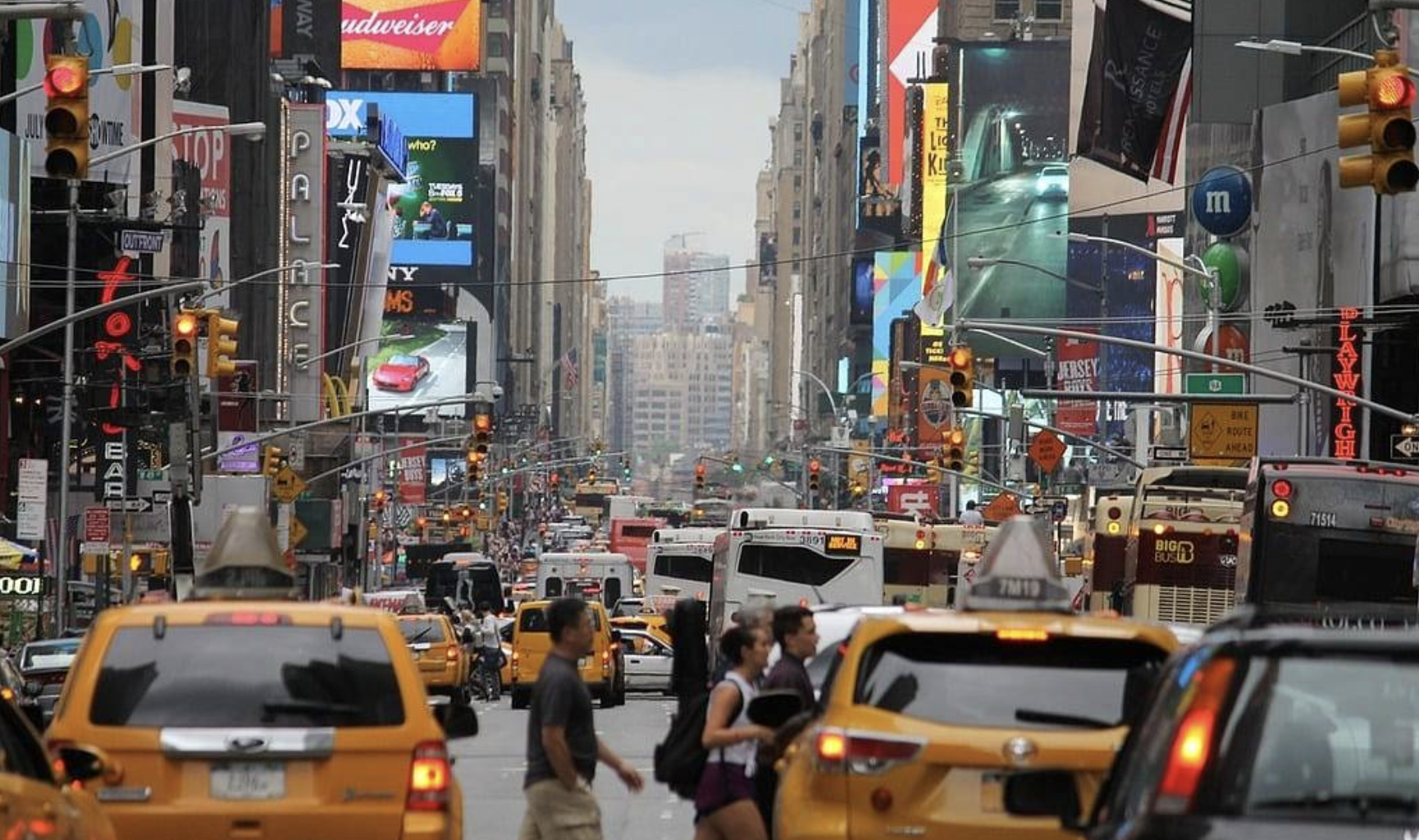
A federal judge ruled this week that New York City’s congestion pricing program can continue, delivering a significant legal victory for the Metropolitan Transportation Authority and New York State after months of political and legal conflict with the Trump administration.
In a sweeping 149-page decision, U.S. District Judge Lewis Liman concluded that the federal government’s attempt to revoke approval for the program was unlawful. The ruling effectively blocks the Trump administration from dismantling the tolling program and allows the cameras and tolls south of 60th Street in Manhattan to remain in operation.
The decision reinforces the foundational principle of this nation that local governments make local decisions for a reason. They understand the needs and realities of their own communities far better than federal officials.
The case centered on whether the federal government could unilaterally rescind approval for the congestion pricing program after it had already gone through years of environmental review and federal authorization under the Federal Highway Administration’s Value Pricing Pilot Program.
Liman rejected the administration’s reasoning.
“It would be difficult to imagine a more definitive repudiation of contractual obligations,” Liman wrote, referring to the federal government’s attempt to reverse its earlier approval of the program.
New York’s congestion pricing program was created through a democratic process. The policy was approved by the New York State Legislature, signed into law by a governor elected by New Yorkers and authorized by federal transportation officials before the program launched.
Attempting to dismantle it after the fact is an attempt to override the self-governance of New York State.
The program, which took effect January 2025, charges most vehicles $9 to enter Manhattan below 60th Street during peak hours. Trucks and buses pay higher rates.
The project has two main goals: reduce traffic congestion in one of the world’s most crowded urban centers and generate funding for critical public transit upgrades.
Early results and research suggest the policy is already working According to transportation data cited in court filings and reports, roughly 27 million fewer vehicles entered the congestion zone during the program’s first year. That amounts to about 73,000 fewer vehicles per day. Vehicle speeds have increased and greenhouse gas emissions within the tolling zone have declined.
At the same time, the program has raised hundreds of millions of dollars for the MTA. Those funds are expected to support more than $15 billion in long-term transit improvements, including modernizing aging subway signals and making stations more accessible.
Critics of the program often frame congestion pricing as a tax on drivers, but that argument ignores the reality of how New Yorkers actually commute around the city.
The vast majority of commuters in NYC rely on public transportation. Subways, buses and commuter rails carry millions of people every day. By comparison, only a minority of the city’s residents commute by private car.
Yet cars occupy an enormous share of the city’s space and resources. Streets, highways and parking infrastructure consume massive amounts of land in a city where space is already scarce. Maintaining roads and vehicle infrastructure also requires significant public funding.
In other words, a minority of commuters traveling by car currently receive a disproportionately large share of transportation resources.
Congestion pricing attempts to rebalance that equation. By reducing traffic and investing in transit, the policy shifts resources toward the systems that most New Yorkers actually use.
The benefits also extend far beyond transit riders.
Emergency responders depend on clear streets to reach people quickly. Ambulances, fire trucks and other emergency vehicles lose precious time when roads are clogged with traffic. In situations such as severe injuries or fires, even a one-minute delay can be fatal.
Reducing the number of vehicles on the road makes it easier for emergency responders to move through the city. Congestion pricing can save lives.
The federal government’s attempt to halt the program reflects a broader ideological divide over transportation policy.
Many republicans have long treated public transit with skepticism or outright hostility, often prioritizing highway construction and automobile infrastructure instead.
That mindset fails to recognize that cities like New York operate fundamentally differently from most of the country. Public transit is the backbone of the city’s economy and daily life.
Attempts by federal officials to impose a one-size-fits-all transportation philosophy on a dense urban environment like NYC ignore those realities.
The legal battle also highlights a troubling pattern in national politics. President Donald Trump, who was born and raised in New York, repeatedly declared on social media that congestion pricing was “dead” and portrayed himself as having saved the city from the program.
However, federal power does not extend to arbitrarily overriding state policies simply because the White House disagrees with them.
Liman’s ruling reaffirms that principle, demonstrating that democratic processes, state legislation, regulatory approvals and judicial review still matter.
For New Yorkers who regularly rely on public transit, the ruling represents a defense of local decision-making and a reminder that even in deeply polarized times, the rule of law still carries weight.