
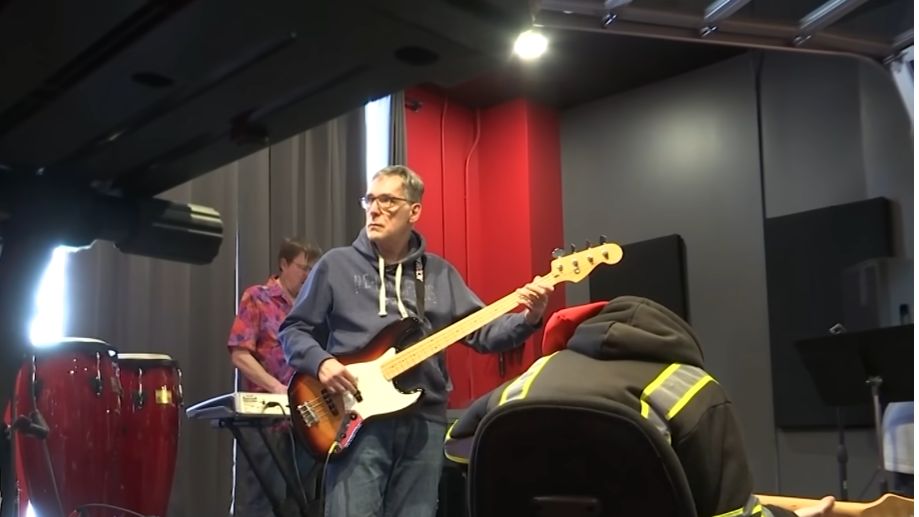
ROCHESTER, N.Y. — Pablo Gavilondo is obsessed with television, editing and the way stories are cut together. He built a career in post-production, played bass in a band and from the time he was 5 years old, he lived with grand mal seizures.
The Brain Injury Association of America says someone in this country experiences a brain injury every nine seconds.
What You Need To Know
Pablo Gavilondo has lived with grand mal seizures since age 5, enduring two brain surgeries that largely eliminated his grand mal seizures, but left him with short-term memory loss
Despite his diagnosis, Gavilondo continued working in post-production and playing bass, refusing to walk away from the career and identity he built
Now a member at Bridges for Brain Injury in Rochester, Gavilondo is the driving force behind the Brave Notes band and advocates for greater understanding of invisible brain injuries
For Gavilondo, seizures began at age 5, but went undiagnosed for years.
“Seizures started when I was 5 years old. I wasn’t actually diagnosed until I was ten. That’s when I started taking seizure medicines. I’ve been taking them all my life since I was ten years old,” he said.
Grand mal seizures, now called tonic-clonic seizures, cause a sudden loss of consciousness and violent muscle contractions. For Gavilondo, they were triggered by the flickering lights and parallel lines of the edit suite he loved. He never left.
“I didn’t fear the grand mal seizures. I worked in post-production. And several times over the years, I had seizures on the job — but I’m not gonna run away from what I love just because of a seizure,” he said.
For Gavilondo, this was always more than a career. It was his identity. And when the seizures became too severe, the choice was never whether to keep going — but how.
“They would happen at school, at work, on the subway. And that’s me. I wasn’t mad at my brain. I wasn’t mad at the disability,” he expressed.
Gavilondo had two brain surgeries which largely eliminated the grand mals, but left something harder to see and harder to explain.
“I stayed conscious, which, after the brain surgery, was at least good enough. But I had no idea where I was or who I was,” he said.
The surgeries also left him with short-term memory loss, affecting his reading, writing, and ability to remember songs he had played for years.
“I still had a love for creative things. For music. But I had to relearn how to play guitar and the bass,” he said.
Still, he pushed forward.
“It’s not like I was unhappy doing it. This is just the steps I have to take in fighting it,” he added.
Today, Gavilondo is a member at Bridges for Brain Injury in Rochester and the driving force behind the Brave Notes, the center’s band.
Tiffany Jones of Bridges for Brain Injury says the program meets survivors exactly where they are.
“After a TBI, many folks have to relearn how to walk, have to relearn speech. We give them a comfortable place with peers to be able to do that,” she said.
For Jones, watching Gavilondo’s journey has been unlike anything else.
“Pablo is not just the bassist. Pablo is a true artist. Watching how music has those healing abilities for him has been magical,” she expressed.
But Gavilondo says the hardest part of living with a brain injury isn’t the seizures, it’s invisibility. The Brain Injury Association calls it a silent epidemic.
“When it’s memory, and reading and writing — why isn’t he paying attention? Why is he lazy? Not trying to remember? Whereas here, no one is judging anybody. That’s why I feel so at home,” he said.
Gavilondo is not a victim, but a survivor who chose what comes after. He practices his bass every day, relearning the same riffs over and over. For him, that’s not a setback, that’s just the work.
He wants people to know: Don’t judge too quickly when meeting someone with a brain injury.