
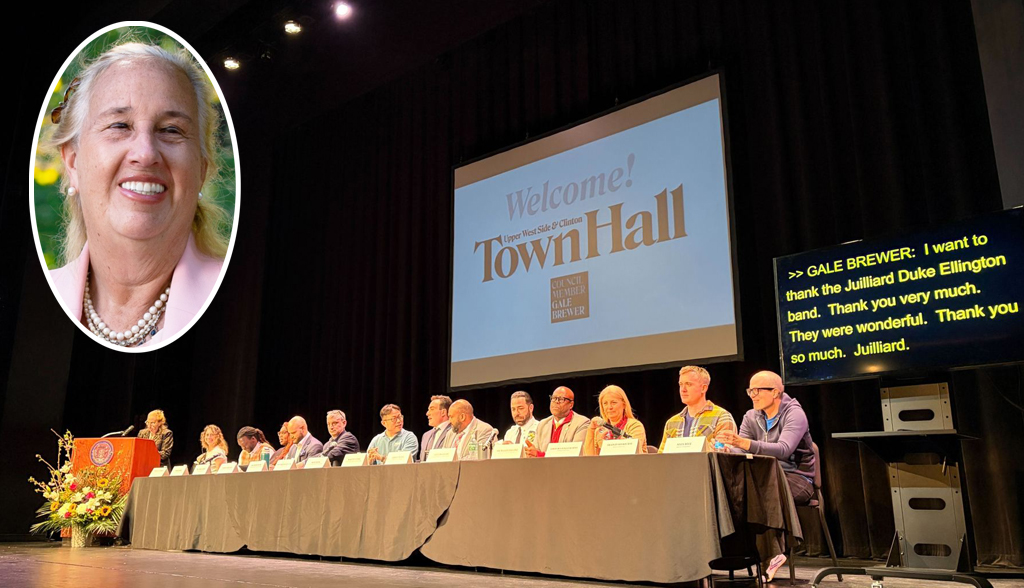
Is something finally Brewing for bike safety in Central Park?
Upper West City Council Member Gale Brewer called on the Mamdani administration to install a long-sought protected bike lane on the 72nd Street Transverse through Central Park to reduce bike traffic on indirect park paths and encourage cycling by making it safer and more convenient.
“I particularly support the 72nd Street transverse … you can’t get across the park, I think it would take pressure off [the Central Park Drive and] also even more people would use bicycles when they know they can get from one part of Manhattan to another,” Brewer told Streetsblog after a town hall hosted by her office on Monday.
The town hall was billed as a chance for locals to question representatives from a variety of city agencies, but really, it was a chance for the veteran elected official — a three-term Council member, then a two-term Manhattan borough president before she regained her Council seat 2022 — to pushing the public servants about the pressing needs of her district, including the need for a cross-park bike connection.
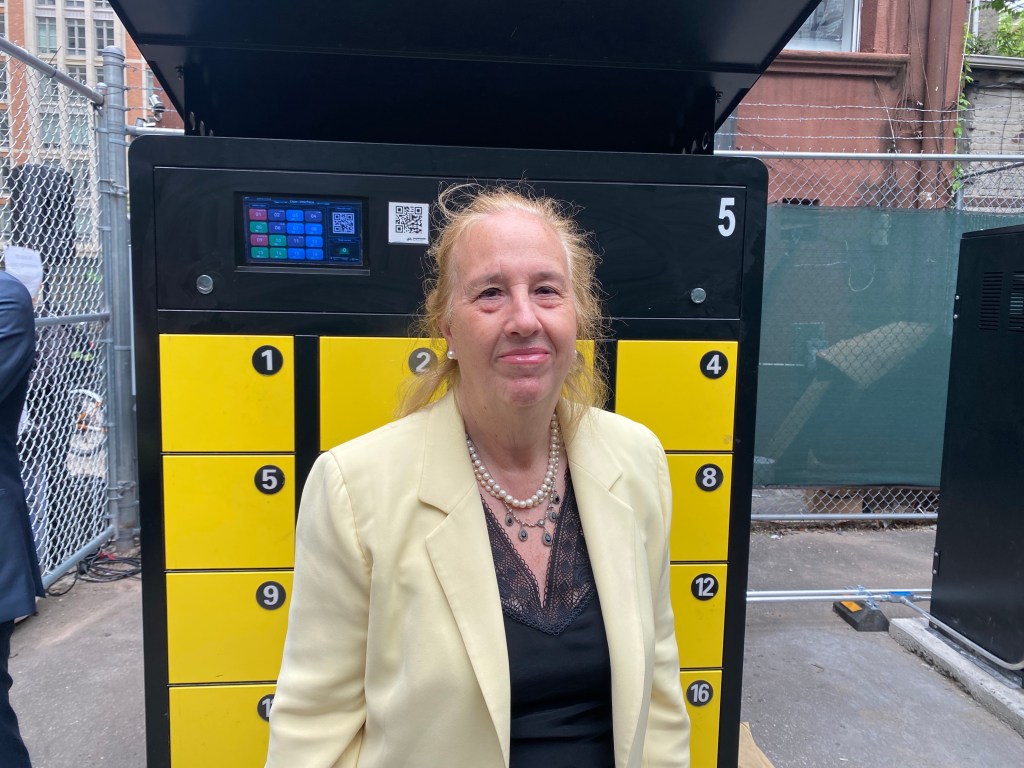 Council Member Gale Brewer slammed the city’s escalating ticketing against cyclists.
DOT Manhattan Borough Commissioner Danielle Zuckerman said the agency is “very interested” in more cross-town connections and wants to work “with the community on proposals for the transverses.”
The Central Park Drive, or the main six-mile loop, is popular with recreational cyclists, pedestrians, runners, and thousands of tourists. But due to the lack of protected bike infrastructure in Upper Manhattan, it has also become a vital route for commuters and delivery workers trying to get across town.
Giving cyclists safe passage through — or, more accurately, under — the park is a key ask of both cyclist advocates as well as people who want the park drives to be calmer places so the public can fully enjoy the fruits of the banishment of cars in 2018.
But the DOT’s redesign of the drive — south of 96th Street on the west side and 90th Street on the east side — turned the old car traffic lights into blinking yellow “yield” signals for cyclists, and some pedestrians complain that they have to be more alert than previously even though data shows the park is far safer than it was in the past.
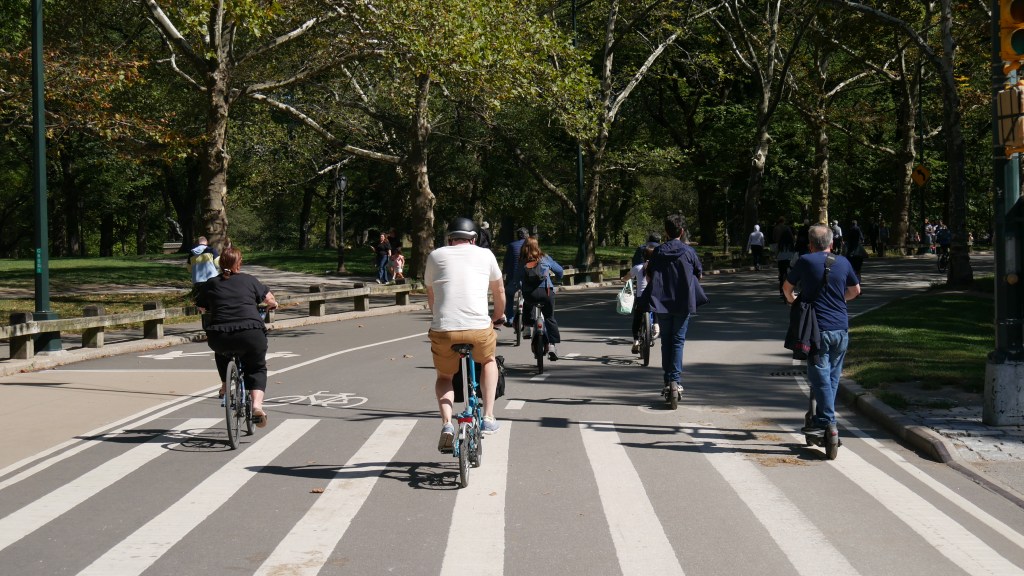 Cyclists ride in Central Park.
The percentage of pedestrians waiting more than 10 seconds to cross the drive dropped at all times observed by DOT on a weekday and a Saturday after the redesign, and the department has seen no evidence that cyclists speeds have increased since the new lights went in.
The redesign was a part of a plan recommended by the Central Park Conservancy after a study of the drive was conducted in 2024. The study also recommends the same transverse bike lanes being pushed by Brewer — and in a nifty twist, the study was conducted by consulting firm TYLin, where Mike Flynn, Mayor Mamdani’s new DOT Commissioner, worked when the study was being undertaken.
Brewer has certainly been all over the map when it comes to cycling advocacy. She supports a ban, sponsored by MAGA firebrand Vickie Paladino (R-Queens), on electric bikes in the park. And she supports a state bill to license and register electric bikes, a bill that opponents say will reduce cycling and make roadways less safe.
But she also supports daylighting — despite some earlier wavering — and ending the criminal crackdown on cyclists, as she re-stated at the town hall.
On daylighting, DOT stuck to its guns, again stopping short of endorsing a universal approach.
“We definitely support implementing daylighting where it makes sense,” said Zuckerman.
And Brewer wholeheartedly praised Mayor Mamdani’s decision to end the criminal summons policy for e-bike riders — though, ever-eager to accommodate her unconvinced Upper West Side constituents, she played both sides of the issue.
“I thought it was OK if they do [criminal summonses]. I mean, others don’t. You know, it’s very controversial,” she said, before suggesting the criminal summonses weren’t effective in actually making streets safer. “I didn’t know how effective [it] was. What was happening with criminal [summonses], to the credit of the judges, was they were dismissing them.”