
BROOKLYN – In the last quarter century, New York City’s most populous borough has quietly established itself as the state’s hotbed for illegal election activity involving nonprofit organizations.
A Times Union investigation has found that during that span, more than 100 nonprofit organizations in Brooklyn that are prohibited by federal and state laws from participating in campaigns and other electioneering activities have made donations or lent support to candidates or political committees. The donations are more than double the amount of prohibited activity by nonprofits in any other municipality across the state during that period.
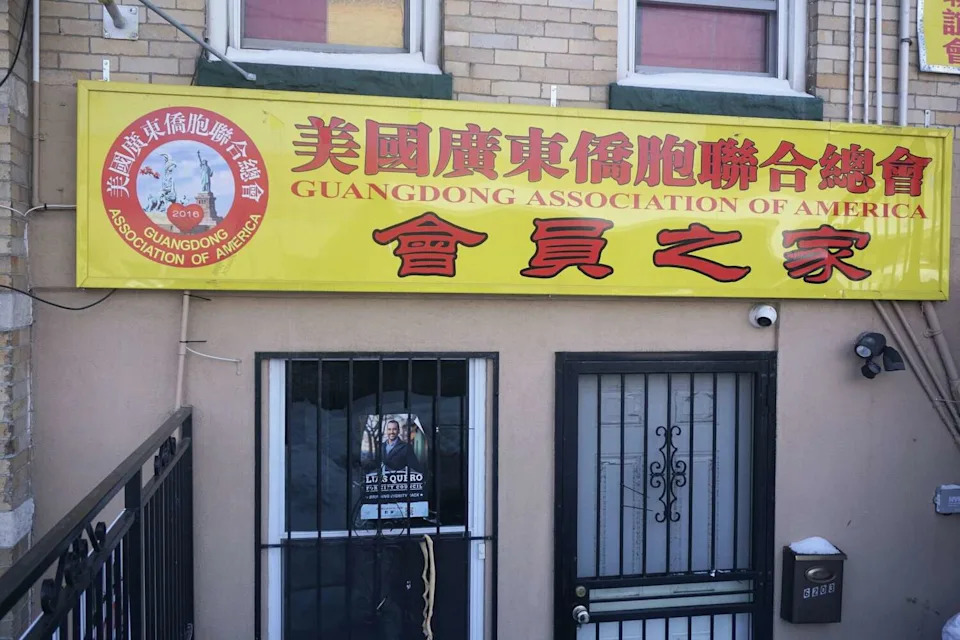
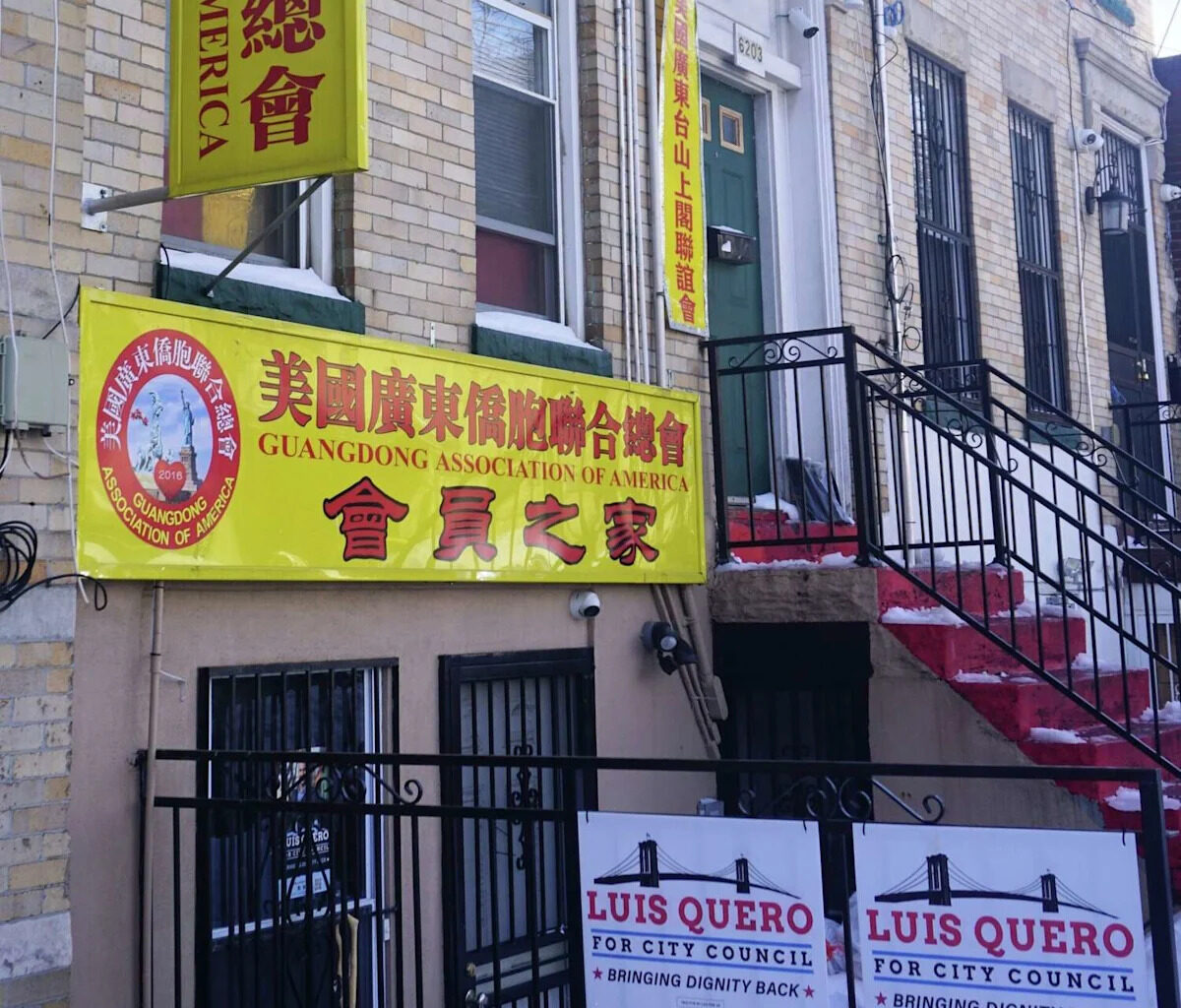
The Guangdong Association of America displayed campaign signs for a candidate in January. The nonprofit also reserved a table at a political fundraiser and shared video from a candidate’s campaign kick-off event on its social media. (Emilie Munson/Times Union)
The newspaper’s investigation has also revealed sparse enforcement of the statutes governing election integrity in that sector, leaving charitable groups and their leaders – or the candidates they have supported – with minimal concern that their actions may have legal consequences.
Named for the section of the Internal Revenue Code that governs them, 501(c)(3) nonprofits receive two valuable benefits: an exemption from paying federal taxes and tax deductions for donors. Federal law has barred organizations from campaign activity for decades, and New York has a similar prohibition that took effect in 2019.
Manhattan has nearly 40,000 more registered 501(c)(3) nonprofits than Brooklyn. But IRS and state elections data show Brooklyn has had more than twice the number of those organizations engaged in making prohibited campaign contributions.
In recent years, the contributions have continued while nonprofit organizations have also quietly promoted politicians and candidates through other means.
RELATED: Hundreds of nonprofits made illegal campaign contributions across New York
The Times Union unearthed instances of 19 nonprofit organizations endorsing candidates, displaying their political signs, promoting their fundraisers, or speaking at campaign events in Brooklyn. These occurred despite mandates that their work be exclusively focused on public-benefit purposes, including charitable, religious, educational or scientific endeavors.
The candidates who benefited from the improper practices in recent years include, but are not limited to: Republican state Sen. Stephen T. Chan, Republican state Assemblyman Lester Chang, Democratic Assemblyman William Colton, and Democratic New York City Councilwoman Susan Zhuang. In earlier years, nonprofits donated to former state Sen. Velmanette Montgomery, former Assemblyman Nick Perry, who was also a U.S. Ambassador to Jamaica, and former Assemblywoman Rhoda Jacobs, all Democrats.
Many of the nonprofits are state and city grant recipients. Multiple sources interviewed for this story said some of the charities are wading into politics now with the explicit goal of securing more government funding. Other organizations appear unfamiliar with the rules, or may be failing to comply due to language and cultural barriers. Several of the candidates who have benefited are Chinese American, and so too are many of the groups that support them.
While some nonprofits may be ignorant of the law, allegations of trading endorsements for government funding would be public corruption, said Susan Lerner, executive director of Common Cause New York, a group that advocates on election issues.
“To the extent that there is a pattern, it clearly violates our laws, and if this is indeed what is happening, it approaches a quid pro quo,” Lerner said.
{“__type”: “devHubFreeformEmbed”,”__id”:”DataTable”,”__data”:{“story_settings”:[{“Market_Key”:”Albany”,”Subhead”:”
\n”,”Chatter”:”The table includes prohibited electioneering by 501(c)(3)s since 2020.”,”Fallback_Image”:””,”Test_URL”:”https://preview-prod.w.timesunion.com/interactives-embed/1771009323170-devhub-test-proj/DataTable?width=450″,”Freeform_ID”:”104675″,”Freeform_Link”:”https://wcm.hearstnp.com/index.php?_wcmAction=business/item&id=104675″,”Unique_ID”:”1771009323170″,”Template”:”none”,”WCM_Embeds”:”DataTable”,”Subtype”:”Base”,”Slug”:”devhub”}],”table_settings_wcmprops”:[{“Table_Width”:”wide”,”Note”:””,”Credits”:”Emilie Munson/Times Union “,”Alt_Text”:”This table shows the ways Brooklyn 501(c)(3) nonprofits engaged in electioneering and what the nonprofits said about those actions.”,”Max_Rows”:”5″,”Search”:”TRUE”,”Search_Placeholder”:”Search by nonprofit”,”Expander_Search”:”FALSE”,”Featured_Color”:”#CFE0EF”,”Reverse_Sort”:”FALSE”,”Abbreviate_Nums”:”FALSE”,”Expanded_Filter”:”FALSE”,”S3_URL”:””},{“Table_Width”:”Optional: How wide you’d like your table to appear on desktop. Will default to text width, but you can make it wider (large is 928px, wide is 1200px).”,”Note”:”Optional: Any notes or caveats about your data can go here. This will appear under the table.”,”Credits”:”Optional: Sources and bylines go here and will appear under the table. Credits are in this style: Name / Newsroom • Source: XXX”,”Alt_Text”:”Optional: This is where you can provide a brief description of what your table is showing. It’s good for SEO and accessibility.”,”Max_Rows”:”Optional: Set the max number of rows displayed per page. This is set to15 by default.”,”Search”:”Optional: Add a search bar to search all text columns”,”Search_Placeholder”:”Optional: Override the placeholder text in the search bar. By default, a placeholder will automatically be generated based on the column names. Ex: \”Search by School, Record\””,”Expander_Search”:”Optional: Check this box to allow expander rows to be included in search results. Expander row searching is disabled by default.”,”Featured_Color”:”Optional: Override the background color of featured rows. Featured rows have a background color of #F5F5DC (light yellow / beige) by default.”,”Reverse_Sort”:”Optional: By default, your \”defaultSort\” column will be sorted in ascending order. If you’d like to flip the order, check this box.”,”Abbreviate_Nums”:”Optional: Abbreviate large numbers to match SFC Style Guide. Only applies to currency and number columns. Ex: 1K, 1M, 1B”,”Expanded_Filter”:”Optional: Automatically expand the filter menu when the page first loads. Useful if you only have a few filters and want them shown by default.”,”S3_URL”:”Optional: For developers only. If this field is empty, it will pull the data from the data_wcmfeed tab. This field allows you to link directly to a json file on S3 which is more complex, but great for large datasets. In the first object in your json, you need to assign the data types for each key. Reference the docs for supported types in this C2P. You must also manually fill out the data_settings tab for each key in your data.”}],”data_wcmfeed”:”https://files.sfchronicle.com/wcm-feeds/2026/1cTWUzNuwLtaizDKJkBYDrl5QaFPJq0xVrmgo68pzY3cdata_wcmfeed.json”,”data_settings_wcmprops”:[{“Setting”:”Optional: All of your headers from the data tab should be populated here. You can use this tab to tweak table settings to your preferences.”,”Width”:”Optional: Control the width of individual columns. Useful if you want one column to be wider than the others. Do not set a width on expander rows.”,”Expander”:”Optional: This will move a column into an expander row. It will not appear in the main table, but will show up if you click on a row. Useful if you want to write notes, or if you feel like you have too many columns.”,”Sortable”:”Optional: Allows a column to be sorted when you click on its header. Not every column makes sense to sort by, so this gives you the ability to choose.”,”defaultSort”:”Optional: Sets which column is used to sort by default when the table first loads. Select only one column as your default sort.”,”imageSize”:”Optional: You can control the image sizes of \”paired columns\” which are columns that have images and text in them. By default, images are set to 15px.”,”fontWeight”:”Optional: Controls the font weight of the data in each column. By default, the font-weight is normal. Options: normal, bold, 400, 500, 600, 700, 800″,”Alignment”:”Optional: Manually switch text alignment from left to right for an individual column in the main table (this setting is ignored in expanders). All columns are left aligned by default. Options: left, right”,”Filterable”:”Optional: Selecting one or more of the checkboxes below enables a filter menu that allows a column to be filtered. If you don’t want any of your data to be filterable, simply leave these boxes untoggled and the filter menu will not show up on the page. Only text, number, currency, percent and date data types can be filtered.”,”mobileDrop”:”Optional: For developers. Disables horizontal scroll on mobile and makes a column drop into the expander. If the expander is not enabled, mobileDrop will hide the selected column on mobile instead. You should perform a mobile inspector check to adjust mobileWidth settings and/or data accordingly.”,”mobileWidth”:”Optional: For developers using mobileDrop, assign a width for the columns that are not \”dropped\” on mobile devices or in the expander.”},{“Setting”:”Nonprofit name”,”Width”:”20%”,”Expander”:”FALSE”,”Sortable”:”TRUE”,”defaultSort”:”TRUE”,”imageSize”:””,”fontWeight”:”bold”,”Alignment”:””,”Filterable”:”FALSE”,”mobileDrop”:”FALSE”,”mobileWidth”:”40%”},{“Setting”:”Chinese name”,”Width”:”20%”,”Expander”:”FALSE”,”Sortable”:”FALSE”,”defaultSort”:”FALSE”,”imageSize”:””,”fontWeight”:””,”Alignment”:””,”Filterable”:”FALSE”,”mobileDrop”:”TRUE”,”mobileWidth”:””},{“Setting”:”Political activity”,”Width”:”30%”,”Expander”:”FALSE”,”Sortable”:”FALSE”,”defaultSort”:”FALSE”,”imageSize”:””,”fontWeight”:””,”Alignment”:””,”Filterable”:”FALSE”,”mobileDrop”:”FALSE”,”mobileWidth”:”60%”},{“Setting”:”Notes”,”Width”:””,”Expander”:”TRUE”,”Sortable”:”FALSE”,”defaultSort”:”FALSE”,”imageSize”:””,”fontWeight”:””,”Alignment”:””,”Filterable”:”FALSE”,”mobileDrop”:”FALSE”,”mobileWidth”:””},{“Setting”:”Response”,”Width”:”30%”,”Expander”:”FALSE”,”Sortable”:”FALSE”,”defaultSort”:”FALSE”,”imageSize”:””,”fontWeight”:””,”Alignment”:””,”Filterable”:”FALSE”,”mobileDrop”:”TRUE”,”mobileWidth”:””},{“Setting”:””,”Width”:””,”Expander”:”FALSE”,”Sortable”:”FALSE”,”defaultSort”:”FALSE”,”imageSize”:””,”fontWeight”:””,”Alignment”:””,”Filterable”:”FALSE”,”mobileDrop”:”FALSE”,”mobileWidth”:””},{“Setting”:””,”Width”:””,”Expander”:”FALSE”,”Sortable”:”FALSE”,”defaultSort”:”FALSE”,”imageSize”:””,”fontWeight”:””,”Alignment”:””,”Filterable”:”FALSE”,”mobileDrop”:”FALSE”,”mobileWidth”:””},{“Setting”:””,”Width”:””,”Expander”:”FALSE”,”Sortable”:”FALSE”,”defaultSort”:”FALSE”,”imageSize”:””,”fontWeight”:””,”Alignment”:””,”Filterable”:”FALSE”,”mobileDrop”:”FALSE”,”mobileWidth”:””},{“Setting”:””,”Width”:””,”Expander”:”FALSE”,”Sortable”:”FALSE”,”defaultSort”:”FALSE”,”imageSize”:””,”fontWeight”:””,”Alignment”:””,”Filterable”:”FALSE”,”mobileDrop”:”FALSE”,”mobileWidth”:””},{“Setting”:””,”Width”:””,”Expander”:”FALSE”,”Sortable”:”FALSE”,”defaultSort”:”FALSE”,”imageSize”:””,”fontWeight”:””,”Alignment”:””,”Filterable”:”FALSE”,”mobileDrop”:”FALSE”,”mobileWidth”:””},{“Setting”:””,”Width”:””,”Expander”:”FALSE”,”Sortable”:”FALSE”,”defaultSort”:”FALSE”,”imageSize”:””,”fontWeight”:””,”Alignment”:””,”Filterable”:”FALSE”,”mobileDrop”:”FALSE”,”mobileWidth”:””},{“Setting”:””,”Width”:””,”Expander”:”FALSE”,”Sortable”:”FALSE”,”defaultSort”:”FALSE”,”imageSize”:””,”fontWeight”:””,”Alignment”:””,”Filterable”:”FALSE”,”mobileDrop”:”FALSE”,”mobileWidth”:””},{“Setting”:””,”Width”:””,”Expander”:”FALSE”,”Sortable”:”FALSE”,”defaultSort”:”FALSE”,”imageSize”:””,”fontWeight”:””,”Alignment”:””,”Filterable”:”FALSE”,”mobileDrop”:”FALSE”,”mobileWidth”:””},{“Setting”:””,”Width”:””,”Expander”:”FALSE”,”Sortable”:”FALSE”,”defaultSort”:”FALSE”,”imageSize”:””,”fontWeight”:””,”Alignment”:””,”Filterable”:”FALSE”,”mobileDrop”:”FALSE”,”mobileWidth”:””},{“Setting”:””,”Width”:”Width total: 100%”,”Expander”:””,”Sortable”:””,”defaultSort”:””,”imageSize”:””,”fontWeight”:””,”Alignment”:””,”Filterable”:””,”mobileDrop”:””,”mobileWidth”:”Width total: 100%”}]}}
Multiple New York City candidates said the charities’ political activities have influenced the outcomes of recent elections. They claim this activity has allowed corruption to infiltrate local politics, splitting candidates into those who follow the rules and those who do not. Several commented on the condition of not being identified, saying they fear professional or political retaliation.
Chan, a Republican senator, insisted the charities that appeared to support his campaign only did so through the personal actions of their leaders. (Employees of a 501(c)(3) may engage in campaign activities as long as they do so in their private capacity and it is clear that they are not acting on behalf of the organization, according to the state attorney general’s office.)
Chan noted that many nonprofits in his Brooklyn district have allegedly made official endorsements and given support to Zhuang, the City Council member, and Larry He, a Democrat running against Chan.
“This time around, a lot of them are working actively for Dr. Larry He, my opponent, with the promise of money,” Chan said in an interview. He added that he’d seen Zhuang collect nonprofit support with the same alleged promises.
“When you go around dangling money in front of all these 501(c)(3)s, there is some cause and effect,” he said. “To use the funding as leverage for votes is not the right thing.”
Chan claims he had been approached by the same nonprofits seeking government funding, but as a Republican in a Democrat-led state Legislature, he probably couldn’t deliver.
Hank Sheinkopf, a spokesman for He, said Chan’s allegations are inaccurate.
“Community organization leaders supporting Larry He’s candidacy do so voluntarily at their own will with no incentive of any kind offered or suggested,” Sheinkopf said.
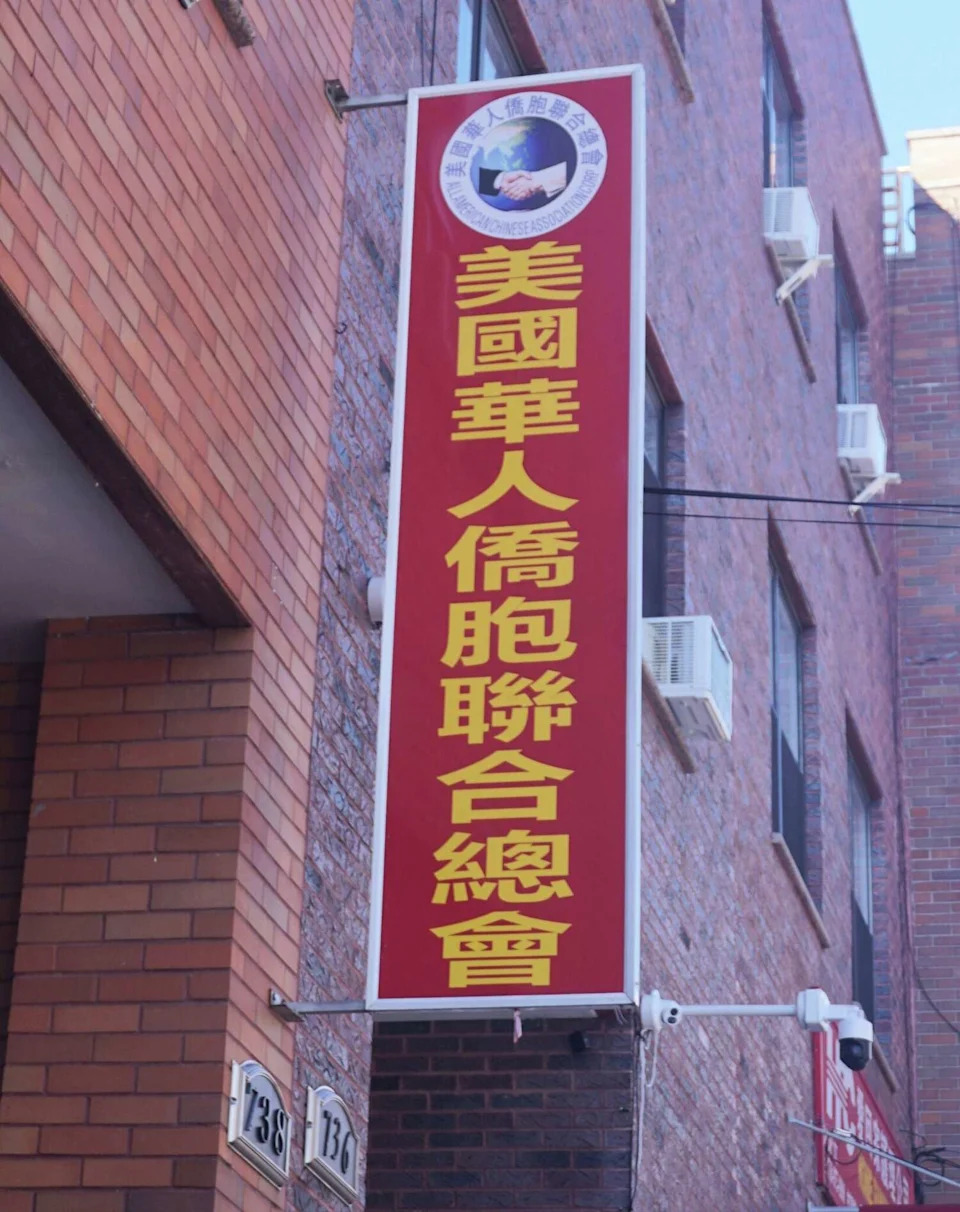
The nonprofit All American Chinese Association Corp endorsed Councilwoman Susan Zhuang, according to her website, and donated to Assemblyman Lester Chang’s campaign. A leader of the nonprofit said he only intended to convey personal support for Zhuang. The nonprofit name was written on his check when he didn’t know how to write his English name, he said. (Emilie Munson/Times Union)
One Brooklyn charity official, who declined to be named out of fear of reprisal, confirmed she’s observed charitable nonprofits exchanging endorsements for grants and other political favors. She said she declines to use her organization to influence campaigns because she knows it is illegal – but “at the end of the day, we get less funding.”
Another nonprofit leader, who also declined to be named, said the organizations engaging in election activity may not understand the law.
“Lots of people, they are newly arrived … so they do not understand the process of political elections,” she said. “They start doing lots of things which are wrong.”
Officials with dozens of 501(c)(3) nonprofits that appeared to participate in election activities were contacted for this story. Some said they were familiar with the rules and that their leaders were acting in a personal capacity. Others did not respond or declined to comment.
For two years, Zhuang’s campaign website listed an endorsement from Breaking the Cycle Drop Corp., a charitable homelessness organization, along with numerous other endorsements from nonprofits. Breaking the Cycle Drop’s president, Renee Mitchell, said the nonprofit never made the endorsement of the City Council member. Mitchell was furious to learn of the campaign’s claim and threatened legal action.
Zhuang declined to answer questions about that endorsement claim and other election activities in support of her campaign.
“Organization executives on their own initiatives – using personal resources – chose in significant numbers to support the election effort,” said Sheinkopf, who is also Zhuang’s spokesman.
Tell us what you’ve seen.
Do you have information about election activity by 501(c)(3) nonprofits in New York?
Email reporter Emilie Munson at emilie.munson@timesunion.com
Possible corruption
Most of the election activity has centered on a small group of lawmakers with overlapping political connections and districts. Democratic candidate He is Colton’s chief of staff, while Zhuang previously had that job.
Many of the nonprofits are also “hometown associations,” which are organized around immigrants’ native cities or provinces. Some said they organize cultural events for the Chinese community, help members sign up for government benefits, provide programming for the young or elderly, and similar activities, according to tax filings and interviews.
A New York Times investigation found these types of organizations have also acted as an arm of the Chinese government to promote pro-China candidates, including by intervening in multiple elections in New York.
Lerner, the longtime leader of Common Cause, called for the state attorney general’s office to probe the nonprofits and for campaign finance boards to examine any suspect contributions. Lawmakers have a responsibility not to accept improper contributions and not to seek endorsements from groups that can’t legally make them, she said.
Chang, who defeated Democratic incumbent Assemblyman Peter J. Abbate Jr. in 2022, contends it’s the charities’ responsibility, not the candidate’s, to know if they are permitted to donate or endorse.
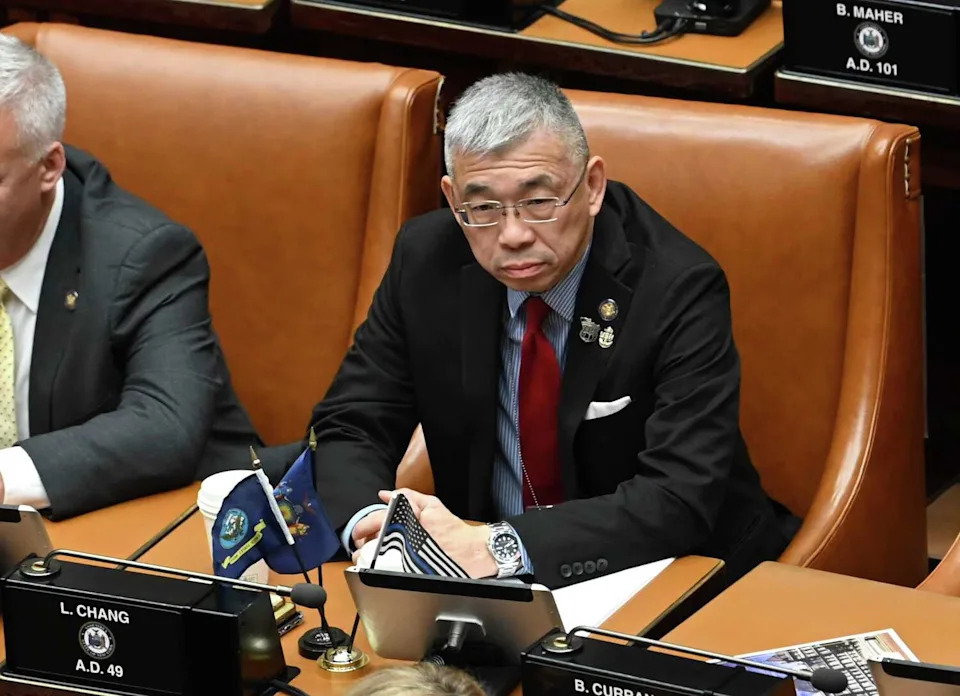
Nonprofits reserved tables at a fundraiser for the campaign of Assemblyman Lester Chang and one contributed $1,000 to his election effort. Another charity wrote on social media it had contributed “money and effort” to his election campaign, while seeking a help from his office. (Lori Van Buren/Times Union)
Chan, a former New York Police Department sergeant elected to the state Senate in 2024, said he urges 501(c)(3)s to be cautious: “Even when they go ‘Hey, we support you,’ I say ‘be careful,'” he said.
Chan claims he’s already seeing charities at work in this year’s races – this time opposing him.
“I urge people to vote with their conscience, not with their greed,” he said.
Colton’s club
In his three decades representing Brooklyn, Colton has received at least 31 campaign contributions from registered charities, state records show. The Times Union couldn’t find another state lawmaker who’d received more nonprofit contributions that appear to be improper.
One group, the Brooklyn Italian Soccer Club, made 10 contributions totaling over $1,500 to Colton from 2000 to 2007, records show. In 2009, the state attorney general’s office warned the club that it had apparently violated the law and could lose its nonprofit status unless its donations were refunded.
Records show Colton never returned the funds to the soccer club or any of the other charities. Abbate, who was in the Assembly from 1987 to 2023, and former City Councilman Vincent Gentile also received contributions from the club, but their campaigns issued refunds.
Colton said the improper nonprofit contributions represented less than 3% of all contributions he’s received over 30 years.
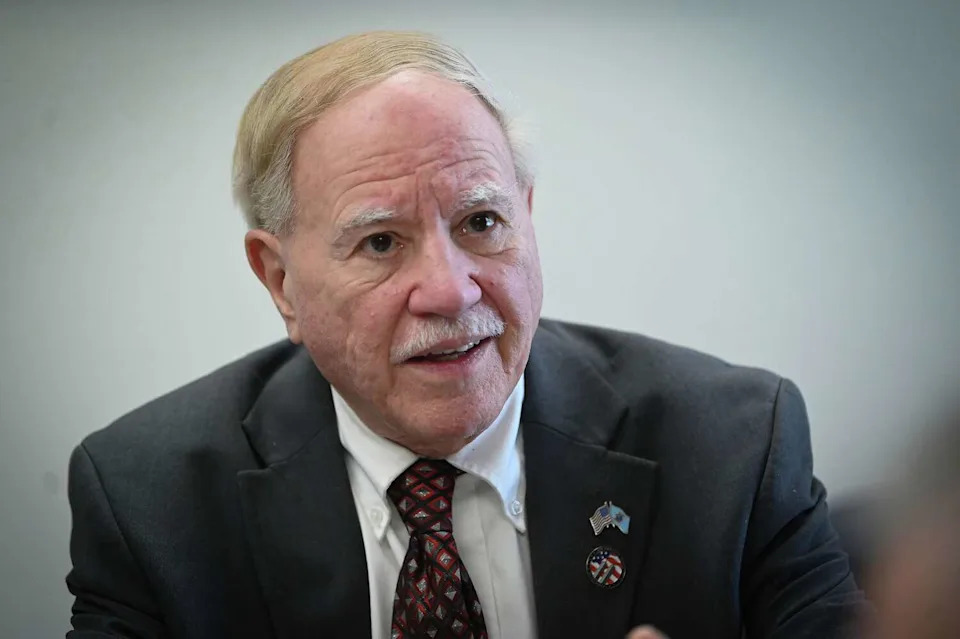
Assemblyman William Colton has served in the Legislature since 1996. He did not answer questions about the contributions his campaign received. (Lori Van Buren/Times Union) (Lori Van Buren/Times Union)
“As soon as we look into and confirm the accuracy of this matter, we immediately will return the contributions at issue,” Colton said.
The Brooklyn Italian Soccer Club, an active 501(c)(3), does not appear to have made any further campaign donations. The club’s officials did not respond to a request for comment.
Another nonprofit, the United Military Veterans of Kings County, Inc., donated $150 to Colton in 2019, state records show.
Raymond Aalblue, the group’s executive director, said the payment was for an advertisement in a journal distributed at a dinner where the group’s president received an award. The dinner was hosted by the United Progressive Democratic Club, which is run by Colton and other Democrats. Aalblue said he did not know his payment would go toward Colton’s reelection. He added that their group strives to follow the nonprofit rules around election activity.
The Times Union visited the United Progressive Democratic Club in January. Campaign posters for Colton were hung on the front door. Inside, signs for Colton and Zhuang blanketed the wood-paneled walls.
The Zhanjiang Association of America, a charitable nonprofit, shares a building with the club. The association reserved a table at Zhuang’s fundraiser last year and has endorsed the city councilor, a political protege of Colton’s. Nonprofit leaders were inside the club, taking down campaign posters from the walls, when a Times Union reporter stopped by recently. They refused to answer questions and pushed the reporter out of the building.
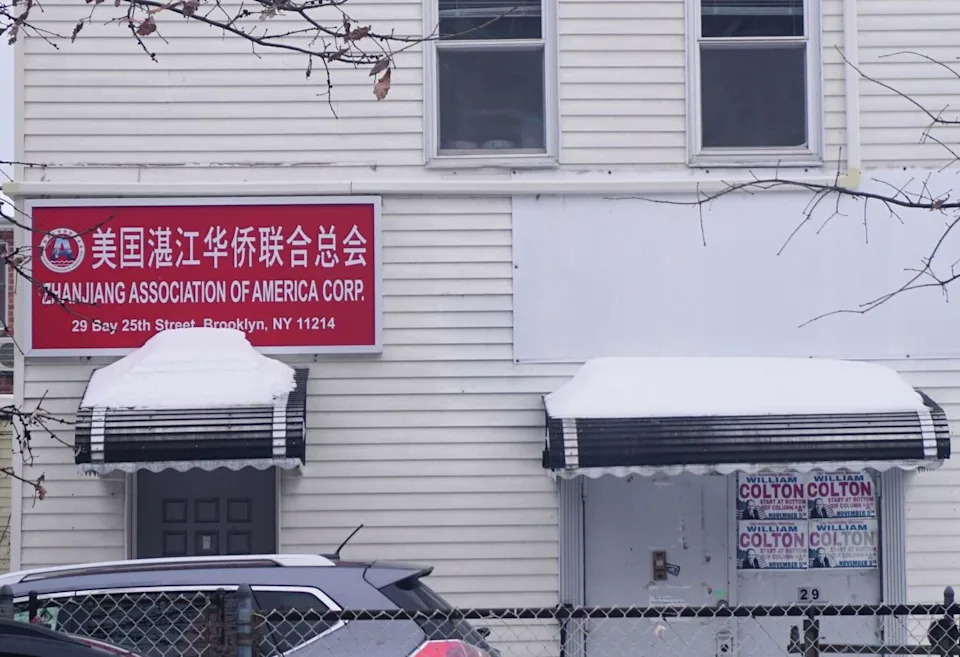
The 501(c)(3) Zhanjiang Association of America shares a building with the United Progressive Democratic Club, seen here with posters for Assemblyman Colton on the door. The Times Union found nonprofit leaders in the club taking down campaign posters during a recent visit. (Emilie Munson/Times Union)
Chan’s fundraiser
In September 2024, over 600 people filled an expansive dining room at a dim sum restaurant in Brooklyn to raise money for Chan, then a state Senate candidate. Though Chan was a first-time candidate, the event would be one of the most successful fundraisers of the 2024 election, a Times Union analysis found. Chan went on to win the only state Senate seat that Republicans flipped in 2024.
Supporters sat on chairs shrouded in gold fabric under bright chandeliers, wearing Chan T-shirts and posing with his campaign signs. The room echoed with chants of “Chan! Chan! Chan!” and “Vote! Vote! Vote!”
Before the event, Chinese community organizations supporting Chan, who goes by “Steve,” promoted the fundraiser on WeChat, a Chinese social media app.
“Chinese communities/organizations that support Steve Chan are going to hold the fundraiser,” their message said in Chinese characters. The organizations do not appear to have paid for the event: Chan spent over $30,000 on the dinner, campaign records show.
At the fundraiser, politicians and community leaders praised Chan, a U.S. Marine Corps veteran.
Zengxin Mei, president of the Brooklyn On Fun Association, another nonprofit, stood before the crowd and called Chan a helpful and kind person. Mei did not respond to requests for comment.
Chan denied that Mei’s comments were an endorsement, claiming Mei only acted in his individual capacity.
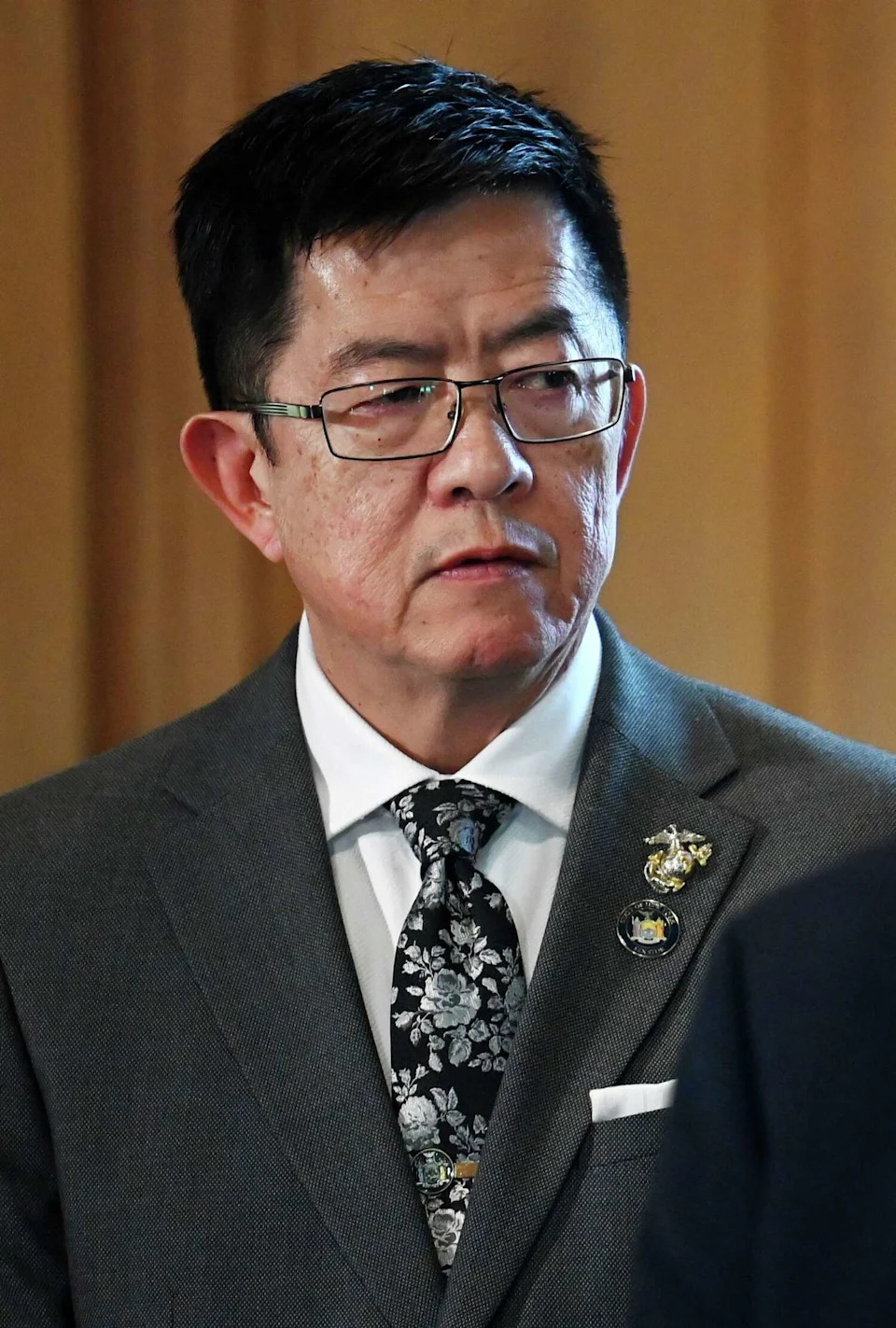
State Sen. Stephen T. Chan has received election support from several 501(c)(3) nonprofits. He denies that he or they did anything wrong, but alleges such nonprofits are engaging in illegal electioneering to benefit his political opponent. (Will Waldron/Times Union) (Will Waldron/Times Union)
Two weeks later, Chan was back at the same restaurant to celebrate the 75th anniversary of the People’s Republic of China.
John Chan, president of Asian American Community Empowerment, another 501(c)(3) nonprofit, invited candidate Steve Chan (no relation) to join him on stage, video shows. John Chan told the crowd to vote for Steve Chan in the 2024 election.
The New York Times reported that John Chan has close ties with the Chinese Communist Party. Steve Chan, who immigrated to the U.S. from Hong Kong as a child, denied he’s building ties with Chinese government agents. His opponent, He, was previously chairman of a state-owned oil company in China, a position typically held by people with close ties to the Chinese government, the Times reported.
Steve Chan claimed he was “never aware” that John Chan endorsed him.
“He might have opened his mouth and told people to vote for me, if that counts,” he said. “If he tells people to vote for me, am I supposed to say, ‘No, no, don’t vote for me’?”
Asian American Community Empowerment appears to have a history of backing candidates, as does its leader, John Chan, who runs several organizations. Another politician interviewed for this story, who declined to be named for fear of retribution, said they went to a gala dinner for one of Chan’s groups with numerous city and state officials in attendance. The politician was shocked when Chan gave explicit instructions to the crowd about who to vote for in the 2022 election. The politician was unsettled by what happened and recalled thinking: Wasn’t this a nonprofit event?
In recent years, Asian American Community Empowerment endorsed Zhuang, the City Council member, through John Chan, its president, as well as via the group’s executive president. The organization also reserved tables at fundraisers for Zhuang and Chang, the assemblyman, using its nonprofit name.
Nonprofits with 501(c)(3) designations are not permitted to “solicit contributions” for a candidate, according to guidance from the state attorney general’s office.
In May 2024, Zhuang’s office used official City Council emails to encourage donations to Asian American Community Empowerment, which could run afoul of city ethics laws, the New York Daily News reported. The New York City Conflicts of Interest Board website showed no enforcement dispositions involving Zhuang. Executive Director Carolyn Lisa Miller declined to provide further information, citing the confidentiality of their investigations.
John Chan did not respond to requests for comment.
Zhuang’s dance
During Zhuang’s reelection campaign in 2025, a WeChat invitation circulated in the Chinese community in Brooklyn about a fundraiser at an upscale restaurant called Fortune Palace. More than 400 people showed up to give campaign cash to the conservative Democrat last January, according to a social media recap of the fundraiser.
It was a lively event with dinner and entertainment. Zhuang appears to have paid no more than $6,000 for the fundraiser, city records show.
The New York Brooklyn Dance Club, a nonprofit that endorsed Zhuang, provided a seven-woman dance performance at the event. The group was not paid by the campaign, nor was an in-kind contribution recorded from the organization to Zhuang, city records show.
The cost of a table at the dinner was $500. At least four charitable nonprofits signed up on WeChat to reserve a table using their organization’s name, including the Guangdong Association of America and the Brooklyn On Fun Association, whose president had endorsed Chan for state Senate months earlier. The charities are not listed as making direct campaign donations to Zhuang, city records show.
The Times Union visited the Guangdong Association of America headquarters and found campaign posters for Luis Quero for City Council still hanging on the nonprofit’s fence and in their office window in January, months after the candidate’s election loss in November.
Wearing her signature pink, Zhuang cruised to reelection. During her 2023 and 2025 races, Zhuang’s campaign website listed endorsements from many local leaders, including at least 14 charities that used their executives’ titles and organization names to show support.

New York City Councilwoman Susan Zhuang has received endorsements and other support from numerous 501(c)(3) nonprofits. (Getty Images)
The state attorney general’s office has advised that nonprofit employees may personally endorse candidates, but any written materials with their organization’s name must specify the employee is not representing the organization.
“On printed materials, the following language should serve as a sufficient disclaimer: ‘Organization shown for identification purposes only. No endorsement by the organization is implied,'” an advisory from the attorney general states.
Zhuang’s endorsement list contained no such disclaimers. Her campaign’s website has since been taken down, but copies of it can be accessed via online sites that archive content.
New York City records show Zhuang directed grant funding to seven nonprofits that endorsed her or participated in her fundraisers after they engaged in the election activities. Some of the nonprofits had previously received city funding through other avenues.
Representatives of most of the nonprofits that endorsed Zhuang did not respond to requests for comment. Several leaders said they were unaware they were listed as endorsing Zhuang on her website and had only ever intended to communicate their personal support for her.
At her small grocery store in south Brooklyn, Yibing Wang, president of the Chimerica Women Association, said she never endorsed any candidate, although her name and nonprofit appear on Zhuang’s endorsement list. She is aware of the prohibition against election activity for nonprofits and follows it, Wang said through a translator. Wang noted Zhuang encouraged her group to apply for city funding because it hosts many community events.
In recent social media messages, however, Wang appeared to use her organization’s influence to solicit help with her personal immigration case. Using an account linked to the Chimerica Women Association, Wang chastised a staff member of Chang, the assemblyman, because Chang had not sent a letter to the federal government calling for Wang’s release from U.S. Immigration and Customs Enforcement custody.
“In his first year in office, Chimerica Women Association put a lot of effort to support him,” Wang wrote to the staffer. “They’ve contributed money and effort to his election campaign.”
Wang insisted her actions were proper, noting that Zhuang, the city councilwoman, and Chan, the state senator, had sent letters to support her.
This article originally published at Brooklyn is a hotspot for illegal election activity by nonprofits.