
Jeena Yi’s Jesa, directed by Mei Ann Teo and now running at The Public Theater, is anchored by sharply observed characters but hampered by a structure that repeats more than it builds, stretches where it should tighten, and resolves with a neatness that feels at odds with the play’s otherwise compelling messiness.
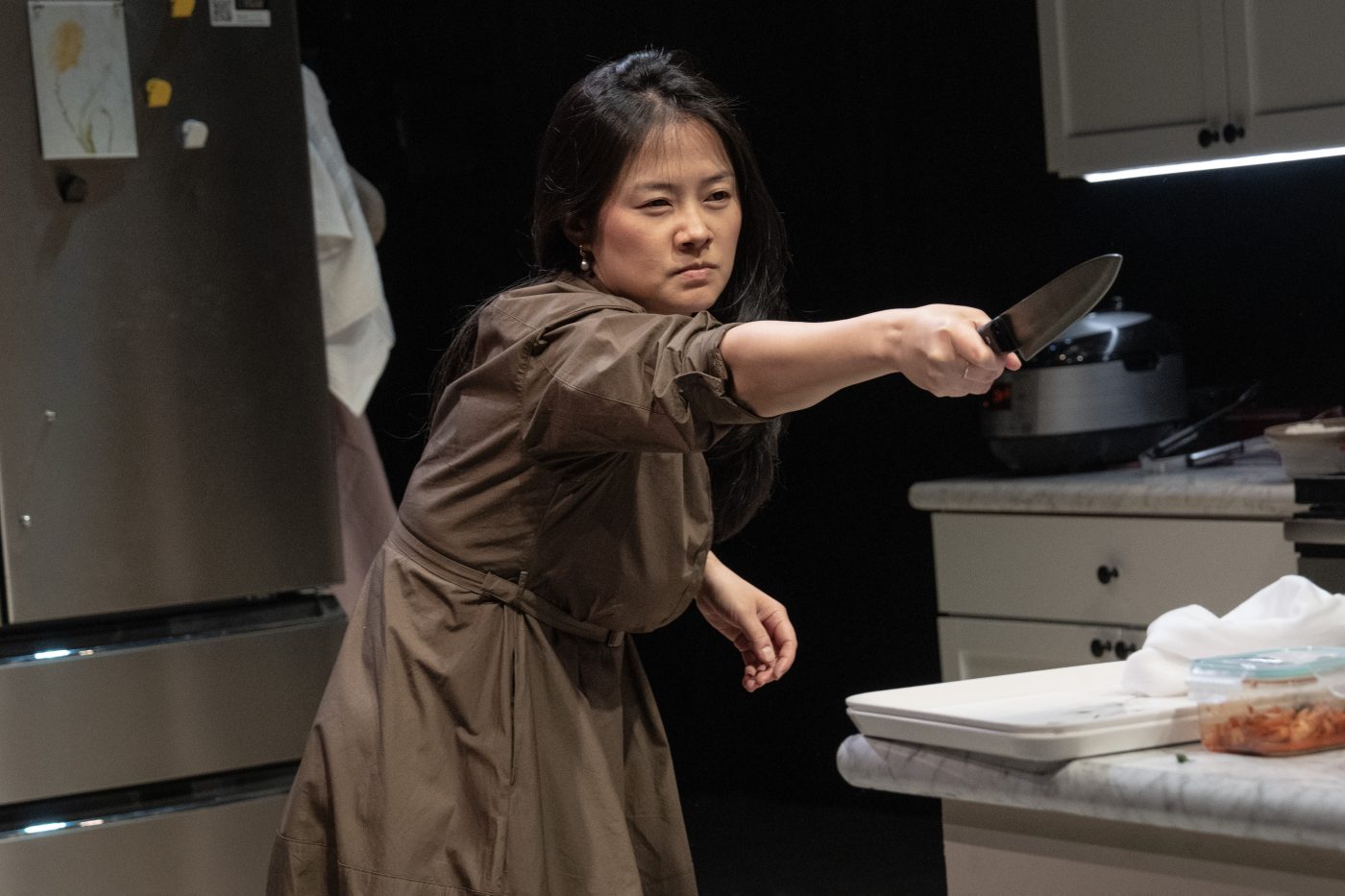
Four estranged sisters reunite in an Orange County home to perform Jesa, the traditional ritual honoring the dead. The production places this gathering in a fully realized domestic space, anchored by a working kitchen and a ritual table prepared with care and precision. The objects onstage, from food to family artifacts, carry a sense of inherited expectation that the sisters are both attempting to honor and noisily disrupting. That structure is not just visual but functional: the choreography of the ritual, from the order of bowing to the careful handling of food and drink, becomes a site of negotiation and conflict, eventually giving way to disorder as objects are knocked aside, contested, and reinterpreted in the heat of the sisters’ confrontations.
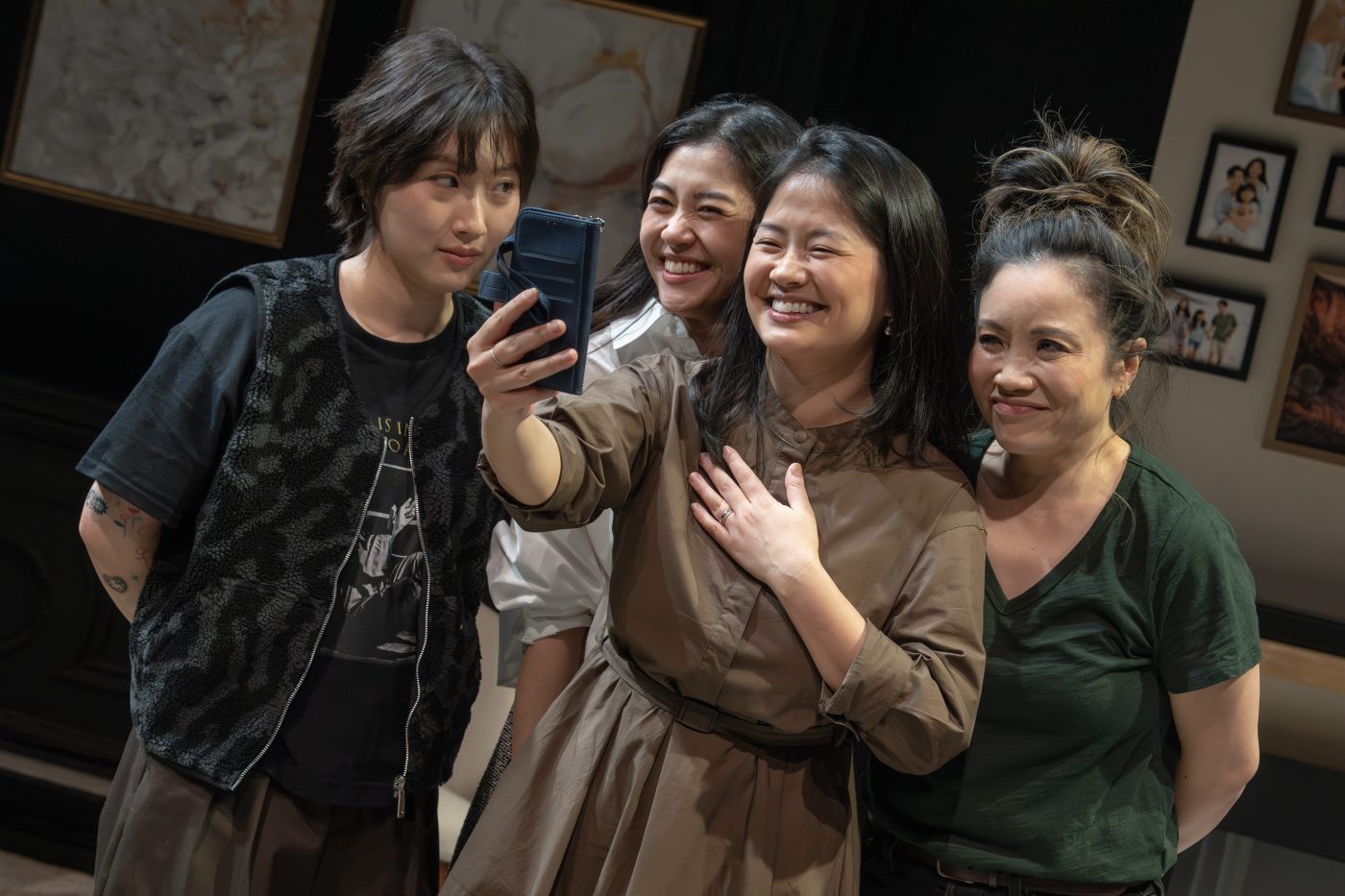
Yi gives each of the four women a distinct emotional and psychological center, and the cast commits fully to that specificity. Tina Chilip, Christine Heesun Hwang, Laura Sohn, and Shannon Tyo anchor the production with performances that feel lived-in and sharply observed, shaping a group dynamic built on defiance, control, stalled ambition, and precision. At the same time, the architecture beneath them remains familiar, each sister occupying a recognizable role within the family system.
The Korean American context is integral, shaping both the ritual at the center of the play and the distinct struggles each sister brings into the room. Each is, in her own way, shaped by the lived tension between Korean parents and their Korean American daughters. Yi also introduces a queer dimension to the family dynamic, complicating a household already structured by expectation and control.
 Yi’s script demands precision. The play is built on rapid, overlapping dialogue, with interruption and timing carrying as much meaning as the text itself. In the opening sequence, where one sister works in the kitchen while another arrives early, the rhythm of abbreviated exchanges is meant to establish both urgency and long-standing disappointment. At times, that precision hasn’t fully settled in performance, with exchanges landing slightly out of sync and softening moments that rely on tightly controlled rhythm.
The central challenge lies in escalation. Scenes move quickly from pointed exchanges to bursts of physical confrontation, generating energy without sustaining it. These moments flare and then reset, returning the sisters to familiar emotional ground rather than building toward a cumulative shift. The result is volatility without progression.
The late-stage revelation serves as the play’s mechanism of closure, tying together tensions that have not yet earned resolution. What is framed as catharsis instead reads as an overly tidy convergence, smoothing over complexities the play has spent its time carefully complicating.
The play is often at its most compelling when it allows its messiness to fully surface. But its most consequential turns resolve too cleanly, compressing tensions the play has otherwise taken care to complicate.
Jesa
By Jeena Yi
Directed by Mei Ann Teo
Venue: The Public Theater, 425 Lafayette Street, New York, NY
Run: Through April 6, 2026
Performance Schedule:
Tuesday–Sunday at 7:00 PM
Saturday and Sunday at 1:00 PM
Tickets:
publictheater.org
212-967-7555